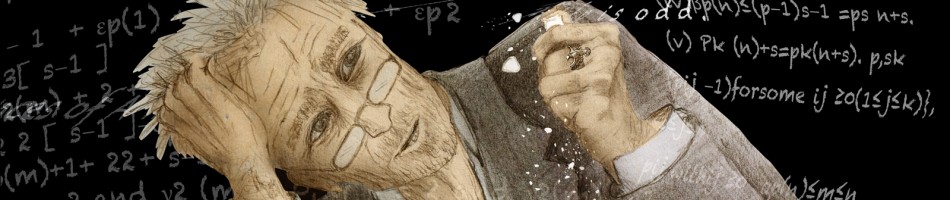
ORDER: FACING the WAVES: Transforming Political Chaos With Art

The project is scheduled for release this MAY. It includes a deluxe limited edition hardcover. There is also a 14-track album featuring original music and spoken word. Additionally, there is a signed limited art print of the cover illustration by renowned Scandinavian surrealist painter Katarina Anderssen.


PRE-ORDER NOW BEFORE TRUMP IMPOSES A TARIFF ON ART ! ! !
All music composed and performed by Gilad Atzmon
Words Composed by Igor Goldkind
All work is Copyright 2025, Igor Goldkind, Katarian Andersson and Gilad Atzmon


HONEST QUESTIONS DESERVE HONEST ANSWERS

QUESTION:
“Igor, Why are you smoking and drinking your self to death?
Smoking, if you don’t inhale cigars, can still give you bladder cancer. Tell tale signs are blood in your urine, often after about forty years of smoking.”
Writes Michael Brett
michael, thanks for expressing your concern and I will answer your question as thoroughly and honestly as I can.

Well, for one thing, I don’t have blood in my urine. Every body is different and reacts differently to different things. For example, my body does not respond well to cannabis although people are constantly praising its health virtues and persuading me to replace it for my consumption of alcohol and tobacco.
Maybe it works for them but not for me. I used to smoke cannabis, a lot of it. But if I smoke even a hit now, I lose focus for days. I become lethargic. I feel demotivated and lack self certainty.
I smoke strong chemical free cigarettes and high end Cuban cigars for. one main reason: The nicotine increases my focus. It also relieves the stress of coping with the seemingly endless stream of idiocies and obstacles that people and their bureaucracies hurl at me. If human beings weren’t so maliciously stupid, needlessly cruel, deliberately ignorant and undermining, I probably wouldn’t smoke at all!

Likewise alcohol, I now drink nearly every day, but only after I’ve finished working, so around 5 or 6 pm. I start work at 5-6 am each and every morning. 7 days a week. God took Sunday off which explains why the world is broken. Repairing the world is a 7/7 day a week vocation.
I drink only the best wine, tequila I can afford and only when I’m in Britain or Germany do I drink beer. British real ale and German Pilsners are living nutrients; unpasteurized and nourishing to the body as much as the soul.
I drink exceedingly but seldom get drunk and even more rarely suffer hangovers. The latter is down to the premium quality of the alcohol I consume. All natural, no additives. And yes, more expensive.
I drink for two equally valid reasons:
1. I’m in pretty constant pain in my extremities, mainly my legs and mainly my right leg. I was diagnosed with lymphedema last October. The American medical system has failed miserably in getting me even a lymphedema specialist. It also hasn’t provided a proper treatment for my condition. Nor even effective pain relief.

American medicine is only about money and the doctors, nurses and health practitioners care about little else than you insurance coverage. It is a disgusting, mercenary, greed-fueled system that should be scorch-earth, burnt to the ground and built from scratch based on a nationalized health model.
But money breeds greed which necessarily breeds incompetence. Beware getting ill or needing any kind of mental or physical health help in America.
You won’t get it unless you’re rich and even then, there’s no guarantees when it comes to American health care, None at all!
So I drink as much as I do as a means of self medication. When I find decent medical treatment for my condition in Europe, I will probably reduce, but not eliminate my alcohol intake.
In spite of my excessive drinking and smoking, my last physical in November, 2024 was according to my nurse practitioner, a 4 star ⭐️ ⭐️ ⭐️ ⭐️ result!
Blood, urine, stool test all came up trumps (and I don’t mean Dumb-Hitler). Blood pressure a little elevated but within normal parameters, cholesterol down, liver super fit, lung capacity excellent, could lose about 15 pounds of excess wait but I apparently have the body of a 35 year old.
That’s what having the right genes from a mixed racial parentage and background gets you!
2. The second equally valid reason I have for drinking in excess is that I’m lonely. My last girlfriend, a Mexican beauty and mother of 2 from Jalisco dumped me because I wasn’t rich and had no intention of getting rich. We were still trying to be friends but I think she more recently decided that the time she spent with me was time she was losing finding a millionaire. She’s not greedy as she’s looking for a millionaire not a billionaire. But as with everything in America, money lies coiled at the roots of all value, even Love.

I am desperate for feminine companionship. Not overtly, but inwardly desperate. I prefer the company of women to men. I think that women in general, are better human beings than men are. I was raised by a strong, intelligent and independent mother and I am passionately attracted to the same type.
I loved my baby sister, Natasha, now deceased, am on warm speaking terms with my ex wife and love my 25 year old daughter Olivia, more than my own life.
I treat women with respect, with consideration, with affection and when they are open to it, passion.
However, this has proved no formula for success.
This is partly due to culture and geography. Being trapped in Southern California for the past 8 years has been an emotional and sexual nightmare.
California women are by nature, defensive, suspicious to the point of paranoia (much of which is justified, considering mentality of Californian men!), spiteful, callous, cruel and rarely know what they want romantically, socially and most certainly sexually.

It is akin to a pandemic level neurosis. I’m sure it is caused by the dominance of excessive consumption capitalism. America is a Nation run amok with Hungry Ghosts wandering aimlessly in constant hunger for commodities that never satisfy. So that the sad ghosts are compelled to consume more and more and more. As well as waste resources, energy and everything around them; including other people and even themselves.
I detect this neurosis most in women, because I am not physically attracted to men and therefore expose my self to more slings and arrows of overpriced fortune from women. Beautiful women; inwardly and outwardly. I say this because what underlines all the female Hungry Ghosts is money. An insatiable desire for money and the companionship of men who can provide it.
My experience and impression is that without money, the Californian branch of the human tree would wither and die from lack of procreation.
I’m not calling Californian women prostitutes. No, they’re far worse than that: they only give of themselves, their love, their affection, their emotional investment to the IMPRESSION of wealth and money.
Actual prostitutes are more transactional. California women are constantly playing games, with themselves as much as others. They live in a cacophony of mixed messages, confusion, self-loathing and passive aggressive spite.
Many appear to both fear and despise men at the same time. But rather than just leave us alone, they like to play cat and mouse games of allure and refusal as a means of compensating for a sublimated sense of power.
I am not the only man who thinks and feels this; btw, before you start hurling more misogyny cards in my hat. Men, especially foreign born men, confess the exact same conclusions about Californian women when there aren’t any women around to overhear.

Even feminist women, who I admire and prefer, have great difficulties expressing what they want and Don’t want from a man. There’s deep insecurity at the heart of the west coast female that more often than not, manifests as passive aggression and occasional overt aggression.
For evidence of this just read the comments from women that will inevitably follow in reaction to this post.
I will find a lover eventually, if not a partner, somewhere in Europe or possibly north Africa, soon enough. Of that I have no lack of self certainty! I was happily married to an English woman for some 18 years.
I have a great deal to offer the “right” woman: intellect, humor, tenderness, insight and genuine affection. I have never been told that I am other than a passionate and satisfying love who gives more than he takes. Whose greatest pleasure is to give pleasure to the point of repeated climax. I am a gourmet chef for whom the greatest act of love (apart from the very act of love) is to cook a favourite meal for a friend for my family, for my lover.
I am very industrious, ambitious and am well on my way to making my career as that of a best selling author and successful poet.
But most of all I am kind.
I do not suffer fools gladly and I state the truth no matter how critical the truth is or how easily offended the recipient.
I feed and house the homeless when I can. I enjoy talking to young people both young men and young women who I speak the truth to regardless of what their elders or authorities think.
I am a critical thinker in the tradition and spirit of Socrates.
I question authority.
ALL authority.
I try my best to alleviate the suffering of others.
I regularly meditate.
I adore the arts and all forms of music (apart from breakfast cereal jingles).
I am the best Poet I have ever been in my life and my life is far from over!
I have very close ‘girlfriends’ and “admirers” in Holland, the UK, France and Algeria. Some are with partners and therefore our relations are Platonic for the time being. Others have issues of faith that prevent them from acting on their attractions and some. I just haven’t met…yet.
But I am actively looking, just not in California or the US, ever again. So for both health and romantic reasons, to quote Robert Hunter “I’m going where the weather suits my clothes”!
Thank you and goodnight!

The Poverty of American Arts: The Main Threat to American Mental Health

I have only had two editors in my life. One was the now deceased artist Eleanor Brooks. She was the widow of the great novelist Jeremy Brooks, and a friend of Ken Kesey’s and Robert Stone. Eleanor was a British Beatnik, an official Friend of Wales, and a former Duchess of Gloucester. She renounced her title and seat in the House of Lords to marry Jeremy, a commoner.
The other and now my current editor is Dr. Miles Krogfus. He won first place in a national poetry competition back in the 1950s. This achievement paid for his entire university education. AND his PHd in Yeats, an the Romantics. At 83, he can detect the Classical within the contemporary. He keeps my poetry disciplined within the legacy and structures of poetics.
Part of The Mission is to publish the monthly Mission. My newly incorporated company will include comics, poetry, prose, and art. Mile’s work will feature in it and then after a year, we will publish a book of his poetry.
Not for his sake or mine.
For the sake of the American people. This is especially true for Americans under the age of 30. They have been denied the richness of art and culture. They continue to be denied access. Art and culture are how any civilized society tends to its emotional and psychological challenges.
I am utterly certain that many Americans are mentally ill due to poverty in arts and culture. Some are lethally so. This society has ultimately commodified arts and culture into extinction.
It is difficult to pursue a career as an artist anywhere. However, it is next to impossible in America. It didn’t always used to be this way. It’s a change I’ve seen happen slowly, really just in the last 40 years. The only socially acceptable vocation in America today are institutional ones or corporate jobs. Or science, engineering and technology. because we value our tools more than we do our fellow human beings.
We treat dogs like people and people like dogs in America.
Anything else is derided as “not a real job”. With the rare exception of musicians and recording artists who are viewed as potentially money-spinning. Painters and writers and sculptors are treated like complete shit. We are advised to stop practicing our craft. Instead, we should get jobs loading paper bags at Trader Joe’s for rich hippie vegan scum.
Once when I was being processed after being arrested in San Diego for one of my many nefarious crimes (I will die before I tell them where I buried the 4th body!), I was at the booking desk and I was being asked what profession I claimed, I said “Poet” and the desk sergeant guffawed, laughed loudly and turned to the other deputy as they both belly laughed.
THAT is what Americans think of and how they treat the arts in this tragic land.
All to the detriment of the mental health and well being of our society. Yes, the word ‘Society’ does actually refer to a real thing, you just can’t buy much of it.
The last time America had an arts-based culture that pervaded society was from the late 1950s until the dawn of the 80s. This culture was admired and emulated by other cultures far and wide. Whats loosely referred to as the 60s. Nobel Prize Winning Poet Bob Dylan completely revolutionized the music industry with his songs and music. He turned the  Beatles onto LSD, and we all know where that led: cultural, spiritual, and social Revolution!
Ken Kesey wrote Sometimes a Great Notion and then Cuckoo’s Nest, was experimented on by the US military with LSD and decided that not only did he like it, he would give it to everyone else!
And the Merry Pranksters and the Grateful Dead were born, Giants of cultural upheavel and enduring art. Yes, I’m saying that Jerry Garcia wasn’t just a great guitarist like Jimi Hendrix. (Another America icon to the arts, our “Mozart” of the electric guitar.). He was an artist plain and simple. He intuitively grasped the dream nature of art, how to embrace chaos and allow the growth of form to emerge out of content. There was nobody ever like his band The Grateful Dead and there will never be another like them. 
Jerry Garcia was a Boddhisatava who changed the lives, improved the lives, alleviated the suffering of millions upon millions of people. For which he took no credit or accolade because he knew that it wasn’t him,, he had no ego, he was just Jerry doing what Jerry wanted to do.
Because “if you’re not having fun doing what you’re doing, you’re not doing it right!”
Jerry Garcia and Ken Kesey were artists using humanity and the people as their canvass. They improved people’s lives, period!
Ornette Coleman, John Coltrane, Miles Davis, Ton Carter, Sonny Rollins, Lee Morgan, Anthony Braxton (and too many more black musicians to list here), took the suffering and political humiliation of the African American people, absorbed it deep within their soul and then produced something more beautiful, more African American, more valuable than all the suffering of all their generations had endured could quell: Modern Jazz. The only uniquely indigenous American cultural product, ever. And it was our underclass, our N**g**s that produced it, that created our cultural heritage
White folk produced it and took most of the money and sometimes, on occasion aligned with it in emulation and imitation. But it was black people, African Americans who created it, from the blood and sweat of their masters lashes, the only lasting cultural worth America has every produced.
The Blues and Jazz will endure all of us for the next 2 thousand years. If humanity still exists in 2 thousand years, you can be certain. They will be listening to Jazz. Maybe ‘their’ Jazz, but they wouldn’t be listening to anything without the creative fountain of the African American artist.
Andy Warhol, Georgia O’Keefe, Jackson Pollock, (and please list painters that changed your life in the comments) didn’t just create visual art that sold for high prices. They changed the way people SEE and think about art. Consequently, they altered the way people viewed their lives as they are living.
Charles Olsen, Alen Ginsberg, Gary Snyder, Walt Whitman, Eugene O’Neil. John Reed, Dashiell Hammett, Raymond Carver, Carolyn Forche, Jack Kerouac. Lillian Hellman, Shirley Jackson, Dorothy Parker, Gertrude Stein, Bessie Smith. Billy Holiday, Lenny Bruce etc. etc. etc.
These were all writers and artists creating the raw material that makes up our soul. They weren’t just singing songs or spinning rhymes. They offered up, from the depth of their souls, the remedies for living. They provided the cure for our social illness! They taught us how to live better. They guided us in leading more rewarding lives. They helped us overcome the slings and arrows of our outrageously over-priced fortunes.
They were and still are our shamans. They are our urban witch doctors, our counsellors, and our therapists. Without them, without more generations of artists, we are all going to languish. We will whimper and suffer in our straitjackets, in one big WHITE lunatic asylum. It is ruled by the insanest WHITE king of them all: mad Donald Trump.
Today “art education” consists of “you better pick up a skill you can fall back on”. It has taken me 40 years of hard graft. Daily work, rejection, and overcoming rejection have brought me to this point. Now, I can look the cop in the eye. I can proudly say, “yes, I’m a poet, I’m an artist. You gotta problem wid dat”?

These days I mainly talk to young people, meaning people younger than me.
Guys and gals, working odd jobs, standing outside of restaurants barking customers. Because San Diego is so fucked up, the management gets weird when I talk to young women my daughter’s age. People give me hostile looks. I’m asked not to return to the establishment to spend my money.
Generational isolationism is a real social problem in San Diego. But I don’t give a shit, I’ll talk to whomever, whenever I want regardless of their age or mine. Unless they don’t want to talk to me and then I apologize and go away. But young people need their elders to give a shit about them, to talk to them to ask them what’s on their minds.
That is how a civilized, healthy society functions. You go to any other developed nation in the world. You’ll find ancient town centers in England, France, Spain, Italy, and Greece. In these places, the neighborhood’s children run free. Their parents sit at outdoor cafes or at tables or around fountains gossiping away. The children run free, feeling both free and safe. They know, without even being conscious of it, that they are the village’s children. They belong to the community, and the community will care for and protect them.
Socialist? You’re damn right that’s socialist. It is much better and healthier than the fear and paranoia that dominates current American parenting. Our teachers are prison guards. Our parents are overworked overlords. Our police are soldiers. They view every citizen and every member of the public as an antagonist.
How many cops does it take to change a light bulb?
None. They’d prefer to just beat up the room for being dark!
America has lost its soul along with its way.
Now it is just about the money; not even about what the money buys, just the frigging money.
When I last ran a company (or more accurately, ran after my company to make sure it didn’t go off its own rails!), I used to hire what were then a new breed of worker: the code, the computer programmer, the software developer. This was very difficult for me. Although I served my investor’s interests and followed my detailed business plan, I knew little about actually writing code. At the time, I didn’t even know how to write html. It’s not a code, but a mark-up language for the web.
So I had to hire some dozen coders very quickly to execute an array of electronic publishing projects, on CD-ROM at the time as DVDs had yet to be invented. So I interviewed everyone who came to apply for a poisition as I did with all of my staff. Anyone who ever works for me, who is paid by me, has a direct contact with me. A direct human to human connection is crucial in order to maintain a cohesive working environment. I do not delegate Human Resources. Because Humans come first, before even the money.
So I would typically take two strategies to discern whether or not I wanted someone working with me. The first was to sit in front of a screen and a keyboard with the individual and ask them to show me what they did that affected the screen,. Like I was an idiot. I called it my “Colombo” approach.
If the young candidate (typically college graduates in their early to mid 20s), balked and told me that I didn’t know enough to understand what they did; or try to waffle me with computer code jargon or resisted explaining anything to me; I would thank them for their application and say I’d be in touch.
I never was ‘in touch’.
If you can’t explain what you do to a 12 year old child, much less your potential employer, then you don’t really know what you’re doing yourself
My second approach is relevant to the point of this essay.
At the time I had secured over a million and a half £s in corporate investment. Enough to develop, produce and market an electronic publishing platform of 8 new interactive titles.
I coined the term INTERACTIVE DRAMAS to avoid the computer game association. Ironically, it was the computer Game MYST that was our great inspiration. It inspired the development of these interactive titles. I had the superb artist, designer and my aesthetic mentor Dave McKean as my nonsalaried Art Director. I also had a team of hard working, London working class designers.
They were “My Boys”. (along with a couple of girls). My Boys is my reference to Garth Ennis’s superb comics series and now Netflix series (The Boys; highly recommended if you hat super hero movies as much as I do)
So I was a happening dude in London in the early 90s. Which was a success that was all too shortlived, as all successes ultimately are. Nothing lasts forever, baby, apart from the Moon, the mountains, the ocean and the stars.
But back to the interview process relevant to my point about money and its intrinsic valueless-ness. So I had a company cheque book at the time when people still wrote cheques. My candidate would come into my office and sit in front of me and I would ask the usual questions about their backgrounds and experience. Then we’d do the computer screen test. Finally I would lean forwards and look them straight in the eyes (and smile).
“Tell me, what is it that you really want out of life, what is the real reason that you’ve applied for this job; what do you want?”
Without exception, the candidate would drop their guard and answer with one word:
“Money”
And these were British kids, mind you. Working class, self-educated or middle class college graduates. Not Americans. With Americans, its ten times worse.
Now the lesson would begin:
I would smile and say
“But of course, what would be the point of going to a job every day if you weren’t being paid. I want money,, I like what money buys me”.
The informality would open the candidate up:
“I want loads of money, I want to be rich by the time I’m 30 and I’m so good at what I do, I’m going to make that real” (or some paraphrase to that effect).
So then I would start the game. I would look seriously at the candidate and say:
“Would you consider a million pounds enough money?”
Inevitably, they would be confused by the question.
I would repeat myself while I opened my desk drawer and extracted the company cheque book.
“Would you consider a million pounds enough money to make you happy to achieve your dream?”
The answer was always the same. So I would begin to write out a cheque so that they could see my writing, for a million pound on the company cheque book, logo and all. Then I would rip the cheque out and being to hand it to the candidate.
“I’m going to give you this million pounds, it’s yours and you can call the bank right here and now to verify that the cheque’s good. It’s a real cheque for a million pounds and I’m going to give it to you, right here and right now on one condition.”
The candidate was never sure how real this game was but they knew for certain it was a real cheque; one guy actually called our bank and was told that the funds were liquid. But I wasn’t taking any pleasure in the startled eyes and nervousness of these young people. Instead I had an invaluable lesson to impart.
“One condition and the money is yours”, I repeated.
And I would hand them the cheque so that they could feel reality in their own hands.
Some would ask “What’s the catch”?
Some wouldn’t.
Then I would explain:
“You can have this cheque. You can have a million pounds on one condition. You must accompany me directly to the airport. We will go without interruptions and with no stops. At the airport, we will grab the first flight to Cairo. Once in Cairo there’s a helicopter awaiting us (there wasn’t, I lied). The helicopter journey will take some 3 or 4 hours to the heart of the Sahara (‘Sahara’ means desert, so to say Sahara desert is redundant). Once we have reached the centre of the Sahara, we will land. Or we will hover about 5 or 6 feet above the desert. You will jump a short distance. The sand will cushion your jump. And then we are going to leave you in the middle of the Sahara with your cheque but no water, no phone and at least a hundred mile walk to the nearest oasis.”
And then the punch line, which I would deliver while meeting the person’s eyes full on:
“So what is your million pounds worth to you now?”
The AHA! Moment
(the one word that Allen Ginsberg wrote on my first edition City Lights copy of Kaddish when he signed it and invited me up into his room; I didn’t go, its another story. Always been a touch homophobic)
The day to day epiphany available to all of us any time of day, “if you look at it right”.
The moment of realization of enlightenment and understanding happens when you grasp not just something new but when everything you had been thinking crumbles away. Everything that you thought to be true up to that moment crumbles away. Those scarlet begonias are a touch of the blues.
And your mind is just blown wide open to the fact that what you knew was certain wasn’t very certain at all.
You can’t hide that moment on your face.
And I knew with utter certainty that the look on my candidates face was their passing grade. If they ‘got it’ I could work with them.
I’m friends with some of my ex employees to this day and recently one of them, a girl now a woman, reached out to me to remind me of my little employment game and how it made her start to see her life in a totally different way.
I told her that no thanks were needed.
That I was just doing my job
The best way I knew how.
Thanks for reading.
Leave your comments below and I will respond.
Still human that way.
The Cultural Marxist Revolutionary Circus is Coming to YOUR Town. Resistance is Futile!

Just a quick update to tell you developing news in the world of my crusade to take over the world and change it into a world of poetry, art and aesthetic convictions. Once we have infiltrated the power structure, we will enact our cultural Marxist conspiracy by getting key political figures to at first become more concerned about the color of their hair, their wardrobe, office furishings and back ground decor during their press conferences. 
This represents phase one which we call
the iron fist of Fashio-nismo.
As key political leaders become obsessed with the arrangements of flowers in their vases, the subject matter and artists of their wall hangings. Shoe color and accessories will become crucial, time consuming judgement issues.
The next phase we called Confused Identity Syndrome is when we get our targets to actually begin to question whether they truly exist, or not. Based largely on the exemplary work of our previous agents Jean-Paul Sartre, Albert Camus and Andre Breton, CIS will start with leaving copies of the Japanese Poet-Monk-Warrior Hakuin Ekakaku’s essays and aphorisms lying around on coffee tables and near water coolers within the White House, Pentagon and Congressional offices
.
Boredom, while waiting for meetings to begin, will inevitably lead to bureaucrats and functionaries glance at the works of Hakuin and soon become immersed in a Zen literature that will render them confused and uncertain of even their own existence in reality. They will begin to doubt if anything they’ve ever known or believed to be true is in fact, real. Their sense of Self will be rendered void.
They will gasp for breath in the vacuum of their own Being!
Finally, left sprawling and crawling on carpeted floors, tears streaming down their faces, our targets will be rendered inoperative as they crawl on the floors laughing uncontrollably while muttering incoherently, ‘there is no self, there is no self, there can be no Self, there is no Self!”
This is when we may our move.
Our crack team of Ninja Seals, Jewelry Makers and Dolphins will strike from their underground locations at the very heart of the power structure. They will be armed with books and art prints, tarot decks and astrology charts, prepared to bring the new order of Poetry Workshops, Expressive Arts seminars and forced aesthetic training into play. The targets will be interrogated with impossibly vague questions for which there are no answers.
The questioning itself will be the answer.
Targets will be constrained and forced to watch reruns of Gilligan’s Island and My Mother the Car. William Burroughs reading his work in an endless, monotonous, tape loop will become our background training will sound, never ending day in day out.
Poetry will be read to them over and over and over again until they shriek, beg for mercy and break down. We will show no mercy. What does not kill us makes us strong.
When they are broken we will rebuild them into better beings. Mainly with water color, clay sculpture and improv classes. They will please for mercy (or death), at first but then thanks to us, once the Macrame and knitting regimes are introduced, they will become pacified.
We will force them to wear outlandish fashion trends, force the men to dress in drag and wear makeup (which we will teach them how to apply), and make the women dress in appropriate formal evening and day casual wear that does not accent their breasts or rear ends. Girls will be taught how to run not like a girl, but like a human being. Boys will be taught how to cry in public, or else!
Finally the once effective political operatives, business lobbyists, generals and high placed bureaucrats will be assigned new roles as poets, philosophers, tarot card readers, astrologers, day care workers and after school program directors.
Once the revolution is achieved, peace will return to our nation and to all nations. The earth will resume its spin and stars will fill the sky in splendor and celebration at the return of the human species to its natural sanity. 


May SHE (who is not perfect but tries very hard indeed and deserves a thank you card now and again), look down on us from her cosmic kitchen table and bless us with the good fortune to overcome our enemies.
I submit to you, my dear comrades and circus clowns, our plan.
Choose which side of the barricades you will be on.
Pack up your water color brushes and acrylics and tarot decks and prepare for Revolution!
btw, I’m shutting down my X (Twit) account because Elon Mollusk is a traitor to America, an Afrikaner racist and an enabler of fascism. But I don’t like what he looks like either and he fucked Amber when Johnny Depp was filming, so fuck him!
Find me: https://mastodon.social/invite/nhjRLzbQ
& @igorgoldkind.bsky.social
Don’t Let Them Dick Your Soul Around

Well, some say yes,
some say no
Some say hey man,
I just don’t know
I say man, he’s going to be-lieving you hanging from a tree
So whatever people’s saying
Don’t you let them dick your soul around
Cuz we’re rolling into Memphis
And got no time to fuck around.
Well I get up,
And you get down.
Both of us here,
just dancing around
No matter what you do,
don’t let them dick your soul around.
Cuz we’re rolling into Memphis
And got no time to fuck around.
Hey, some go fast,
Some go slow,
Some folk don’t have no place to go.
But Lord Jesus,
don’t let them dick your soul around.
Cuz we’re rolling into Memphis
And you got no time to fuck around.
Some say God,
Some say Not,
Some say money’s all they got.
But it don’t matter what you worship,
Cuz its only plastic idols laying around.
And with change in your pockets, you’ll get home just fine,
Long as you don’t skip this line.
But whatever you do baby, don’t let them dick your soul around
Cuz we’re rolling into Memphis
And got no time to fuck around.
Some say this
Some say that
Some want you to wear some kinda hat.
But that ain’t nothing but a lid,
To keep inside, what’s in your head
So don’t be raising no rabbits up there
Whatever you choose to be, wear:
Don’t let them dick your soul around
Cuz we’re rolling into Memphis
Ands got no time to fuck around.
I’m telling you, sweetheart,
You can’t let them fuck you around.

Igor Goldkind© 2024
October 20, 1024
Edited by Miles Krogfus
Don’t You Ever Let Nobody Drag Your Spirit Down!

Once again, I have been slurred by a coward.
Someone, remaining anonymous, has warned a dear friend of mine to beware of me as I exhibit the behavior of a “Dangerous Narcissist”.
My friend is too cowed to tell me who it is or what they said exactly but once again I am confronted with the innate back stabbing cowardice that too often typifies southern California character; or lack thereof.
To quote Kamala Harris, “if you have something to say, say it to my face”!
But I am fascinated as to how the over–therapized California resident has misappropriated actual medical vocabulary to use to further their personal spiteful agendas.
 Narcissism, from the greek myth of Narcissus, is a specific mental health condition that has to do with a fixation on the self at the expense of other “healthy” relationships. As any qualified therapist would tell you, as with most mental conditions, everyone exists on a spectrum. It’s not a black or white proposition. You’re not either a Narcissist or NOT a Narcissist; but rather we all exhibit Narcissistic tendancies. The diagnosis comes about when the tendency becomes so intense or acute that the individual is impaired in their otherwise “normal” social relationships.
In my instance specifically, it took me decades of meditation and self reflection to come to a point where I could admit to loving and caring for and about my Self. Having been tormented as a child, often times violently so, for my Russian heritage name of Igor, I had assimilated a strong impulse towards self loathing. In actually believing that the reason I was such an object of derision and hostility from my peers was somehow, ‘my fault’ and due to a failure on my part.
Two factors remedied this.
One was to leave the country.
As soon as I moved to Europe and a Gallic centered society. My name did not change but it’s social value did. Instead of being endlessly teased as a “monster” out of a horror film or later out of Mel Brook’s comedic interpretation of Frankenstein, (great film, btw), instead people identified me for what my name really meant: an indication of my Russian heritage.
Both my father’s parents immigrated from Poland and Russia in the early part of the 20th century. My mother named me Igor in tribute to my heritage, that of refugees escaping pogroms and anti semitic prejudice.
In Europe, my name has a good currency value. The second change from self loathing and self doubt to self acceptance was my readings into Buddhism, particularly the work of the Japanese scholar and translator, DT Suzuki and his 3 volume opus on Zen Buddhism. Alan Watts and Christian Humphries also helped. When I took my book learnt knowledge and applied it and actually started to regularly meditate, the toxic social poisons I had inadvertently assimilated began to dissipate.
Ultimately it was poetry that brought me to my senses between pariah and ‘attractor of beautiful European women’. Walt Whitman taught me to love and celebrate myself, my body, spirit and mind in his seminal Leaves of Grass. To anyone who has ever suffered from the imposed self loathing that comes with attempting to conform to an oppressive, Protestant mediocrity, I suggest re-reading I Sing the Body Electric.
In this celebratory prayer to self love and the celebration of the self, Whitman touches us with an eternal universal truth: that we are all not just worthy of Love but are the very source of Love.
Our bodies ARE Electric, super charged with the beauty of Being.
We are already super heroes, capable of extraordinary acts of heroic kindness.
My self love is not a superior love. On the contrary, I love myself simply and precisely because I am not better than anyone else. Because of the fact that we are all equally beautiful as the bright, shining magical creatures that human beings are.
Upon my return to my native land, I carried this self certainty with me as well as try to share the self realization with others. Unfortunately, my taunters of childhood are still here and their self limitations makes them target me as arrogant, self aggrandizing and yes, Narcissistic.
I remind myself that these are their failings, not mine.
A social, shared neurosis.
However, the hostility and down right abusive treatment persists and I must stand firm in the gail of human avarice, clutching my self–worth to my breast and holding my head up in the self-knowledge that to love myself is not to love anyone else less, and is tribute to a very human humility, not superiority.
In fact, to love yourself is not Narcissism, it is a state of humility of awe and wonderment at the nature, the body and the spirit each of us actually are and too often forget to recollect to our competitive lives.

And that, my friends, is the rest of my story.
To quote Eric Bibb:
Don’t Ever Let Nobody Drag Your Spirit Down
Full Lyrics:
You might slip, you might slide, you might
Stumble and fall by the road side
But don’t you ever let nobody drag your spirit down
Remember you’re walking up to heaven
Don’t let nobody turn you around
Walk with the rich, walk with the poor
Learn from everyone, that’s what life is for
And don’t you let nobody drag your spirit down
Remember you’re walking up to heaven
Don’t let nobody turn you around
Well I might say things that sound strange to you
And I might preach the gospel, I believe it’s true
I won’t let nobody drag my spirit down
Yes, I’m walking up to heaven
Won’t let nobody turn me around
You might slip, you might slide, you might
Stumble and fall by the road side
But don’t you ever let nobody drag your spirit down
Remember you’re walking up to heaven
Don’t let nobody turn you around
The Problem With American Women: The Commodification of Sexuality in American Culture


Of course I realize that this title was going to attract your attention.
But if you’re expecting a misogynistic rant about my failures to attract American women for sex, love and money while listing an arbitrary itinerary of American female failings (heads not flat enough on top to rest a beer on; always changing their minds from what I want to what THEY want; too busy working, taking care of children, cleaning the house, running errands and cooking to dress up in lingerie and give me a poll dance [double entendre intended]), then you will be sadly disappointed.
What James Thurber endearingly referred to the war between the sexes is a significantly different battlefield than in his age of single income affluence when women couldn’t own property without the consent of their husband or father or older brother.
Economically, socially, politically, psychologically and most importantly, sexually
My age grants me the memory of what there was before what there is now.
My adolescence coincided with the 70s, the decade in which the formant of social and technological changes of the 50s and 60s came to fruition into permanence in the 70s.
Readily available contraception, nascent computational technologies and the emancipation of the African American all spread ripples that were waves of change, like an asteroid had struck and plunged into the center of the collective, American cultural pool. African Americans and their other than colored allies, strode the lunch counters,school buses and schools that had been violently forbidden them.
The British adoption of the African American sound and its subsequent export back to America via the Beatles, the Stones and other blues based white boy bands infiltarted the American psyche.
Elvis Presley no longer played n*g**r music that stirred the white youth into sexual frenzy, but now was seen as performing classic Americana, to the extent that Richard Nixon invited him to the Whitehouse and made Elvis a federal cop.
Through the 70s I saw women becoming bus drivers, cops, doctors, lawyers, business women. I saw black faces on my colored TV. And the emancipation kept rippling. Homosexuality became Gay.
Mexicans became strikers, fighting for a decent wage.
Asians became Kung Fu fighters, although their star had to be David Carradine not Bruce Lee. Movies became the subversion of the times. Altman, Coppola, Scorsese, Woody Allen, et al chronicled the narrative of change and their audiences applauded in self-recognition.
But in many ways the change in over half the human population (51%) was most significant of all. As women regained their economic power through wider employment and enterprise opportunity coupled with their control over their reproductive rights, the right not to get pregnant from having sex, our society as a whole began to shift it’s world view.
The feminine became mainstream. Women were taken more and more seriously by men, not just as objects of desire and potential child bearing mates, but as agents of agency and volition all their own.
The masculine was being checked.
This however was no bed of emancipation roses.
With women gaining more social power, many men felt that the power of their patriarchy was under threat. Many men embraced the reality of neater, gentler, more considerate and nurturing values infecting the mainstream of alpha male dominance. But many more did not. As women gained prominence as agents of their own agency, many men began to begrudge the loss of their sex toys.

If women were less and less beholden to men for their economic and social status, then why should they continue sleeping with them or bearing their children?
So with the positive social changes came the desire to maintain control over what was being lost. What was being lost was the masculine dominance and control over the feminine. In response, men began to alienate themselves from the very people that they loved and wanted to be close to. The perceived loss of power trumped (pun intended), the loss of intimacy.
This was manifested by the explosion of the porn industry in the mid to late 1970s.
If women no longer submitted their sexuality, their reproductive volitions to men, then men needed to extract what it was that they thought they desired in women: their image, their sexuality, their allure.
Americans are the most effective industrializers of human commodities since Nazi Germany created their factories of death.
Capitalism has always been about two things: the assignation of value to market demand and second, the exploitation of labour for the sake of “surplus value” i.e. money, Capital.
Capitalism means money, the value of which supersedes all other human values as the ultimate measure of humanity.
.
In true American Consumer Capitalist fashion, America created the porn industry on an industrial scale, hiring women in the thousands to perform to male ideals, to submit to masculine desires.
Men, having lost the intimacy of their gender dynamic could now afford to “buy” the fulfillment of their assumed entitlement, their deserved desires. Even before the internet, (which ultimately bankrupted the porn industry by making imagery, the sound and motion of performative sex free), porn pervaded every corner of male culture.
If you are a woman or don’t know this already, you need to understand that every man you have every met or will meet, including your partner, your father, your uncle and your sons have masturbated to pornography until climax.
This is a fact, not merely my opinion.
There are no men who don’t use porn as a tool of literal self relief.
The problem of course congeals because porn is not sex; or rather it is feigned sex, performative sex. The actors who are hired to expose themselves, to engage in the myriad of soft to hard core scenarios that are delivered as commodities, don’t necessarily enjoy what they are doing. They’re doing it for the money, not the pleasure.
Of course, as in any acting, some performers are more fully immersed in their roles than others but the fact remains that without money, there would be no porn.
Pornography is the ultimate commodification of human beings.
I write this not as a Puritan (who have their own sexual problems). I write this as a partaker (seldom and less and less), but nonetheless a user of pornography.
I have watched pornography with women who claim, at least to me, that they enjoy it. But mainly they say that they enjoy my enjoyment of it. The more turned on I am the more turned on she is: and that’s the crux of the dilema.
Pornography is NOT sexuality, it’s not sex; it’s fake sex.
When fake sex begins to replace real sex we begin to lose our discernment of humanity on an emotional, visceral level.
There is no way I can make love, have sex with a woman without completely surrendering to my empathy for who she is as a human being. I want to use her for my own gratification, yes; but I equally want her to use me for her gratification. I desire her to desire me. The more she desires me,, the more desire I feel for her.
In pornography, fake sex, all the desire is one way.
There’s the object, commodified, paid for and thus acquired and then there’s the recipient of the product’s desire, who has paid for its delivery.
There’s no collaboration, there’s no carnal dialogue, no exchange and no empathy.
There’s no sex, really.
It’s Important at this Juncture to Address the Metaphysics of Sex and Sexuality.
The sexual act, when engaged in, is one of the most powerful psychological/emotional and physical behaviors that human being experience. Speaking phenomenologically, as a participant (rather than an observer), the human body undergoes dramatic physiological and chemical variance when sexually aroused and when engaging (again, NOT observing; ENGAGING) in sex. 
Biochemically, the body’s hormones trigger a radical change to the body chemistry and psychological experience and behavior of the participants. When we are aroused it feels as if another force is acting through us. We lose our inhibitions and surrender to our senses. We are consumed by our desires for another’s body.
We become more in and connected to the moment of our gratification.
We become simultaneously emotionally charged and emotionally vulnerable. When we are with someone we trust, someone we have affection for, our emotions are hightened and stimulated into a state of adoration.
It is no coincidence that we culturally refer (across all cultures, by the way), to the sexual act as ‘Making Love’. Because it is precisely Love that we are experiencing during this hightened state of transcendental arousal.
Moreover, our senses become dilated, our focus dissipates into a primarily sensory experience. Our sense of time alters, even space appears to contract to the realm within reach of our senses.
As we reach orgasm we lose our normal sense of self and can experience the melding of one into two and then into one. Most of all, we experience pleasure and ultimately ecstasy.
On an experiential level, good sex is psychedelic, reminding the body and mind of our natural lack of separation from the place and time we are in and who we are with. The spiritual value of good sex is better explored by the Hindus and the concepts of Tantric sex which really amounts to treating sex as a meditative activity, an active Yoga of mind, Spirit and mind. 
Good sex is curative.
It relieves us of our daily suffering we have grown numb to. It relieves anxiety and fear, it grounds us in our own bodies and minds. But most of all, it connects us to another (or others) through a transcendence of our senses into a higher state of awareness.
Sex is the LSD anyone can take any time and still go to work the next day (or same afternoon).
Sex is so good for us, for everyone that of course, like LSD they had to make it illegal!
Or if not strictly illegal, controlled by the church, by the state and by the inhibitions of guilt and shame that were taught to us. Taught? Brainwashed, more exactly!
All of us have been abused into associating sex with shame.
Because nature wants us to fuck, urgently, imperatively; and nature must by every and any means, be controlled.
Good Sex is the key to the survival of our species. The primeval drive to procreate is so powerful that it even supersedes the mind’s normal self awareness of causality and consequence. We don’t give a fuck, we just want to fuck and that is where the social context steps in.
Such a strong, spiritual nay metaphysical, force that affects every aspect of the human’s being really can’t be controlled. One’s sex drive can be regulated, restrained even, but ultimately the force prevails or the subject becomes ill.
Sexuality has always threatened organized society precisely because everyone knows it can’t really be controlled.
The Bonono chimpanzees of Africa, our closest biological relatives on the planet spend most of their day fucking, when they’re not eating. Bononos fuck everyone, males fuck males, females fucks females, fathers fuck their daughter, sons fuck their mothers. A tribe of Bononos are a virtual ongoing orgy. Even when they’re not fucking, Bononos will engage is mass masturbation behavior especially when feeling anxious or fearful of predators.
This is what nature provides and what nature wants.
Now humans, on the other hand, have developed complex social labyrinths determining status and pedigree based mainly on language and power.
So the less Bonono and more human people became, the greater the need to control sexual behavior. Taboos evolved. Some pragmatic, such as the incest taboo; but others less so, like the pervading Victorian era myth that good women didn’t want to have sex.
With the advent of the so-called Sexual Revolution facilitated by the mass availability of the pill, as well as the misunderstanding of the anthropologist Margaret Mead’s study of the sexual habits of Polynesian people, sex once again began to assume its default position within human behavior. So ofcourse, the powers-that-be needed to exercise firmer control over what cannot ultimately be controlled.
The tragedy of the Human Comedy is that we always try to control what cannot be and should not be controlled.
Capitalism in its neurotic quest to commodify everything, conquered sex by commodifying it. By deconstructing the blessed act into it’s sensory components that could be sold piecemeal. Like a corporate takeover that strip mines a successful company for its assets. American Capitalism pornographies sexuality, made it an observer’s obsession rather than a participants spiritual celebration.
By disarming the subjective participant into an observer, our modern society is able to regulate our sexuality, determin fresh taboos and grant licence to what was previously prohibited as long as it can be sold for profit.
Thus homosexuality was allowed to be Gay.
Because Capitalism is an international conspiracy to dehumanize our species, the commodification of our sexuality is not contrained to American shores. It’s just much worse and more intense here.
American women especially, have been subjected to the most abusive dimension of this dehumanization. I speak from the personal experience of having lived in half a dozen mainly European cultures, having married an English woman and courted many a non American woman. (Well not MANY, but enough to draw an accurate comparison).
The American woman, having more recently reached a level of economic, ediucative and social emancipation (but still not paid the same amount for the same job as her male counterpart), determined to seize the reins of her own sexuality. And compared to the early 20th century, have seemingly succeeded in doing so.
Reproductive rights and women’s sexual health are currently political issues for the presidential election.
The great Sigmund Freud made his reputation and foundation of Psychoanalysis based on treating bourgeois (upper middle class) women for the affliction of “Hysteria”.
Hysteria was a common diagnosis in the early part of the 20th century and medical doctors all through Europe received the wives of welathy industrialists to cure them of this mass affliction. Brutal practices such as ECT and even lobotomies were applied to “cure” these poor, afflicted women.
The symptoms of Hysteria were depression, listlessness and non submissive behaviors. If a woman argued, then she might be suffering from Hysteria and rushed to an institution to be cured.
But one of the foremost symptoms of Hysteria as reported by the husbands of these unfortunate women of the time was seeking sexual attentions from their partners.
Yes!
Wanting to have sex with her husband, to surrender to that primal state of natural human being, was considered at one time a sure tell sign of hysteria and thus remedied by electric shock, ice water plunges and even lobotomy!
As I write this I shudder at the mere thought of the extremes of human cruelty and callous indifference.
Fortunately, Freud’s approach was to actually listen to his women patients and when he wasn’t prescribing them cocaine, he wrote down their words, their confessions into his famous case histories that eventually were the foundation of his “talking cure” and theories of child sexuality.
His daughter Anna Freud furthered her father’s paradigm-shifting approach and founded the field of Child Psychology, studying and reporting the effects of sexuality on our natures and happiness as adult individuals.
Freud famously posed the question “What do women want?” and ultimately through years of interviews and research, answered his own question.
What we all want, Good Sex!
So what’s the problem with American women?
They have been co-opted into the business of sex to the extent that they have begun to commodify their own sexuality and sell it to men. Not as prostitutes, although there are plenty of both male and female versions of this. No, they have begun to deconstruct their own sexualities as components to be observed, not loved, not actually fucked, but seen to be sexual..
They have harnessed the sexualities of alienated lonely, pathetic men into a market force that they can supply. Only Fans is just the latest example of this. American women have countered the tyranny of the patriarchal gaze by consciously manipulating it for their material gain. Emancipation has become self-slavery.
Sex is now a power struggle as to who dominates who, commercially, transactionally.
Instead of connectivity, of intimacy and shared sensualities, sex for the American woman has become transactional. ‘What do I get out of it?’, is as strong a calling as nature’s pull. Stronger in the form of manifesting neurotic behaviors such as manipulation, salesmanship, intentional confusion and chaotic communications.
Since sex is now a transaction, the only question becomes who gains the most?. Pleasure and fulfillment are secondary considerations. Intimacy, even Love, a fairy tale you grow out of to join the “real world”
Surely this is true of European women as well, I hear someone saying.
Yes, but not so much so in my experience.
English, French, Italian and Spanish women are no more promiscous than their American counterparts. However, in general European women know what they want, know who they want and don’t want it from and are much more comfortable in their sexuality as well as expressing it than American women are.
American women seem at times to be almost afraid of their own sexuality, afraid of losing control, of surrendering to lust. This is by no means healthy!
Whereas Europeans just don’t make that big a deal out of it. They enjoy sex because they know it’s good for them and if it doesn’t work out, c’est la vie; there’s always other experiences with better partners down the line.
In Europe sex is treated more like a fine meal.
Necessary for healthy living and worthy of enjoyment. Bad sex, like a bad meal is to be avoided and hopefully not repeated. But you don’t know until you try it, right? Just taste a little, you might like it.
Good sex, like a good meal is literally a divine experience, a jubilant celebration of the senses (btw, anything accompanied by the right wine is a ticket to paradise).
I have enjoyed meals in Paris bistros, Greek tavernas, Italian Tratorias thate can only be described in transcendetnal terms.
Likewise I have loved, made love to, had love with women of Europe that will adhere to my memory like a childhood. Respectful, tender loving moments that will never escape me.
Unfortunately, outside of the adolescent fumblings of highschool and early college, I have yet to experience the same level of encounter here in my native land. I attribute my failure to connect as an aspect of Capitalist culture. I cannot bridge the transactional nature of American sexuality; to me it all seems like a verision of pornography or even prostitution to me; an impression which has been reinforced most recently when a woman friend of mine suggested I hire a professional sex worker to share intimacy with.
I was genuinely shocked as if it had been a male friend, I could have understood his clumsy solution. This friend knew me and yet her choice of assistance was to suggest I buy the services of a sex. I am MUCH TOO CHEAP, to ever consider this as a practical option. Besides why wouldn’t the woman PAY ME, for my « services »?
My friend was a well intended American woman, a peer who seriously suggested that my path to sexual fulfillment could be purchased and transacted rather than pursued or danced for.
I can only conclude that the sexuality of the American woman has been seriously compromised by a cultural and societal appartus constructed by men but now reinforced by women. This apparatus generates sexual neurosis and ultimately dehumanizes and devalues the most powerful and wonderful experience people can give each other.
So What’s Your Solution, Sherlock?
Well, not cocaine.
Far be it for me to prescribe remedies for societal ills; even my arrogance has limits!
I would fall back on conversation. People need to start talking about sex a lot more, especially to the people we want to have sex with.
A lot more.
The social rituals are still too complex. When I first met my future wife, we had sex the same night we met because we were both attracted to each other and trusted each other enough to act on our desires. My beautiful daughter Olivia is a product of unbridled, unihibited sexuality as she was and continues to be the best thing in my life.
Men, being stupider than women, need to be less coy and less aggressive at the same time. We need to learn to ask for what we want without acting like petulant children when refused. We need to cultivate a taste for the sensual, not just the sex; everything surrounding and leading up to and following the act, not just the act itself. We need to learn how to be better lovers, not technically but emotionally.
Remember you men reading these words, the number one cause of female mortality in the US, more than disease, more than accidents is men. So just keep in mind that women have just cause to be wary of us.
And women: you lovely, lovely, horrific creatures must learn how to celebrate your sexuality, not as a tit for tat transaction, but as something for yourself. Something you enjoy in itself for it’s own sake, not for status and/or material gain. Women must learn to be joyful participants, equal partners in the sensual dance of lust and desire.
Learn how to clearly signal what you want from a man. Remember, men are stupider than you are, so make sure your signals are clear and obvious. SPELL IT OUT that you want to fuck when you want to. Protect yourself, of course, but when you trust a man and trust your own desires, surrender to the power of your libido.
You have nothing to lose but your inhibition and your neurosis.
Learn how to fuck with gusto, with tenderness, with celebration. Embrace the moment you can step out of your daily concerns and like wild Bonono chipanzees be animals for a night (or a day, or an afternoon or the entire weekend).
Celebrate the Body Electric!
And have no expectations. Sex happens in the moment not in the anxiety of the future nor the nostalgia of the past. Keep your emotional baggage to the size where it can fit comfortably in the overhead locker of you flight. Then buckle up and fly baby, fly!
I guarantee that you will be happier, healthier and free from the constraints and manipulations of commodification. You will become your better self by embracing what is most precious about being human.
Have a divine meal of an other, feast on the sensuous pleasures you can unfurl from within your own sacred being and discover within an other.
Don’t feel guilt or shame or poker-player gaming, feel joy, scream out loud, laugh, cry and be free.
For what it’s worth that’s my advice.
I leave you not with my words but that of Patti Smith’s:
“Love is an Angel Disguised as Lust”
thanks for reading and have A Great Flying Fuck!


Dropping Out to Drop In

A Facebook Dialogue with Rebecca Behar
My art is also poetry and short “fiction”. And I am head on confronting this very issue every day of my working life. I turned my back on academia where you can get paid to regurgitate curriculum while you do your real work.
Why?
Because ultimately academia is a crutch that consumes your mind and soul after a while if you’re trying to be an artist. I call academia the artist’s meth. It feels great while you’re smoking it; status, paycheck, the admiration of the young….but ultimately your artist’s teeth fall out, you get uglier from compromise, and the admiration of youth makes you psychotic when you start actually believing it.
So I decided 6 years ago to starve to death.
No, let me tell you the truth.
I determined that the undervaluing of poetry by the mainstream (commercial) was a social malaise, a symptom of a wider social problem compounded by the monetization of popular culture.
I looked at who was actually reading and writing poetry first by hitting the poetry readings circuit. There I found the old clutching at reminiscences and the young clutching at life and strait jackets.
The number of young people 16-26 earnestly writing and writing confessional poetry struck me. Especially young women. They were confessing their angst and being young, about being raped, about being molested, about living in a world weighed down by the gravity of the male gaze. There were also cocky young men, rapping and slamming their hearts away.
So I started writing for them.
The same age group that suffers from historic levels of suicide, anxiety and depression, gave me fodder for my writing.
I wrote and read to them in public and my piece Suicide Note gained an audience of lonely girls who would approach me after my reading to highlight how that poem in particular struck them as they didn’t realize that other people felt as they did.

I also began carrying copies of my modestly selling my author copy books with me everywhere I went, signing and selling copies by hand at readings. But also if I met someone new in a cafe or party and the conversation got to the “and what do you do”? part, I’d answer, “let me show you” and pull out a copy of my latest.
“I’m a poet, would you like to hear a poem?”
IOW, regardless of the market, I decided to take my professional seriously and not try and disguise the thrust of what I do. I always have enough author copies of my books within reach so that when someone asks where they can buy one of my books, I list the usual Amazon, Barnes&Nobel, bookshops local to me and then I add “or you can buy a copy from me and I’ll sign it for you”.
At this point, I am ahead of the market because I have numerous direct contacts with my buyers. I talk to them. I find out who they are and why they read and what they need from an author.
Laborious, yes. Low yielding revenue, yes. Time consuming, yes. But I would match my market research on my audience against any data crunching publisher, any day of the week.
I am determined to make poetry pay.
Not a lot, but enough to make a bare boned living at.
I stopped buying things.
I stopped trying to be middle class.
I live in a meager apartment.
I collect food stamps and any other government assistance I can talk my way into and I have absolutely no shame. The government is paying me to be a poet, a writer and an educator.
That’s my government subsidized job, in the long standing, centuries old tradition of the patronized arts.
There is never any shame in survival.
How many fast food jobs did Socrates work? Or Ovid or Homer. Did Dante pack groceries at Trader Joe’s in one of his circles of hell?

I teach independent poetry workshops at libraries for non mandatory donations. I lecture on poetry. I do readings and signings. I collaborate with a music producer in Stockholm, Frederic Iriarte who records my readings to mix with his music and publishes them on line as albums for download streaming. Do they make any money? No. Barely enough to justify the effort.

But I am getting paid to write and read poetry, just not very well.
I love my work and the place it puts me mentally and spiritually to labor through, more than the comforts of middle class continuous consumption I have had to leave behind.
I am totally dedicated to improving upon and perfecting my work for the sake of an unseen audience. For the sake of readers I haven’t even met yet.
I am not unemployed, although I collect unemployment.
I write and teach poetry and writing.
That’s my job.
Here I am: http//igorgoldkind.com

Don’t get me wrong, it’s much harder to be an artist than a businessman. But over 6 years, I have built an audience. I have 5,000 FB followers, nearly a thousand subscribers on other media, including my blog.
I now run into people both on and off line who knows someone who bought one of my books. I also get anonymous phone death threats, obscene emails and am persona non grata among my local amateur poetry community.
But these are small prices to pay for being to hold up my head and answer “Poet” when someone asks me what I do for a living.
I like to add “But I’m only in it for the money”.
Rebecca Behar:
“Igor Goldkind You are just describing the life of dropouts who succeeded, why not – my best friend was like this, but she went to Italia. Depends on the place. Also in some countries you cannot do anything directly with a bookshop or a library – the distribution is perfectly controled, no freelance accepted.
But it does not matter, I belong to this underground and we did wonders, and now slam and spoken word are still great. So I agree that it is very difficult to kill poetry – like weed. But just compare with Victor Hugo – not only his poetry paid for a big house in Guernessey, but for his expensive way of life. And anyway he believed that he was a kind of prophet. But there is something else which is what ppl can accept and understand, called “reception” in general. I think that a real poet provocative and misunderstood by definition.
About an audience and ppl reacting, this became quite easy with internet, but again all these video kids are relying on marketing. My concern is that written, hermetic, creative poetry is obviously confidential. PS – I just visited an exhibition on surrealism, this is exactly what is missing : a big bang, a scandal, a movement breaking all this business & technology boredom. I think that it is happening in Iran, with the movement “women, life, freedom”.”
Rebecca Behar, look at the life and lifestyle of Stephan Mallarme, at a time in Paris where Poets were rock stars. He didn’t compromise his art for the sake of his acquired wealth and fame. The Roll of the Dice, his last work was perhaps his greatest masterpiece inspiring CharlesOlsen and the Black Mountain Poets, as well as my first book, Is She Available?
Rimbaud was a great poet too, but died poor in Africa. And Charles Baudelaire lived off of his mother’s money his entire life. This didn’t qualify his genius nor the fact that he gave world our Edgar Allen Poe; who without Baudelaire’s promotion would have been buried in obscurity.

The general point being is that financial reward and market value has very little to do with art and nothing to do with talent.
It’s funny that you would refer to my naked confessional as “Dropping Out”. I worked decades at corporates, in publishing in academia as a professor at the University of Liverpool. I always earned good money for marketing and publishing other people’s work. (Ever heard of the “Graphic Novel”? I coined the term in the mid 1980s and made publishers billions!)
And earned steady income teaching students how to be artists.
But I never had the balls to walk the line myself and it does take balls (or the equivalent female genitalia). And I was never completely happy with my life, having had wanted to write for a living since I was a child.
Now some 45 years later, I get to do this.
And I’m the happiest I’ve ever been. Because now regardless of my food stamps, I know that every working hour I live is dedicated to my authentic being, to the truth of my experience.

(I also live 4 blocks from the beach and go there a lot to swim and stare at the horizon).
So no, I haven’t dropped out; I was a drop out, I’ve dropped in.
I’ve dropped out of the ‘real world’ of stable salary, constant consumption, obeying the dictates of fools and being happy chattel for human crushing machine Ginsberg named the demon Mollock, in Howl.

And I’ve dropped into the actual world, behind the real world, where poetry and art connect me intimately with 10,000 years of my compatriots from all over the world.
I’ve dropped into the world where me and Rumi can share a bottle of wine while watching the sunset.
You can call me a drop out if you want; but in my experience, I had to drop out to drop in.
I would like your permission to republish this dialogue on my blog. Igorgoldkind.com


COMING SOON! The Cure for Pandemania

Take a Deep Breath – Living With Uncertainty
A book of poetry and art, fables and philosophies aimed at the pandemic of crisis anxiety so many are facing.

In uncertain times people turn to uncertain means. This is a book of poetry and art, of fables and philosophies aimed at the pandemic of crisis anxiety so many of us are going through right now in our daily lives and in our inner spaces. We are all of us and each us in this together.
The sciences but also the arts do provide remedies. The ancient Egyptians wrote curative words on fragments of papyrus to feed their burnt ashes to the afflicted. Lacking morphine, Walt Whitman read verses to fallen soldiers on the battlefields of the first Civil War.
At their best, the right words are more than therapeutic, they can be curative. Take a Deep Breath emulates this ritual here in administering remedies for living in these times of crisis, in living with uncertainty.
Poetry Therapy: Towards an Uncommon Sense

A Brief History of Poetry Therapy
From the collection of poetry, philosophy and art TAKE A DEEP BREATH: Living With Uncertainty
by Igor Goldkind (Chameleon Publishing, 2021)
Poetry Therapy, or poetry which is used for healing and personal growth, can be traced back to primitive Man, who used religious rites in which shamans and witchdoctors chanted poetry for the well-being of the tribe or individual. It is documented that as far back as the fourth millennium B.C.E. in ancient Egypt, words were written on papyrus and then dissolved into a solution so that they could be physically ingested by the patient and take effect as quickly as possible.
The first poetry therapist of historic record was a Roman physician by the name of Soranus in the first century A.D., who prescribed tragedy for his manic patients and comedy for those who were depressed. It is not surprising that Apollo is the god of poetry as well as medicine, since medicine and the arts were historically entwined. For many centuries the link between poetry and medicine remained obscure. The poet John Milton wrote in 1671:
“Apt words have power to swage The tumours of a troubled mind And are as balm to festered wounds.” Pennsylvania Hospital, founded in 1751 by Benjamin Franklin and the first in the United States, employed many ancillary treatments for their mental patients, including reading, writing and the publishing of their work. Dr. Benjamin Rush, called the ‘Father of American Psychiatry’, introduced music and literature. The writing of poems was was encouraged, and the results were published in The Illuminator, their own newspaper.
On the battlefields of the American Civil War, Union field medic Walt Whitman would administer recitations of verse to fallen soldiers who were well beyond hope long before the use of morphine. He was later to pen the classic Leaves of Grass, the greatest celebration of humanity in the midst of its own despair. Pennsylvania Hospital employed this approach as early as the mid- 1700s.
In the early 1800s, Dr. Benjamin Rush also introduced poetry as a form of therapy to those being treated. In 1928, Eli Greifer, an inspired poet who was a lawyer and pharmacist by profession, began a campaign to show that a poem’s didactic message has healing power. He began offering poems to people as prescriptions, and eventually started “poem-therapy” groups at two hospitals with the support of psychiatrists Dr. Jack L. Leedy and Dr. Sam Spector. After Griefer’s death, Leedy and others continued to incorporate poetry into the therapeutic group process, eventually coming together to form the Association for Poetry Therapy (APT) in 1969.
Librarians also played a major role in the development of this therapeutic approach. Arleen Hynes was a hospital librarian who began reading stories and poems aloud, thus facilitating discussions on the material and its relevance to each individual in order to better reach out to those being treated and encourage healing. She eventually developed a training program for those interested in teaching poetry therapy.
In 1980, all the leaders in the field were invited to a meeting to formalize guidelines for training and certification. At that meeting, the National Association for Poetry Therapy (NAPT) was founded. As interest grew, books and articles were published to guide practitioners in the practice. Hynes and Mary Hynes-Berry co-authored the 1986 publication Bibliotherapy — The Interactive Process: A Handbook. More recently, Nicholas Mazza outlined a model for effective 188 poetry therapy, also discussing its clinical application, in Poetry Therapy: 189 Theory and Practice.
The Journal of Poetry Therapy, established in 1987 by the NAPT, remains the most comprehensive source of information on current theory, practice, and research. There is also a relationship between psychological healing and incantations, either repeated as a musical chant by the patient or recited by the attending medicine man. Of course, modern medicine and science consider the notion of magical incantations possessing healing or restorative powers as so much superstition.
But this, of course, begs the question that if recitations and incantations had no evidential result and no beneficial property then why would have nearly every human culture have adopted the method and repeated it for thousands of years? Surely if there was no value to vibrating the air with the sound of one’s breath, rising from the abdomen, pushed upwards by the lungs, shaped by the throat, mouth and tongue, with the added stimulation of associative meanings being understood cognitively by the patient’s mind, we would have given it and its sisters, singing and chanting, up aeons ago.
I am not advocating a supernatural or spiritual causation for the effectiveness of poetry as a healing agent, but rather the supra-natural mystical cause which is grounded first in human nature and cognition, and for which there maybe a myriad of imprecise explanations, none of which can fully explain why it works. Today, poetry therapy is practiced internationally by hundreds of professionals including poets, psychologists, psychiatrists, counselors, social workers, educators and librarians. The approach has been used successfully in a number of settings — schools, community centers, libraries, hospitals, rehabilitation centers, and correctional institutions, to name a few.
SO HOW DOES POETRY THERAPY WORK? 
• Poetry is beneficial to the process of introspection, and can be used as a vehicle for the expression of emotions that might otherwise be difficult to express
• Poetry promotes self-reflection and exploration, increasing selfawareness and helping individuals make sense of their world.
• Poetry helps individuals redefine their situation by opening up new ways of perceiving reality.
• Poetry helps therapists gain deeper insight into those they are treating.
In general, poetry therapists are free to choose from any poems they believe offer therapeutic value, but most tend to follow general guidelines. Some poems commonly used in therapy are: The Journey by Mary Oliver Talking to Grief by Denise Levertov The Armful by Robert Frost I Wandered Lonely as a Cloud by William Wordsworth Leaves of Grass by Walt Whitman Turtle Island by Gary Snyder as well as the poetry of Alan Watts, Allen Ginsberg and Antonin Artaud.
TECHNIQUES USED IN POETRY THERAPY
Different models of poetry therapy exist and are being refined all the time, but one the most popular is the model introduced by Nicholas Mazza. According to this model, poetry therapy involves three major components: Receptive/Prescriptive, Expressive/Creative, Symbolic/Ceremonial.
I. In the Receptive/Prescriptive component, the poet merely introduces the subject of how to focus on their own issue. The aim is to establish concentration and cognitive focus on the details, none which is revealed to the poet. Only when the poet feels confident that the subject is cognitively attuned to and non-verbally focused on the problem or issue of concern does he or she begins to ask suggestive questions as to how the subject feels, not thinks, about their issue. This provocation of tangible emotions usually comes in three distinct phases of emotional content. First is the predicament, when the subject becomes aware of the existence of the issue. This is a gateway phase, where anticipatory feelings are illicit and registered by the poet.
II. Then there is a further stage when anticipation of the issue has given way to the full experience of all the emotions, anxieties and fears related to the issue. This is usually overwhelming (or it wouldn’t be ‘an issue’ in the first place), and it is paramount that the poet guides the subject through distinct words to describe the layers of emotions experienced by the subject. The poet must ground the subject’s emotions in language. Language and the use of words is the key here, because emotions always come in complex clusters that make it difficult for both poet and subject to distinguish them and focus on the underlying causes.
“What kind of anger do you feel?”, “How would you describe your sadness?”, “How much shame do you feel? What would you compare it to?” This is a sophisticated method of word association, but rather than creating bridges between seemingly disparate words the goal is to drill down to the core emotions of the issue by refining the language, as led by the subject. Achieving exactitude of description is the task at hand. The poet makes careful notation of everything the subject says in regard to describing their emotions. It is important to keep them focused and not to succumb to intellectual distraction. Thoughts are illusions and often lies, whereas emotions are facts. Get the subject to correctly describe the facts of the matter. All meaning is metaphorical.
III. The final stage is waiting for an exit strategy. How do the feelings begin to recede? How does the issue move back into the background? What are the parting emotions? Is there anxiety about the leaving? Anticipation of an issue yet unresolved? Or is the issue impermeable, and subject to a rhythmic return? Again, the subject’s wording, their adjectives, adverbs and phrases are the material of the poem. At this point there is usually a short break to give time for the subject to recover from the emotional transitions and for the poet to briefly skim their notes and begin to focus on the flow of adjectives. It is preferable, if possible, to compose what amounts to a first draft, a flow of words which the poet can read back to the subject to confirm its accuracy. 
At this first reading stage it is possible to start interjecting logical bridges between the emotional descriptors. This is the creative factor 194 unleashed. The poet, assisted by the subject, creates coherent sequences 195 between the emotional states. The poet suggests and the subject confirms or vetoes the phraseology, one line at a time. Now we arrive at a second draft which is the property of the subject. It is their poem. The preference is that the subject now reads the poem aloud and takes ownership of its content. The subject can redraft the poem a third time, or many more times, claiming it as their own. The poet has merely provided poesy prompts, the poem is the creation of the subject.
The expressive/creative component involves the use of creative writing — poetry, letters, and journal entries — for the purpose of assessment and treatment. The process of writing can be both cathartic and empowering, often freeing blocked emotions or buried memories and giving voice to one’s concerns and strengths. Some people may doubt their ability to write creatively, but therapists can offer support by explaining they do not have to use rhyme or a particular structure. Poets can also provide stem poems from which to work, or introduce sense poems for those who struggle with imagery. A poet might also share a poem with their subject and then ask them to select a line that touched them in some way, and then use that line to start their own poem. In groups, poems may be written individually or collaboratively.
Group members are sometimes given a single word, topic, or sentence stem and asked to respond to it spontaneously. The contributions of group members are compiled to create a single poem which can then be used to stimulate group discussion. The symbolic/ceremonial component involves the use of metaphors, storytelling and rituals as tools for effecting change. Metaphors, which are essentially symbols, can help individuals to explain complex emotions and experiences in a concise yet profound manner. Rituals may be particularly effective to help those who have experienced a loss or ending, such as a divorce or death of a loved one, to address their feelings around that event. Writing and then burning a letter to someone who died suddenly, for example, may be a helpful step in the process of accepting and coping with grief.
HOW CAN POETRY THERAPY HELP?
 Poetry therapy has been used as part of the treatment approach for a number of concerns, including borderline personality, suicidal ideation, identity issues, perfectionism, and grief. Research shows the method is frequently a beneficial part of the treatment process. Several studies also support poetry therapy as one approach to the treatment of depression — it has been repeatedly shown to relieve depressive symptoms, improve self-esteem and self-understanding, and encourage the articulation of feelings. Researchers have also demonstrated poetry therapy’s ability to reduce anxiety and stress. Those experiencing post traumatic stress have also reported improved mental and emotional well-being as a result of poetry therapy. Some individuals who have survived trauma or abuse may have difficulty processing the experience cognitively and, as a result, suppress associated memories and emotions.
Through poetry therapy, many are able to integrate these feelings, reframe traumatic events, and develop a more positive outlook for the future. People experiencing addiction may find poetry therapy can help them explore their feelings regarding substance abuse, perceive drug use in a new light, and develop or strengthen coping skills. Poetry writing may also be a way for those with substance abuse issues to express their thoughts on treatment and behavioral change. Some studies have shown poetry therapy can be of benefit to people with schizophrenia, despite the linguistic and emotional deficits associated with the condition. Poetry writing may be a helpful method to describe mental experiences, and can allow therapists to better understand the thought processes of those they are treating.
Poetry therapy has also helped some individuals with schizophrenia to improve social functioning skills and foster more organized thought processes. It is important to note in many instances, especially in cases of moderate to severe mental health concerns, that poetry therapy is used in combination with another type of therapy and not as the sole approach to treatment.
TRAINING FOR POETRY THERAPISTS
Poetry therapists receive literary as well as clinical training to enable them to be able to select literature appropriate for the healing process. While there is no university program in poetry therapy, the International Federation for Biblio-Poetry Therapy (IFBPT), the independent credentialing body for the profession, has developed specific training requirements. Several studies support poetry therapy as one approach to the treatment of depression, as it has been repeatedly shown to relieve depressive symptoms, improve self-esteem and self-understanding, and encourage the expression of feelings.
However, the only qualitative measure of effective poetry therapy is in the poesy and the results. No accreditation can guarantee or substitute for the quality of cognitive empathy that is achieved during a successful session. Ultimately, there can be no real separation between the experience of the poet and the subject. This methodology provokes a meeting of mind in confrontation with universal truths. The poet is there merely to reassure the subject that there is no hocus-pocus, no supernatural or alternative reality, and that the cognitive associations that ring true are true in the present mind of the subject. The poet is on hand to reassure, to validate the responses of the subject to radical new perspectives into their own most intimate selves, and to relieve and dispel any accompanying trauma as grounded in the normalcy of human experience.202 203
CONCERNS AND LIMITATIONS OF POETRY THERAPY
In spite of its widespread appeal and broad range of applications, some concerns have been raised about the use of poetry therapy. 
Some critics have pointed out it is possible for people to analyze a poem on a purely intellectual level, without any emotional involvement. This type of intellectualization may be more likely when complex poems are used, as a person might spend so much time trying to decipher the meaning of the poem that they lose sight of their emotions and spontaneous reactions. Poems that are unoriginal or filled with clichés are unlikely to stimulate individuals on a deep emotional level, or challenge them to think in ways promoting growth.
Just always keep in mind that poetry therapy may have little or no value for those individuals who simply do not enjoy poetry.
References:
Chavis, G.G. (2011). Poetry and story therapy: The healing power of creative expression. Philadelphia, PA: Jessica Kingsley Publishers.
Gooding, L. F. (2008). Finding your inner voice through song: Reaching adolescents with techniques common to poetry therapy and music therapy. Journal of Poetry Therapy, 21(4), 219-229.
International Federation for Biblio/Poetry Therapy. (n.d.). Summary of training requirements. Retrieved from http://ifbpt.org/obtaining-a-credential/getting-trained
Mazza, N. (2003). Poetry therapy: Theory and practice. New York: Brunner-Routledge.
Olsen-McBride, L. (2009). Examining the influence of popular music and poetry therapy on the development of therapeutic factors in groups with at-risk adolescents (Doctoral dissertation).
Rossiter, C. (2004). Blessed and delighted: An interview with Arleen Hynes, poetry therapy pioneer. Journal of Poetry Therapy, 17(4), 215-222.
https://www.facebook.com/realpoetrytherapy
realpoetrytherapy@gmail.com
Riding Johnny’s Train

I’m on your train,
Riding through the lower melodies like
Cars crashing through steel
Leaving twisted steel in our wake.
It’s momentum builds mass.
The faster we think the thicker we get,
The heavier gravity’s pull.
Can we escape our bodies?
Why can’t we just take our bodies with us?
Eternity surly has enough room
Our bodies are vinyl cartwheels spinning after us,
The tails of burning meteors.
We burn atmospheres so fast and hot
We don’t even know we’ve arrived
Until after we’re long gone.
And now that we’ve arrived, we’re much too early
For supper.
For the show to begin.
Unless of course, it’s already ended and we missed it again.

TAKE A DEEP BREATH by Igor Goldkind and Frederic Iriarte

The Cure for Pandemania is Here!
An Album of Original Spoken Contemporary Poetry and Music
– Making Sense Where Nothing Else Does –
Original poetry by Igor Goldkind
Music by Frederic Iriarte and Igor Boyko
Launching September 5th at The 2020 International Beat Poetry Festival (Normally in Boston, now virtually everywhere!) https://www.youtube.com/channel/UCilhqGXf2CAARg7N7EjwNQg
The Festival Will be streaming 3 original music videos from the album for the first time.
TAKE A DEEP BREATH is available for download exclusively on Bandcamp
9 Tracks, 40 Minutes, $18.00 $15 EU
Original Words, Music, Video and Antidotes for Living With Uncertainty
Internationally renown fine artist and producer Frederic Iriarte and American Poet Igor Goldkind have collaborated on 9 original tracks of musical interpretations based on Igor Goldkind’s forthcoming collection of poetry also entitled TAKE A DEEP BREATH.
The album of 9 tracks is being launched as a complete work at this year’s International Beat Poetry Festival and will be released for download at midnight this coming Saturday, September 5th.
This unique multimedia work was written and produced during the pandemic in Stockholm, San Diego and Moscow. It is intended as an artistic attempt to help us live with uncertainty and survive catastrophe living.
“TAKE A DEEP BREATH is most important piece of Spoken Word Art to come along at just the right time: right when we all needed it the most!”
– Henry Rollins
TAKE A DEEP BREATH and step out of your comfort zone.
Just don’t look down.
2020 has been a year of both social, economic and psychological upheaval. Humans have been required to adapt to drastically changing circumstances without forewarning and without certainty as to the outcomes.
We are being challenged as a species to adapt.
Adaptation is our genus but it is also painful and exhausting.
TAKE A DEEP BREATH is a guidebook: a pause for a moment of reflection. Take a break from panic and get a clear view of where we are as individuals, as a people and as a species.
Covid-19 has literally attacked our humanity however in doing so has done us the service of reminding us of our shared humanity, our common mutual vulnerability. These are hard lessons to learn and uncomfortable changes to be made for us to survive. TAKE A DEEP BREATH is a pause in the gloom and a chance to regain our strength and resilience to all carry on.
TAKE A DEEP BREATH is a step backwards in time when poetry and music were used and appreciated as tools for contemplation, meditation and reflection on the most crucial factor in our lives. Now that we are being confronted and overwhelmed with multiple catastrophes, is the time to return to using poetry for what it is designed for:
Reflection, Meditation, Contemplation
Self-Healing and Recovery
We will survive.
Pandemic: The Cure for Panic in the Face of Uncertainty

What if we thought of this uncertainty
as the Jews consider our Sabbath—
As a sacred space in time?
Stop travelling
Stop buying and selling.
Stop working.
Give up for now,
trying to make the world
better than it is.
Instead, Sing. Dance. Pray.
Write songs and read poetry.
Paint the pictures from your eyes.
Walk amongst the leaves and the stars.
Touch only those to whom you have commited your life.
Sit down.
And when your mind and body have become still,
reach out with your heart.
Know that we are connected in ways that are both terrifying and beautiful.
No one can deny that now.
Do not reach out with your hands.
Reach out with your heart.
Reach out with your words.
Reach out with all the curled tendrils
of compassion that connect us invisibly,
where we cannot touch each other.
Promise this world your love
for better or for worse,
in sickness and in health,
For as long as we all shall live
In this time of mass uncertainty.
On Poverty and Consciousness

 A new acquaintance asked me why I endured relative poverty and uncertainty in California when I could easily take a tech copywriting or PR job and be living comfortably.
I answered, for which I’m sure someone reading this might wonder the same.
The answer is not simple and all has to do with my commitment to art and to the art of writing. It’s somewhat like a religious or spiritual calling; certainly as requisite of sacrifice and discipline as a monastery. (Read James Joyce’s Portrait of an Artist as a Young Man, if you need further elucidation on the subject). To become a great artist, which is what I believe I am becoming at this late stage of my life (or will at least die trying to be), takes total focus and constant dedication.
Not just to creation but to observation. Many of my best friends are not just poets and artists but scientists and mathematicians because they are processing their own observations through their own disciplines. When we talk and share words they read me and hear me, they comprehend how we’re all pursuing the same thing: the truth about life and the lives we are living.
Science and Art are really just two different vantage points in the same universe. During our Rennaisance there was no such separation between science, engineering and art. Just look at Da Vincis’s sketches if you don’t believe me. And this underlines the true failing of the formal education systems. No purely structured system can account for, much less process the unstructured data of experience.
But one truth I have learnt along this way is that we are all connected; both as a species and as sentient beings. Not just to those existing in the moment we all share but for all of us, from the very beginnings of awareness and rational self-consciousness. We are all brothers and sisters of the same mind, the same awareness that is awake and cognicent.
We all share the same biology of the mind.
I imagine that when extraterrestrial sentient life is contacted, it will be the poets and artists most open to the new who will not only best describe and communicate qualitative meanings with them but decipher their language(s) to communicate with them (more of “us”?), before the actual scientists can interpret their data and the military can rationalize the threat.
From the point of commonality; this sentience itself has a common shape or form in all of us throughout time and geography. It is our human nature.
My words try to sketch its outline.
Without needing to name a god, the Buddhists have been attempting to describe this commonality of all sentient beings, for thousands of years. In art and yes, in poetry too.
It’s what poetry is for: to describe the indescribable that is true for all of us, to all of us.
The known shining its single torch down a darkened corridor to the unknown.
The unknown (not the unknowable), has always been our mind’s final frontier.
We weren’t born yesterday. We did not just become aware of consciousness. The history of consciousness is the history of us, of the ‘you’ that is reading and comprehending these words.
You are no different in awareness than the Neanderthal who stumbled out of her cave and looked up at the stars in wonder. Every astronomer I have ever known harbors that exact same wonder. Our tools maybe bigger, faster and deadlier but our minds haven’t changed, just adapted to our tools. They’re physiologically still the same; and only enhanced by the evolution of language, both associative, symbolic and metaphoric.
This is where we alll connect. The commonality of our senses’ perception and their comprehension. This is what is meant by ‘realisation’. When we make the world real. When we realise that the truths we know from our senses connect us to the world as intimately as to each other.
These are the materials I use to create art.
But why not get a day job?
I will have to.
I have learned all I can stomach for now about the tangible reality of poverty. I have made some great and tragic friends outside my walls of privilege and comfort. But when I first detected my dwindling resources, I panicked. I borrowed gas money from friends, slept in beachside campsites for free and spent too many days in chic cafes nursing one cup of coffee and a refill just to write, just to connect with the non poverished. I. applied for every job I was qualified for and hustled my books even harder.
But this did not avert my panic and the fear, until it passed of its own. And you already knnow: nothing is ever as bad or as long as we first imagine it to be. That’s when I understood how many of my needs, weren’t needs at all and that I could live without the comforting requisites of a middle class existence, just fine. In some ways better.
Less consumption = less waste.There’s what I want and what I can have and if I diminish my wants, I can have have everything I want.
When you don’t have any money, you don’t spend any money and that initself is a good thing.
The last argument that pursuaded me of the virtue of experiencing this lifestyle is that if I really wanted to write for wider audience in a profound and meaningful way, that I might need to understand and empathize with the truth of our human condition across the entire economic spectrum, not just those who can afford to buy books
And the truth is that the vast majority of “us”do not live a middle class lifestyle and that the majority of “us” struggle every day to earn what is called a living and yet seldom ressembles it.
I have met so many, so many poor people living on the streets in one of the wealthiest cities in the wealthiest state in the union, in the wealthiest nation in the world.
None of us can afford to rest within our illusion of justice and freedom until poverty is no longer the default state of the human condition in America. Remember, poverty is a prison from which escape is difficult. But if we truly want to say that we live in the land of the free, then we must free our citizens from the prison of poverty.They are “us” as well. Not charitable”us”, not pitiful “us”, not lazy, drug taking, alcoholic “us”.
Just us.
I have talked in depth with enough of the so-called “homeless”. to recognize them for who they really are: The Poor. You know, those people Jesus was always talking about and Charles Dickens and Emile Zola wrote about? The idea that those without homes choose to live that way is a bigoted urban myth that need to be quashed.
Yes, may of the poor have real problems with alcohol, drugs and severe mental illness. But so does every other group and class of people I have ever known. The rich and the middle class aren’t exempt from alcohol, drugs and craziness; in fact they can afford more!
How then are we less connected as human beings?
Or is “humaness” only measured by level of income?
When I moved back to California to look after my mother, I was immediately struck by the avalanche of poverty that had engulfed my home town. As is every other foreign visitor to California, by the way. No tour of Balboa Park or visit to Sea World can eradicate the open poverty that everyone can see on the streets of San Diego. Which now more closely ressemble the streets of Port-au-Prince, Haiti or the extreme poverty that can be found in some places in Mexico, than any American city.
The first thing that went was the last vestage of regional or even national pride.
It is a crime against humanity for so rich a city as San Diego to maintain the level of homeless poverty that is evident to anyone who visits us. It is “our” fault. Because we are also connected to the impoverished and the socially weak.
You know, what Jesus was saying.
If I am to write the truth for those who want to read or hear the truth, then I ought to know what is lying outside the walls my middle class habits and worldview. What is it really like, not just for the impoverished but for the vast majority of Californians who also now live beyond the walls of middle class sensibilities, paycheck by paycheck?
Haunted by the memories of its long gone comforts.
What does it mean to be a human being living in America right now, in 2020. Aren’t we all supposed to have jertpacks by now?
What is the Truth of our American selves?
As Tony Morriosn said “The whole point of freedom is to free others”.
To my friends who have offered their support, I thank each one of you.
I will never forget your kindness and your humaness.

Yes I have a new book coming out in the fast approaching Spring.
It’s entitled TAKE A DEEP BREATH, A Book of Remedies and will feature much of the writing and accounts of experiences of truth that I have had living in California these last 5 years.
I hope that you will take a look.
Poetry Therapy


Everyone wants to be free.
ven from the things that once gave us comfort.
We are like children who swap our blankets
For softer ground.
So why do you wait to be free
When the keys to your cage
Are hanging right outside your front door?
Reach through the bars with your hand
Stretch your fingers far and bend your will around the bars.
Your mind is your best friend, your best teacher, your best doctor,
Whether you believe it or not.
In spite of everything you’ve done to yourself,
Your mind really does care about you and often thinks of you, quite fondly.
Just let your mind mend itself
Heal yourself with a few choice words.
Your own words.
When you say:
The truth is not a cold tombstone
The truth is not a judgement
The truth is a flowering realisation inside your own living mind.
Pulling you outwards, & forwards, enraptured by Time.
When my breath and
My will are as one,
The universe swallows me
Whole.
The Stars


There are few shreds of dignity left
When you drown face down in your own back street gutter.
You can cry out as loud as an archangel’s horn, if you like.
It won’t do you any good, or any harm either.
You still can’t silence the wind or turn back the tide.
Fate is nothing personal.


It’s just the universe catching up and then passing you by.
Your dream of yourself evaporates,
Forming clouds that obscure the night’s sky.
The stars are leaving you now, blinking out one by one.
This is the last moment of your own
self-awareness.
Your last chance to figure out what the fuck’s been going on.
It’s very much like the moment you first awoke
Although your mother’s smile is nowhere to be found
All that remains of her unlimited love is your fast fading memory
The sound of her voice calling out to you to come home now,
In the far distance,
From where the stars have gone to mourn your passing.

So You Think You’re Going to Shoot Me?


So you think you’re going to Shoot Me?
I got news for you goyim,
You’ve been shooting at me for 900 years
From arrows to bullets to canon and you still haven’t hit me.
Because I am no other than you.
How can I replace you when I am you?
Open your eyes, you are shooting the gun at yourself.
You don’t get it.
This must be the trick of the devils’ twisted tongue, right?
The one that tries to deceive you
With the facts of truth
Poured from the grail of reason.
Go on, have a gulpful .
No, you can’t shoot me, you can’t even aim straight.
Your hatred is so predictably boring,
Always looking for someone else to blame
For your failure as a human being.
Anyone should do, but
Just like a bad movie cliche, you pick the Jew.
How can you shoot me,
When most of us are already dead?
Replaced, misplaced, driven from your nations’ borders.
Baked in your ovens.
Never even pausing
To wonder what the difference ever really was.
Now we have nations, guns and missiles and
Our own black-booted armies, to protect us from bad shots like you.
To protect us from everyone but ourselves.
Now we can sip from the same blood cup,
While hating then shooting,
All of the Other Jews.

Being is Becoming Still


Existence is a limitless screen of emptiness
Vibrant with jubilant celebrations.
And gratitude for the joy in rolling a boulder blissfully up this steep hill.
Tripping over our own thoughts like loosened cobblestones,
We no longer see the reality directly in front of us.
The truth is a truce we struck with certainty ages ago.
After losing the desperate struggle…
To cling to some kind of hope buried deep beneath the root of ourselves.
I am fearful of fully failing myself and yet
I love myself best when I am alone with eternity.
Suicide Note:


There are still a few options available to you still, apart from death.
Yours is a free choice.
Your death is yours.
No one is making you choose;
Death is after all, inevitable.
Not so much an option as fast forwarding to the point where there are no further options.
Living is dying anyway, so why speed up the process?
To stop the pain?
Many have endured much more
Still clinging to any delay of the inevitable.
Regardless, suicide doesn’t stop the pain it merely passes the suffering on to someone else.
Remember them?
They remember you.
They will remember you with pain.
You no longer feel of worth or of value anymore?
To whom, exactly? yourself?
Perhaps your judgement is drunk or wanting in discernment?
Perhaps your judgement is just wrong and awaits over-ruling by a higher judgement.
Who are you, really, to judge yourself so severely?
If you are worthless then your judgement is suspect and certainly not worth acting upon.
What if you went and saw a movie instead?
Or got drunk?
Or went to sleep?
Or made love until the dawn found another, better judgement to wake up to.
A truer, more temperate version of yourself.
One who can solve problems and get you out of the sweet jam you’re stuck in.
Do you long to die because life is absurd and void of meaning?
What took you so long to notice?
Does your slowness make you want to do things quicker?
Instead of death, you could seek laughter, which is really a form of dying;
A release from the known into the unknown by way of
Catching your breath inside its own rhythm.
Inwards and outwards.
What if you were about to hear a joke you’ve never heard before?
That made you laugh so hard that it woke you up into the wide-eyed, open world that embraces this one?
If you die now, you will miss hearing the eternal joke
That would awaken you to a world where you no longer wanted to die
Because you suddenly found yourself here,
Where you belong
Where you belonged all along,
Not living or dying
But blinking and breathing like this,
Like this, like this, like this…
©Igor Goldkind 2018
Meditations on My Self

This morning after sitting around and paying attention to nothing for a long while, the pedestrian thought that loitered and would not keep moving down the sidewalk became a realisation.
My self, which I know is an illusion, a trick of perception, occupies too much of my time. I know this fully with my mind even if my heart still clings to safe delusions.
The easiest thoughts to dismiss are the good ones, the comforting ones. The memories of past loves long gone. My mother’s unconditional love, my sister’s devoted, admiring love. The eulogies and compliments I’ve received over time from those who have borne the patience to get to know me just a little bit beyond our facades.
The pleasure I took in surprising my friends with my true nature is easily exiled, easily erased from the Book of Illusion resting on my dusty shelf. But today I awakened to the fact that so it is of the slings and arrows my memory flings at me. The regrets, the failures, the self-loathing for being so much less than I imagine myself to be.
I have welcomed hatred like a long lost friend. When I am targeted by malice or false accusations, I somewhere believe that I am well deserving of acrimony; that deep within me is a broken porcelain doll wearing a torn, stained dress.  I have sought refuge in self-hatred, in depression, in the idle futility of it all.
After all, cynicism is just another mask worn by our own complacency.
This morning, the light shone on me and I laughed at how insidious my vanity could be. To soak in self-loathing is as deluded as celebrating false glories. None of my past is real apart from what I insist on carrying into this present like a troublesome burden; weighing down my footsteps. Stalling the will to keep on moving, with the current, a little further down the road. Misery, the sister of Narcissus, loves company and the good liquor I buy her. But she’s too needy and crazy and no real friend of mind.
I may feel brave wrestling with my demons but they are in truth, made of the same scattered dust as my angels.
My Buddha tells me that enlightenment lies in the transcendence of seeming dualities. The trick of mind in seeing beyond black and white to the full spectrum and subtleties of the colors surrounding me. I can hold my inner sense of self, both magnanimous and self-damning, one in each hand and then bring those hands together, accepting both as one simultaneous truth.
I can know myself completely, even the parts left out.
Rumi says that beyond right and wrong, beyond good and evil, lies the desert of disillusionment.
At the end of the desert there is an oasis and in the middle of the oasis is a fountain and that fountain is the source of all Life.
Do me a favour, next time you feel down about yourself, undeserving of love, miserable and useless; do not blow the feelings away but rather hold them in one hand. Then with the other hand conjure the feelings of pride, of self-worth of glorious love. Hold each sense of yourself like a ball in each of your hands while substituting either/or with both/and. Now bring your hands together in gratitude for the whole of who you are.
Tell me how that feels.
Write it here, just beneath these words.
The Halo of a Hope


Hope is mortal, not eternal.
Though it may feel like eternity
Sitting in a chair by the window.
Gazing up and down the path that leads
Up the hill and down to the canyon on your doorstep.
Every morning, every evening, every day.
Waiting for an answer to your prayer for hope to be restored.
Resilience rewarded
Patience still burning brightly
Under your old photograph on the wall where you live now.
I’m not sad.
No, sadness is just passing rain to irrigate the eyes.
Instead, I’m a new planet
Ringed by the last halo of hope
The one wrapped tightly around my head.

Being is Becoming Still

Existence is a limitless screen of emptiness,
Joyous celebration,
And gratitude for the joy in rolling a boulder blissfully up a steep hill
Tripping over our thoughts like loosened cobblestones
The truth is a truce we have struck with certainty.
After losing the desperate struggle…

To cling to some kind of hope buried at the root of ourselves
Does choice invalidate certainty?
By undermining the sense, the unravelling of our story.
I am fearful of fully failing myself.
Although I love myself best when I am alone with eternity,
 Secure and supported by this universal clarity.
Blue Notes

 Depression is merely an afterthought.
 We are slaves to our memories
A Short History of Poetry Therapy: Practice and Perfection by Igor Goldkind

On FaceBook, a discussion where questions are posed and answered: https://www.facebook.com/realpoetrytherapy/
The healing effect of words has long been recognized. As far back as 4000 BCE, early Egyptians wrote words on papyrus, dissolve them in liquid, and gave them to those who were ill as a form of medicine. In more recent history, reading and expressive writing have been employed as supplementary treatments for those experiencing mental or emotional distress. Pennsylvania Hospital, the first hospital established in the United States, employed this approach as early as the mid-1700s. 
In the early 1800s, Dr. Benjamin Rush introduced poetry as a form of therapy to those being treated. In 1928, poet and pharmacist Eli Griefer began offering poems to people filling prescriptions and eventually started “poem-therapy” groups at two different hospitals with the support of psychiatrists Dr. Jack L. Leedy and Dr. Sam Spector. After Griefer’s death, Leedy and others continued to incorporate poetry into the therapeutic group process, eventually coming together to form the Association for Poetry Therapy (APT) in 1969.
Librarians also played a major role in the development of this approach to therapy. Arleen Hynes, one pioneer in this area, was a hospital librarian who began reading stories and poems aloud, facilitating discussions on the material and its relevance to each individual in order to better reach out to those being treated and encourage healing. In 1980, all leaders in the field were invited to a meeting to formalize guidelines for training and certification. At that meeting,  the National Association for Poetry Therapy (NAPT) was established.
As interest grew, several books and articles were written to guide practitioners in the practice of poetry therapy. Hynes and Mary Hynes-Berry co-authored the 1986 publication Bibliotherapy – The Interactive Process: A Handbook. More recently, Nicholas Mazza outlined a model for effective poetry therapy, also discussing its clinical application, in Poetry Therapy: Theory and Practice.
The Journal of Poetry Therapy, established in 1987 by the NAPT, remains the most comprehensive source of information on current theory, practice, and research.
There is also a relationship between psychological healing and incantations; either repeated as a musical chant by the patient or in fact recited by the attending medicine man. Modern medicine and science of course scoff at the notion of magical incantations having healing or restorative powers as so much superstition. But this, of course, begs the question that if recitations and incantations had no evidential resort and no beneficial property then why would every single human culture have adopted the method and repeated it for several thousand years? Surely if there was nothing to vibrating air with the sound of one’s breath as well as the added stimulation of associative meaning being read cognitively by the patient’s mind; we would have given it and its sisters, singing and chanting aeons ago.
I am  not advocating a supernatural or spiritual causation for the effectiveness of poetry as a healing agent but rather the supra-natural mystical cause which is grounded first in human nature and behavior for which can be a myriad of imprecise explanations; none of which explain why it works.
Today, poetry therapy is practised internationally by hundreds of professionals, including poets, psychologists, psychiatrists, counsellors, social workers, educators and librarians. The approach has been used successfully in a number of settings—schools, community centers, libraries, hospitals, rehabilitation centers, and correctional institutions, to name a few.
How Does Poetry Therapy Work?
As part of therapy, some people may wish to explore feelings and memories buried in the subconscious and identify how they may relate to current life circumstances. Poetry is beneficial to this process as it can often be used as a vehicle for the expression of emotions that might otherwise be difficult to express
•Promote self-reflection and exploration, increasing self-awareness and helping individuals make sense of their world
•Help individuals redefine their situation by opening up new ways of perceiving reality
•Help therapists gain deeper insight into those they are treating
• In general, poetry therapists are free to choose from any poems they believe offer therapeutic value, but most tend to follow general guidelines.
It is recommended selected poems be concise, address universal emotions or experiences, offer some degree of hope, and contain plain language. Some poems commonly used in therapy are: “The Journey” by Mary Oliver “Talking to Grief” by Denise Levertov “The Armful” by Robert Frost “I Wandered Lonely as a Cloud” by William Wordsworth “Leaves of Grass” by Walt Whitman “Turtle Island” by Gary Snyder The poetry of Alan Watt, Allen Ginsberg and others.
Although the selection of material is often by the therapist, those being treated might be asked to bring to therapy a poem or other form of literature they identify with, as this may also provide valuable insight into their feelings and emotions.
My Technique in Poetry Therapy
A few different models of poetry therapy exist, but the one I’ve had the most success with is a Four Phased Progression of Attention:
Recognition – Focus – Intention – Action
In the receptive/recognition phase, the poet therapist merely guides the subject to focus on their issue. The aim is to establish concentration and cognitive focus on the details of the issue which are not revealed to the poet/therapist. Only until the poet/therapist feels confident that the subject is cognitively attuned to and non verbally focussed on the problem or issue of concern that they begin to ask suggestive questions as to how the subject feels, not thinks about their subject.

This provocation of emotion usually comes in three distinct phases of emotional content:
I. First is the one of the predicament, then the subject first becomes aware of the existence of the issue. This is the gateway phase where anticipatory feelings are registered and ideally conveyed through the prompting of the poet/therapist.
II. Then there is the full throttle stage when anticipation of the issue has given way to full experience of all emotions related to the issue. This is usually overwhelming (or it wouldn’t be “an issue” in the first place), and it is tantamount that the poet/guide leads the subject through distinct words to describe the layers of emotions experienced by the subject. Language and the use of the words is the key here because emotions always come in clusters of complexity that make it difficult for both poet/therapist and subject to distinguish and focus on underlying and suppress emotions.
“What kind of anger do you feel?”
“How would you describe your sadness”
“How much shame do you feel?
“What would you compare it to?”


Are typical of the questions a poet therapist would ask the subject.
This is a sophisticated method of word association but rather than creating bridges between seemingly disparate words, the goal is to drill down to the core emotions about the issue by uncovering and refining the language the subject has chosen.
Achieving exactitude of description is the task at hand. The Poet/Therapist makes careful notation of everything the subject says towards describing their emotion. It is important to keep them focused and not to succumb to intellectual distraction. Thoughts are illusions, emotions are facts.
Getting the subject to correctly and precisely describe the emotional facts of the matter at hand is the objective
III. The final phase is the exit strategy.
How do the feelings commence to recede? How does the issue recede back into the background? What are the parting emotions? Is there anxiety about the leaving? The anticipation of an issue yet unresolved? Or is the issue impermeable and subject to a rhythmic return?
Again, the subject’s wording, their adjectives, adverbs and phrases are the material of the poem.
At this point, there is usually a short break to give time for the subject to recover from the emotional transitions and for the Poet/Therapist to briefly skim their notes and begin to focus on the flow of adjectives. It is preferable if possible, to compose what amounts to a first draft, a flow of words which the poet can read back to the subject to confirm the accuracy of the flow.
At this first reading stage, it is possible to start interjecting logical bridges between the emotional descriptors. This is the creative factor unleashed. The Poet must be led by the subject to link coherent sequences between the emotional states. The poet suggests and the subject confirms or vetoes the phraseology, one line at a time.
Now we arrive at a second draft which is the property of the subject. It is their poem for which it is crucial that the subject now read the poem aloud and take ownership of its content. The subject can redraft the poem a third time in making it their own. But the physicality of uttering the words they have chosen to express their emotional state is an act of ownership and closure.
The Poet/Therapist can either email the finished poem to the subject, hand them his/her notes or rewrite the poem into a legible form. In any case, it is important that the Poet/Therapist ascribes the authorship of the poem to the client. If the client is hesitant to put their name to the poem than something is lacking in the poem and must be redressed or indeed started over again.
The key to the entire exercise is freedom of expression, honesty and then refinement; exacting the poem.
Other Approaches and Other Models
The process of writing can be both cathartic and empowering, often freeing blocked emotions or buried memories and giving voice to one’s concerns and strengths. Some people may doubt their ability to write creatively, but therapists can offer to support by explaining they do not have to use rhyme or a particular structure. Therapists might also provide stem poems from which to work or introduce sense poems for those who struggle with imagery. A Poet/Therapist might also share a poem with the individual and then ask them to select a line that touched them in some way and then use that line to start their own poem.
In group therapy, poems may be written individually or collaboratively. Group members are sometimes given a single word, topic, or sentence stem and asked to respond to it spontaneously. The contributions of group members are compiled to create a single poem which can then be used to stimulate group discussion. In couples therapy, the couple may be asked to write a dyadic poem by contributing alternating lines.
The symbolic/ceremonial component involves the use of metaphors, storytelling, and rituals as tools for effecting change. Metaphors, which are essentially symbols, can help individuals to explain complex emotions and experiences in a concise yet profound manner. Rituals may be particularly effective to help those who have experienced a loss or ending, such as a divorce or death of a loved one, to address their feelings around that event. Writing and then burning a letter to someone who died suddenly, for example, may be a helpful step in the process of accepting and coping with grief.
How Can Poetry Therapy Help You?
Poetry therapy has been used as part of the treatment approach for a number of concerns, including borderline personality, suicidal ideation, identity issues, perfectionism, and grief. 
Research shows the method is frequently a beneficial part of the treatment process. Several studies also support poetry therapy as one approach to the treatment of depression, as it has been repeatedly shown to relieve depressive symptoms, improve self-esteem and self-understanding, and encourage the articulation of feelings. Researchers have also demonstrated poetry therapy’s ability to reduce anxiety and stress in people.
Those experiencing post-traumatic stress have also reported improved mental and emotional well-being as a result of poetry therapy. Some individuals who have survived trauma or abuse may have difficulty processing the experience cognitively and, as a result, suppress associated memories and emotions.
Through poetry therapy, many are able to integrate these feelings, reframe traumatic events, and develop a more positive outlook for the future. People experiencing addiction may find poetry therapy can help them explore their feelings regarding the substance abuse, perceive drug use in a new light, and develop or strengthen coping skills.
Poetry writing may also be a way for those with substance abuse issues to express their thoughts on treatment and behavior change. Some studies have shown poetry therapy can be of benefit to people with schizophrenia despite the linguistic and emotional deficits associated with the condition. 
Poetry writing may be a helpful method of describing mental experiences and can allow therapists to better understand the thought processes of those they are treating. Poetry therapy has also helped some individuals with schizophrenia to improve social functioning skills and foster more organized thought processes. It is important to note in many instances, especially in cases of moderate to severe mental health concerns, poetry therapy is used in combination with another type of therapy, not as the sole approach to treatment.
Training for Poetry Therapists Poetry therapists receive literary as well as clinical training to enable them to be able to select literature appropriate for the healing process. While there is no university program in poetry therapy, the International Federation for Biblio-Poetry Therapy (IFBPT), the independent credentialing body for the profession, has developed specific training requirements. Several studies support poetry therapy as one approach to the treatment of depression, as it has been repeatedly shown to relieve depressive symptoms, improve self-esteem and self-understanding, and encourage the expression of feelings.
Concerns and Limitations of Poetry Therapy
In spite of its widespread appeal and broad range of application, some concerns have been raised about the use of poetry therapy. Some critics have pointed out it is possible for people to analyze a poem on a purely intellectual level, without any emotional involvement. This type of intellectualization may be more likely when complex poems are used, as a person might spend so much time trying to decipher the meaning of the poem that they lose sight of their emotions and spontaneous reactions. Poems that are unoriginal or filled with clichés are unlikely to stimulate individuals on a deep emotional level or challenge them to think in ways that promote growth. Just always keep in mind that poetry therapy may have little or no value for those individuals who simply do not enjoy poetry.
The Advertising Pitch:

Words are the Most Powerful Magic There Is
Sometimes Your Mind Has a Will of Its Own
With PEGASUS POETRY THERAPY you can
Learn How to Read Your Own Mind!
Confusion bringing you down?
Is manic depression touching your soul?
You know what you want, but you just don’t know how to get There?
Poetry therapy is what you need when the medication, the yoga, the guided meditation, the crystals, the chakra alignment and other Somatic treatments just aren’t working.
Some things only work when you let them work:
• Restore Self-Confidence
• Achieve Closure from Painful Relationship Breakups & Lost Loved Ones
• Find a More Meaningful Direction to Your Life
• Get Unstuck and Out of Your Own Way
• Overcome Fears and Anxiety
• Control panic attacks
• Change Addictive Behavior Patterns, like OCD
• Re-Write bad Scripts
Recognition > Focus > Intention > Action
 There is no trick to listening to yourself and learning how choosing and rearranging your words can unlock darkened doors, de-clutter basements and clean out the attics of your life. Sometimes in merely one session.
Every Tuesday from 11:00 am until 6:30 pm at the
Inner Temple Inner Healing Center
at Eve’s Vegan Cafe 575 S. Coast Highway 101 Encinitas, CA
Contact: realpoetrytherapy@gmail.com or
Call 858 349 6429 for an appointment.
$50- 1/2 Hour $80 – 1 Hour 
EXAMPLES & ENDORSEMENTS
PEGASUS POETRY THERAPY has only recently launched its online version via FaceTime, Skype or Facebook video.  Just add <poetry therapy> to your Skype contacts and schedule a date. Payments accepted through PayPal or Facebook cash. Here are some examples of the poetry achieved through PEGASUS POETRY THERAPY:
I.
Narcissus in a Nutshell
I’ve lost the person locked within the situation
Like a nut dwells within its hard shell of fearful anger.
Escaping vulnerability
Hiding from the unknown.
Hard shells, hard feelings, hardness itself
The excitement of living days in the present
Belonging to the past
I will not let go of what I can recall but not relive
My belonging to that which encompasses myself
Another nut within its shell.
To belong is to exist
Without belonging there is Nothing and
I fear nothing most of all because I do not know it
And I fear what I do not know more than
I would remedy the pain of this loss with trustworthy tools
When two liquids are bonded as one
A single drop of poison poisons the whole glass
And betrayal is always poison no matter how little or how much
The glass of Narcissus’s tears is now empty
He has blinded himself rather than drink his own poison.
Instead he has left me to sip the bitter poison
Of fading better days.
Like a cat
Poised in stillness
Distracted by nothing
Ready to pounce
I will not surrender the pain.
I will not surrender the pain.
Because the pain is my memory of the happiness
We’ve now lost
A sweet nut within a bitter shell.
II.
The Martyr
Last night I saw you beatify a martyr
With a magical brush of gold belief.
You were serious and determined
But your brush strokes were light caresses
On a sky blue span of canvass
As you gently coaxed another image into being.
You remind me of my mother earth
Stern in her compassion
Willing to tolerate just so much from me
Before reining in my love
With her brushes.
And where you have drawn your line
‘Be careful’, you said to me on parting
But all the care in the world could not stop
My bulb from bursting
Rendering me blind in the speeding night
But still seeing with the golden light
Of the martyr you have shown me.
III.
Snake Heart
This sadness, this hopelessness
Will not be swatted away
Nor drowned by the busy work
Of the day to day.
It persists
Even when I am submerged in my bathtub.
The warm water rising from the bottom of my lungs.
Until I lose the will to breath
And the sadness becomes anger
Rising to the very top of my horns
Of my red-hot raging exhaustion.
How good to be angry!
I used to be afraid of snakes but no longer. I am hissing from the centre of my snake-heart
As you try and step over me.
Your eyes fail to see as you tread on my tail.
On my snake heart.
On my resolution without confrontation.
Without the owning of emotion
All that’s left for us is the hissing sound of machinery.
 igorgoldkind


Pre-Order FACING the WAVES: Art & Music Edition by Award Winning Poet Igor Goldkind
The Mass market digital edition is out in April, but I’m only signing the $54.95 limited edition. $34.95 for the cheap, print on demand edition out in April, 2025
Original cover by Norwegian Surrealist Painter
Katarina Anderssen
(Also available as a fine art print, signed and numbered by Katarina )
Original music and spoken word album composed by the magnificent Israeli Jazz composer Gilad Atzmon available in March for download, CD and Vinyl entitled The Broken Star, a musical and poetic indictment of the current state of Israel.
Album cover design by the designer, illustrator, comics artist, visual god Dave McKean. (Arkham Asylum, Sandman, Cages).
International signing and performance tour of Spoken Word and Live Music coming in the Spring of ’25
This is Art.
Sample the Stone Soup:
Rumi’s Mirror
the reflection of a reflection is your reflection.
upon the mirrored surface of a pool,
that is being slowly filled
by the very source of the life
you reflect upon
Now jump in the pool!
Modern Haiku
A boy goes to school
And tears his schoolmates apart
With metal piercing bullets.
This is normal now.
Facing the Waves
Waves are your faces
Crashing in real time,
Raising the tide
Against your complacent shore.
Waves are your faces
Curved towards you:
White-bearded men,
Relentlessly knocking on your front door
Reality, an unknown intruder
Upon your inner core,
Beats rhythmically, poetically,
Drowning you in what you do not know.
Waves are your faces
Melting into one and the other;
Beating, imploring you,
To open your locked front door
Waves are your faces
Beating on your front door
Eroding your discomforts
Seeking to drown your inner core.
Beating senselessly, endlessly
Against locked doors,
Waves are abandoned faces
Beating on your front door.
(Email info@themissionarts.com
To be added to our pre-order list.
order in January for a 99.50% discount!!)
Look for it sweetheart, you ain’t seen anything like this before!
(Email: igor@themissionarts.com
To be added to our pre-order list order in January 2025 for a 99.50% discount!!)
Hey, No one does math the way we do!
Share & Disseminate This With Your Friends
Like this:
December 18, 2024 | Categories: art, beat, book launch, books, bubbles, comments about poetry, death, Depression, Emptyness, Existentialism, Faith, Gilad Atzmon, Healing, Igor Goldkind, jazz, La Jolla, literature, Math, Meaning of Existence, Meditations, mental health, Mindfulness, new poetry, physics, poetry, Poetry as therapy, Poetry Therapy, politics, Self-Therapy, sex, spoken word, story-telling, Suicide, Therapy, Transmedia, world jazz music, Zen | Tags: Anti Fascist Poetry, Award Winning Poetry, Contemporary, Contemporary American Poet, Contemporary Poetry, Modern America Poetry, Modern Poetry, New Poetry, Social Activism, Social Activist Poetry | 5 Comments