
My Howl is My Prayer

An incantation for Allen Ginsberg
The moon before the Ginsberg morning.
Negro skies before a christian dawn
My voice itches for cigarettes and Tibetan hymns.
I want the circuit of Blake, Whitman, Ginsberg and Dylan
To course through my limbs
Electrocuting my fears and lame desires for acceptance.
I want to feel holier than a cantor
Or a Muslim call to prayer.
I want fuzzy peaches where my balls are
And a giant fist of a cock thrusting upwards
Between my legs I will
infiltrate the dreams of daytime sleepwalkers
With hummingbird vibrations
Of sound, soul and spirit.
I will wait to grab a discount Lyft
Neal will be at the crazy wheel
And no fucking GPS
For Moloch to deviate our destination
From paradise
To damnation.

HONEST QUESTIONS DESERVE HONEST ANSWERS

QUESTION:
“Igor, Why are you smoking and drinking your self to death?
Smoking, if you don’t inhale cigars, can still give you bladder cancer. Tell tale signs are blood in your urine, often after about forty years of smoking.”
Writes Michael Brett
michael, thanks for expressing your concern and I will answer your question as thoroughly and honestly as I can.

Well, for one thing, I don’t have blood in my urine. Every body is different and reacts differently to different things. For example, my body does not respond well to cannabis although people are constantly praising its health virtues and persuading me to replace it for my consumption of alcohol and tobacco.
Maybe it works for them but not for me. I used to smoke cannabis, a lot of it. But if I smoke even a hit now, I lose focus for days. I become lethargic. I feel demotivated and lack self certainty.
I smoke strong chemical free cigarettes and high end Cuban cigars for. one main reason: The nicotine increases my focus. It also relieves the stress of coping with the seemingly endless stream of idiocies and obstacles that people and their bureaucracies hurl at me. If human beings weren’t so maliciously stupid, needlessly cruel, deliberately ignorant and undermining, I probably wouldn’t smoke at all!

Likewise alcohol, I now drink nearly every day, but only after I’ve finished working, so around 5 or 6 pm. I start work at 5-6 am each and every morning. 7 days a week. God took Sunday off which explains why the world is broken. Repairing the world is a 7/7 day a week vocation.
I drink only the best wine, tequila I can afford and only when I’m in Britain or Germany do I drink beer. British real ale and German Pilsners are living nutrients; unpasteurized and nourishing to the body as much as the soul.
I drink exceedingly but seldom get drunk and even more rarely suffer hangovers. The latter is down to the premium quality of the alcohol I consume. All natural, no additives. And yes, more expensive.
I drink for two equally valid reasons:
1. I’m in pretty constant pain in my extremities, mainly my legs and mainly my right leg. I was diagnosed with lymphedema last October. The American medical system has failed miserably in getting me even a lymphedema specialist. It also hasn’t provided a proper treatment for my condition. Nor even effective pain relief.

American medicine is only about money and the doctors, nurses and health practitioners care about little else than you insurance coverage. It is a disgusting, mercenary, greed-fueled system that should be scorch-earth, burnt to the ground and built from scratch based on a nationalized health model.
But money breeds greed which necessarily breeds incompetence. Beware getting ill or needing any kind of mental or physical health help in America.
You won’t get it unless you’re rich and even then, there’s no guarantees when it comes to American health care, None at all!
So I drink as much as I do as a means of self medication. When I find decent medical treatment for my condition in Europe, I will probably reduce, but not eliminate my alcohol intake.
In spite of my excessive drinking and smoking, my last physical in November, 2024 was according to my nurse practitioner, a 4 star ⭐️ ⭐️ ⭐️ ⭐️ result!
Blood, urine, stool test all came up trumps (and I don’t mean Dumb-Hitler). Blood pressure a little elevated but within normal parameters, cholesterol down, liver super fit, lung capacity excellent, could lose about 15 pounds of excess wait but I apparently have the body of a 35 year old.
That’s what having the right genes from a mixed racial parentage and background gets you!
2. The second equally valid reason I have for drinking in excess is that I’m lonely. My last girlfriend, a Mexican beauty and mother of 2 from Jalisco dumped me because I wasn’t rich and had no intention of getting rich. We were still trying to be friends but I think she more recently decided that the time she spent with me was time she was losing finding a millionaire. She’s not greedy as she’s looking for a millionaire not a billionaire. But as with everything in America, money lies coiled at the roots of all value, even Love.

I am desperate for feminine companionship. Not overtly, but inwardly desperate. I prefer the company of women to men. I think that women in general, are better human beings than men are. I was raised by a strong, intelligent and independent mother and I am passionately attracted to the same type.
I loved my baby sister, Natasha, now deceased, am on warm speaking terms with my ex wife and love my 25 year old daughter Olivia, more than my own life.
I treat women with respect, with consideration, with affection and when they are open to it, passion.
However, this has proved no formula for success.
This is partly due to culture and geography. Being trapped in Southern California for the past 8 years has been an emotional and sexual nightmare.
California women are by nature, defensive, suspicious to the point of paranoia (much of which is justified, considering mentality of Californian men!), spiteful, callous, cruel and rarely know what they want romantically, socially and most certainly sexually.

It is akin to a pandemic level neurosis. I’m sure it is caused by the dominance of excessive consumption capitalism. America is a Nation run amok with Hungry Ghosts wandering aimlessly in constant hunger for commodities that never satisfy. So that the sad ghosts are compelled to consume more and more and more. As well as waste resources, energy and everything around them; including other people and even themselves.
I detect this neurosis most in women, because I am not physically attracted to men and therefore expose my self to more slings and arrows of overpriced fortune from women. Beautiful women; inwardly and outwardly. I say this because what underlines all the female Hungry Ghosts is money. An insatiable desire for money and the companionship of men who can provide it.
My experience and impression is that without money, the Californian branch of the human tree would wither and die from lack of procreation.
I’m not calling Californian women prostitutes. No, they’re far worse than that: they only give of themselves, their love, their affection, their emotional investment to the IMPRESSION of wealth and money.
Actual prostitutes are more transactional. California women are constantly playing games, with themselves as much as others. They live in a cacophony of mixed messages, confusion, self-loathing and passive aggressive spite.
Many appear to both fear and despise men at the same time. But rather than just leave us alone, they like to play cat and mouse games of allure and refusal as a means of compensating for a sublimated sense of power.
I am not the only man who thinks and feels this; btw, before you start hurling more misogyny cards in my hat. Men, especially foreign born men, confess the exact same conclusions about Californian women when there aren’t any women around to overhear.

Even feminist women, who I admire and prefer, have great difficulties expressing what they want and Don’t want from a man. There’s deep insecurity at the heart of the west coast female that more often than not, manifests as passive aggression and occasional overt aggression.
For evidence of this just read the comments from women that will inevitably follow in reaction to this post.
I will find a lover eventually, if not a partner, somewhere in Europe or possibly north Africa, soon enough. Of that I have no lack of self certainty! I was happily married to an English woman for some 18 years.
I have a great deal to offer the “right” woman: intellect, humor, tenderness, insight and genuine affection. I have never been told that I am other than a passionate and satisfying love who gives more than he takes. Whose greatest pleasure is to give pleasure to the point of repeated climax. I am a gourmet chef for whom the greatest act of love (apart from the very act of love) is to cook a favourite meal for a friend for my family, for my lover.
I am very industrious, ambitious and am well on my way to making my career as that of a best selling author and successful poet.
But most of all I am kind.
I do not suffer fools gladly and I state the truth no matter how critical the truth is or how easily offended the recipient.
I feed and house the homeless when I can. I enjoy talking to young people both young men and young women who I speak the truth to regardless of what their elders or authorities think.
I am a critical thinker in the tradition and spirit of Socrates.
I question authority.
ALL authority.
I try my best to alleviate the suffering of others.
I regularly meditate.
I adore the arts and all forms of music (apart from breakfast cereal jingles).
I am the best Poet I have ever been in my life and my life is far from over!
I have very close ‘girlfriends’ and “admirers” in Holland, the UK, France and Algeria. Some are with partners and therefore our relations are Platonic for the time being. Others have issues of faith that prevent them from acting on their attractions and some. I just haven’t met…yet.
But I am actively looking, just not in California or the US, ever again. So for both health and romantic reasons, to quote Robert Hunter “I’m going where the weather suits my clothes”!
Thank you and goodnight!

Felix the Cat: An Existential Influence on Philosophy and the Science of Mysticism

Felix the Cat is an existential hero. He best embodies the bridge between modernity and Post Modern in the last century. Felix inspired a generation of leading French and German philosophers shortly after WWII. His magic bag of tricks played a large role in this inspiration. Felix the Cat was the model for Camus’s protagonist Meursault in his most widely read work The Stranger. Felix went on to inspire Sartre, Beckett and Martin Heidegger. He served as the personifying primary answer to the question. Heidegger poses this question in his seminal work Being and Time, ‘What is Being?’
Heidegger answered his own question with, ‘why Felix the Cat, of course; and his Magic Bag of Tricks, silly”.
Few people know that Heisenberg’s Uncertainty Principle originates from his experiments with Felix. He repeatedly tried to put Felix in a box with a capsule of cyanide gas. Felix was able to elude death my virtue of his Magic Bag but nonetheless was still able to serve as the model for modern quantum physics. Without Felix, there could not have been a moonshot nor Musk’s Tesla automobile.
Dashiell Hammet’s famous existential hero/detective Sam Spade is said to be loosely based on Felix. Humphry Bogart spent weeks absorbing all of Felix’s cartoons. He did this in preparation for his cinematic portrayal of the existential sleuth. The sleuth is forced to choose duty over love. He eventually overcomes his own choices by using his bag of magic tricks.
Much of Samuel Beckett’s work is set inside of Felix’s bag and the playwrite was often overheard muttering under his breath “where’s my bag? Where’s my bag? I can write nothing with out my bag of magic tricks”.
In February 2025, the University of Heidelberg will be hosting its annual Felix the Cat academic conference. Felix scholars from around the world will present their papers on the cat and his impact on 20th-century thinking. The conference is entitled Felix’s Bag: Magic or Science?
As an internationally renown Magic Bag expert myself, I was invited to attend but unfortunately have a prior commitment to take a cat nap on the day. Inside my Magic Bag, of course. The conference is free and open to the public who are encouraged to attend with their own magic bags-of-tricks

Homeless Bound: A Poem on Homelessness and Humanity

Homeless Bound
You’re a vagabond, a two bit clown
You charlatan,
Sleeping in your own feces
What brought you to this hell-whole?
This inner space of longing and despair?
Longing for a warm embrace
Who are you man, with your upturned frown?
With your magic crystal pipe and your temper’s dynamite?
What happened to make you fall
A-sleep through your own existence?
Who are these demons that have driven you here?
Did you get their licence plate number?
The ones you argue with all day on the street,
The ones who drown you in fear and misery?
The ones you are speaking to right now while I recite this poem.
Who are the devils who make you shout and scream on the street corner on your pavement of shame?
Who did this to you?

Which monster soiled your clothes?
And chased you down the alleyway to where you hide from your life?
Hide and huddle under your sleeping bag drenched in urine.
Your Whole Food’s shopping cart full of dirty clothes and broken dolls.
The dog you feed and care for more than yourself.
Your debris of useless familiar possessions you could not bear to leave behind.
Who drove you to this insanity,
Or did you call an Uber?
Was it me then, after all?
Did I do this to you with my neglect?
With my high minded judgement.
With my stepping over your sleeping corpse?
With my avoidance of your pleading gaze
When I ignored you tripping over your own tied-together shoes?
Was it me, because I did nothing when I could of?
Because I was too preoccupied with my own useless, familiar self-possessions?

($85 a month of public storage).
Is it because I ignored you when you tied your shoes together ?Or if I did see you and looked away, shaking my head
At the slapstick clown you have become?
Buster Keaton and Charlie Chaplin gone to seed
Shitting in their own clown shoes.
You had a job once
You had a wife once
You served your country once.
Now you serve the rats in your alleyways
You’re a waiter serving up garbage and despair.
A collector of cans and copper wire.
Did you steal my bike today to trade to Judas for his silver?
Are you Jesus betrayed so that the Romans might like us? (The best seats .at the orgy.)
No, instead you are Sampson chained to the broken pillars of our “community”.
You are David with a tangled slingshot,
Daedalus with broken wings.
You are my brother and my father.
You are the son,
I have forsaken.
For the sake of a better car.
My shelter is my castle,

From who’s high, lofty turret towers
I pour anguish down upon your head
I pour my diarrhea of sanctimony
Down upon your head!
I write you off.
I wish you were dead.
Instead of haunting my street corners
My pavements, my libraries and alley ways
Plugging your phone in at Star Bucks
Just to watch your cartoons all day
With the phone Obama gave you to call for help.
To call for your sanity to return.
I will call the police
I will call the police
I will call the police
I will call the In-Sanitation
department of human garbage.
They’ll come in a truck to bag you up and haul you away, for the refuse that you are.
They will throw you into jail cells without clocks or any measure of time.
They’ll lock you up into tented cities far away from the children of humankind.
Lest the children see what could happen to them if they will not tow the line.
Now you do have to live like a refugee!
In these times of Oceanic Wealth
That drown the poor in misery
In squalor.
In dead end jobs
3 at a time just to pay the uncontrollable rent.
Who did this to you, you dusty pale ghost of your former self?
Who beat your spirit down?
Who lost you to become unfound?
Who beat you to the ground?
Who broke your holy crown?
Was it me?
Did I do this to you?
Was it me?
When I forgot that you were me?
Was it me?
When I took silver for my humanity?
Was it me?
You are my father, you are my brother
Was it me?
You are my son that I have now forsaken
For the sake of a better car.
Was it me?
Did I forget that you were me?

The Poverty of American Arts: The Main Threat to American Mental Health

I have only had two editors in my life. One was the now deceased artist Eleanor Brooks. She was the widow of the great novelist Jeremy Brooks, and a friend of Ken Kesey’s and Robert Stone. Eleanor was a British Beatnik, an official Friend of Wales, and a former Duchess of Gloucester. She renounced her title and seat in the House of Lords to marry Jeremy, a commoner.
The other and now my current editor is Dr. Miles Krogfus. He won first place in a national poetry competition back in the 1950s. This achievement paid for his entire university education. AND his PHd in Yeats, an the Romantics. At 83, he can detect the Classical within the contemporary. He keeps my poetry disciplined within the legacy and structures of poetics.
Part of The Mission is to publish the monthly Mission. My newly incorporated company will include comics, poetry, prose, and art. Mile’s work will feature in it and then after a year, we will publish a book of his poetry.
Not for his sake or mine.
For the sake of the American people. This is especially true for Americans under the age of 30. They have been denied the richness of art and culture. They continue to be denied access. Art and culture are how any civilized society tends to its emotional and psychological challenges.
I am utterly certain that many Americans are mentally ill due to poverty in arts and culture. Some are lethally so. This society has ultimately commodified arts and culture into extinction.
It is difficult to pursue a career as an artist anywhere. However, it is next to impossible in America. It didn’t always used to be this way. It’s a change I’ve seen happen slowly, really just in the last 40 years. The only socially acceptable vocation in America today are institutional ones or corporate jobs. Or science, engineering and technology. because we value our tools more than we do our fellow human beings.
We treat dogs like people and people like dogs in America.
Anything else is derided as “not a real job”. With the rare exception of musicians and recording artists who are viewed as potentially money-spinning. Painters and writers and sculptors are treated like complete shit. We are advised to stop practicing our craft. Instead, we should get jobs loading paper bags at Trader Joe’s for rich hippie vegan scum.
Once when I was being processed after being arrested in San Diego for one of my many nefarious crimes (I will die before I tell them where I buried the 4th body!), I was at the booking desk and I was being asked what profession I claimed, I said “Poet” and the desk sergeant guffawed, laughed loudly and turned to the other deputy as they both belly laughed.
THAT is what Americans think of and how they treat the arts in this tragic land.
All to the detriment of the mental health and well being of our society. Yes, the word ‘Society’ does actually refer to a real thing, you just can’t buy much of it.
The last time America had an arts-based culture that pervaded society was from the late 1950s until the dawn of the 80s. This culture was admired and emulated by other cultures far and wide. Whats loosely referred to as the 60s. Nobel Prize Winning Poet Bob Dylan completely revolutionized the music industry with his songs and music. He turned the  Beatles onto LSD, and we all know where that led: cultural, spiritual, and social Revolution!
Ken Kesey wrote Sometimes a Great Notion and then Cuckoo’s Nest, was experimented on by the US military with LSD and decided that not only did he like it, he would give it to everyone else!
And the Merry Pranksters and the Grateful Dead were born, Giants of cultural upheavel and enduring art. Yes, I’m saying that Jerry Garcia wasn’t just a great guitarist like Jimi Hendrix. (Another America icon to the arts, our “Mozart” of the electric guitar.). He was an artist plain and simple. He intuitively grasped the dream nature of art, how to embrace chaos and allow the growth of form to emerge out of content. There was nobody ever like his band The Grateful Dead and there will never be another like them. 
Jerry Garcia was a Boddhisatava who changed the lives, improved the lives, alleviated the suffering of millions upon millions of people. For which he took no credit or accolade because he knew that it wasn’t him,, he had no ego, he was just Jerry doing what Jerry wanted to do.
Because “if you’re not having fun doing what you’re doing, you’re not doing it right!”
Jerry Garcia and Ken Kesey were artists using humanity and the people as their canvass. They improved people’s lives, period!
Ornette Coleman, John Coltrane, Miles Davis, Ton Carter, Sonny Rollins, Lee Morgan, Anthony Braxton (and too many more black musicians to list here), took the suffering and political humiliation of the African American people, absorbed it deep within their soul and then produced something more beautiful, more African American, more valuable than all the suffering of all their generations had endured could quell: Modern Jazz. The only uniquely indigenous American cultural product, ever. And it was our underclass, our N**g**s that produced it, that created our cultural heritage
White folk produced it and took most of the money and sometimes, on occasion aligned with it in emulation and imitation. But it was black people, African Americans who created it, from the blood and sweat of their masters lashes, the only lasting cultural worth America has every produced.
The Blues and Jazz will endure all of us for the next 2 thousand years. If humanity still exists in 2 thousand years, you can be certain. They will be listening to Jazz. Maybe ‘their’ Jazz, but they wouldn’t be listening to anything without the creative fountain of the African American artist.
Andy Warhol, Georgia O’Keefe, Jackson Pollock, (and please list painters that changed your life in the comments) didn’t just create visual art that sold for high prices. They changed the way people SEE and think about art. Consequently, they altered the way people viewed their lives as they are living.
Charles Olsen, Alen Ginsberg, Gary Snyder, Walt Whitman, Eugene O’Neil. John Reed, Dashiell Hammett, Raymond Carver, Carolyn Forche, Jack Kerouac. Lillian Hellman, Shirley Jackson, Dorothy Parker, Gertrude Stein, Bessie Smith. Billy Holiday, Lenny Bruce etc. etc. etc.
These were all writers and artists creating the raw material that makes up our soul. They weren’t just singing songs or spinning rhymes. They offered up, from the depth of their souls, the remedies for living. They provided the cure for our social illness! They taught us how to live better. They guided us in leading more rewarding lives. They helped us overcome the slings and arrows of our outrageously over-priced fortunes.
They were and still are our shamans. They are our urban witch doctors, our counsellors, and our therapists. Without them, without more generations of artists, we are all going to languish. We will whimper and suffer in our straitjackets, in one big WHITE lunatic asylum. It is ruled by the insanest WHITE king of them all: mad Donald Trump.
Today “art education” consists of “you better pick up a skill you can fall back on”. It has taken me 40 years of hard graft. Daily work, rejection, and overcoming rejection have brought me to this point. Now, I can look the cop in the eye. I can proudly say, “yes, I’m a poet, I’m an artist. You gotta problem wid dat”?

These days I mainly talk to young people, meaning people younger than me.
Guys and gals, working odd jobs, standing outside of restaurants barking customers. Because San Diego is so fucked up, the management gets weird when I talk to young women my daughter’s age. People give me hostile looks. I’m asked not to return to the establishment to spend my money.
Generational isolationism is a real social problem in San Diego. But I don’t give a shit, I’ll talk to whomever, whenever I want regardless of their age or mine. Unless they don’t want to talk to me and then I apologize and go away. But young people need their elders to give a shit about them, to talk to them to ask them what’s on their minds.
That is how a civilized, healthy society functions. You go to any other developed nation in the world. You’ll find ancient town centers in England, France, Spain, Italy, and Greece. In these places, the neighborhood’s children run free. Their parents sit at outdoor cafes or at tables or around fountains gossiping away. The children run free, feeling both free and safe. They know, without even being conscious of it, that they are the village’s children. They belong to the community, and the community will care for and protect them.
Socialist? You’re damn right that’s socialist. It is much better and healthier than the fear and paranoia that dominates current American parenting. Our teachers are prison guards. Our parents are overworked overlords. Our police are soldiers. They view every citizen and every member of the public as an antagonist.
How many cops does it take to change a light bulb?
None. They’d prefer to just beat up the room for being dark!
America has lost its soul along with its way.
Now it is just about the money; not even about what the money buys, just the frigging money.
When I last ran a company (or more accurately, ran after my company to make sure it didn’t go off its own rails!), I used to hire what were then a new breed of worker: the code, the computer programmer, the software developer. This was very difficult for me. Although I served my investor’s interests and followed my detailed business plan, I knew little about actually writing code. At the time, I didn’t even know how to write html. It’s not a code, but a mark-up language for the web.
So I had to hire some dozen coders very quickly to execute an array of electronic publishing projects, on CD-ROM at the time as DVDs had yet to be invented. So I interviewed everyone who came to apply for a poisition as I did with all of my staff. Anyone who ever works for me, who is paid by me, has a direct contact with me. A direct human to human connection is crucial in order to maintain a cohesive working environment. I do not delegate Human Resources. Because Humans come first, before even the money.
So I would typically take two strategies to discern whether or not I wanted someone working with me. The first was to sit in front of a screen and a keyboard with the individual and ask them to show me what they did that affected the screen,. Like I was an idiot. I called it my “Colombo” approach.
If the young candidate (typically college graduates in their early to mid 20s), balked and told me that I didn’t know enough to understand what they did; or try to waffle me with computer code jargon or resisted explaining anything to me; I would thank them for their application and say I’d be in touch.
I never was ‘in touch’.
If you can’t explain what you do to a 12 year old child, much less your potential employer, then you don’t really know what you’re doing yourself
My second approach is relevant to the point of this essay.
At the time I had secured over a million and a half £s in corporate investment. Enough to develop, produce and market an electronic publishing platform of 8 new interactive titles.
I coined the term INTERACTIVE DRAMAS to avoid the computer game association. Ironically, it was the computer Game MYST that was our great inspiration. It inspired the development of these interactive titles. I had the superb artist, designer and my aesthetic mentor Dave McKean as my nonsalaried Art Director. I also had a team of hard working, London working class designers.
They were “My Boys”. (along with a couple of girls). My Boys is my reference to Garth Ennis’s superb comics series and now Netflix series (The Boys; highly recommended if you hat super hero movies as much as I do)
So I was a happening dude in London in the early 90s. Which was a success that was all too shortlived, as all successes ultimately are. Nothing lasts forever, baby, apart from the Moon, the mountains, the ocean and the stars.
But back to the interview process relevant to my point about money and its intrinsic valueless-ness. So I had a company cheque book at the time when people still wrote cheques. My candidate would come into my office and sit in front of me and I would ask the usual questions about their backgrounds and experience. Then we’d do the computer screen test. Finally I would lean forwards and look them straight in the eyes (and smile).
“Tell me, what is it that you really want out of life, what is the real reason that you’ve applied for this job; what do you want?”
Without exception, the candidate would drop their guard and answer with one word:
“Money”
And these were British kids, mind you. Working class, self-educated or middle class college graduates. Not Americans. With Americans, its ten times worse.
Now the lesson would begin:
I would smile and say
“But of course, what would be the point of going to a job every day if you weren’t being paid. I want money,, I like what money buys me”.
The informality would open the candidate up:
“I want loads of money, I want to be rich by the time I’m 30 and I’m so good at what I do, I’m going to make that real” (or some paraphrase to that effect).
So then I would start the game. I would look seriously at the candidate and say:
“Would you consider a million pounds enough money?”
Inevitably, they would be confused by the question.
I would repeat myself while I opened my desk drawer and extracted the company cheque book.
“Would you consider a million pounds enough money to make you happy to achieve your dream?”
The answer was always the same. So I would begin to write out a cheque so that they could see my writing, for a million pound on the company cheque book, logo and all. Then I would rip the cheque out and being to hand it to the candidate.
“I’m going to give you this million pounds, it’s yours and you can call the bank right here and now to verify that the cheque’s good. It’s a real cheque for a million pounds and I’m going to give it to you, right here and right now on one condition.”
The candidate was never sure how real this game was but they knew for certain it was a real cheque; one guy actually called our bank and was told that the funds were liquid. But I wasn’t taking any pleasure in the startled eyes and nervousness of these young people. Instead I had an invaluable lesson to impart.
“One condition and the money is yours”, I repeated.
And I would hand them the cheque so that they could feel reality in their own hands.
Some would ask “What’s the catch”?
Some wouldn’t.
Then I would explain:
“You can have this cheque. You can have a million pounds on one condition. You must accompany me directly to the airport. We will go without interruptions and with no stops. At the airport, we will grab the first flight to Cairo. Once in Cairo there’s a helicopter awaiting us (there wasn’t, I lied). The helicopter journey will take some 3 or 4 hours to the heart of the Sahara (‘Sahara’ means desert, so to say Sahara desert is redundant). Once we have reached the centre of the Sahara, we will land. Or we will hover about 5 or 6 feet above the desert. You will jump a short distance. The sand will cushion your jump. And then we are going to leave you in the middle of the Sahara with your cheque but no water, no phone and at least a hundred mile walk to the nearest oasis.”
And then the punch line, which I would deliver while meeting the person’s eyes full on:
“So what is your million pounds worth to you now?”
The AHA! Moment
(the one word that Allen Ginsberg wrote on my first edition City Lights copy of Kaddish when he signed it and invited me up into his room; I didn’t go, its another story. Always been a touch homophobic)
The day to day epiphany available to all of us any time of day, “if you look at it right”.
The moment of realization of enlightenment and understanding happens when you grasp not just something new but when everything you had been thinking crumbles away. Everything that you thought to be true up to that moment crumbles away. Those scarlet begonias are a touch of the blues.
And your mind is just blown wide open to the fact that what you knew was certain wasn’t very certain at all.
You can’t hide that moment on your face.
And I knew with utter certainty that the look on my candidates face was their passing grade. If they ‘got it’ I could work with them.
I’m friends with some of my ex employees to this day and recently one of them, a girl now a woman, reached out to me to remind me of my little employment game and how it made her start to see her life in a totally different way.
I told her that no thanks were needed.
That I was just doing my job
The best way I knew how.
Thanks for reading.
Leave your comments below and I will respond.
Still human that way.
There is No “god”, Silly!

In Episode 6 of Joseph Campbell and the Power of Myth with Bill Moyers: Masks of Eternity, Moyers and Campbell discuss the common experience of God.

This is the absolute truth. No one comes closer to identifying it. It is what pedestrian minds refer to as ‘god’. And yes, I do know better than believers because I’ve spent my entire life contemplating this concept. Not ‘God’ but Being.
My earliest conscious memories began when I was 5 or 6 years old. I wanted to know what THIS was all about. What was the explanation, the reason for existence? Why THIS and not something else. I demanded an explanation.
At 9 I asked by father, a distinguished academic with 2 PHds (in Anthropology and Sociology), if he existed.
“Of course I exist”, my bemused daddy answered as he drove his Ford Cortina, his family in tow, to La Jolla Shores.
“But Daddy, how do you know you exist?”, I countered.
My father gave me a sideways glance to determine whether or not I was teasing or serious.
I was serious, deadly serious.
My father knew everything. He should be able to tell me how he knew that he existed. From there, I could derive some conclusion about the nature of all existence.
That’s what parents are for.
My dad smiled. He said, “I know I exist because I can feel my skin. I feel the breeze on my skin and my breath.”
“Yes”, I interrupted, “But how do you know that this is all real and not a dream? How do we know if anything’s really real? How do we know if we exist or not?”
I was 9 years old.
I was deadly serious.
My life’s work is to answer my own question.
I owe it to myself, my 9 year old self, my every age self and to every other self.
What is the true nature of existence?
What is Being?
“God” is no answer, “God” is just a vanity reflected in a fractured mirror. What THERE IS, what is really going on is much bigger. It is much deeper and much grander than any silly sky-daddy can answer.
MY BELIEF is that asking that question ‘What is Being?’ is the only human activity, the only human mental cognition worth bothering with.
The only person who has nearly answered this question satisfactorily is the German Existentialist Martin Heidegger. It is the premise of his opus Being and Time.


He asks the question on the first page and by the time you are through he answers:
“What is the true nature of existence?
What is Being?”
Answer : “Who is asking?”·
In Episode 6 of Joseph Campbell and the Power of Myth with Bill Moyers: Masks of Eternity, Moyers and Campbell discuss the common experience of God. They explore how this experience spans across cultures. Campbell provides challenging insights into the concepts of God, religion, and eternity. These insights are revealed in Christian teachings and the beliefs of Buddhists, Navajo Indians, Schopenhauer, Jung, and others.

The Vocation of Art: Reflecting on Samuel Beckett

MY Uncle Sam!
I swear listening in to this documentary it sounds exactly like my autobiography! Arrogance aside, I have yet to achieve anything even approaching the pinnacle of aesthetic mastery over the English language that Beckett achieved in his life time, but my aspiration and formative years in Paris are very similar.
In my humble opinion, Samuel Beckett was the greatest, most profound and impactful writer of the 20th century; if there could even be such a thing as a number one.
Like him, I too eventually skewed formal academia as too limited to reach the pinnacles of knowledge I wish to scale. I’ve always found academia to be a poor substitute for a real education and scholarly pursuit.
Too rigid and locked into its own political circus of bought credentials and peer review, where in your competitors get to judge your work and inevitably detract from it. Higher education is only available to those who can afford to pay for one and that in itself limits its virtues to privilege and social class.
Like Sam, I too have turned to art (first though the publishing industry), as embodying the best education a self-motivated scholar can pursue. There is no one to judge your work but the public who will either accept it by buying it or give you the feedback of ignoring both the work and you.
This is what the market is for: faceless, anonymous judges cloaked in long dark robes who sit in final judgement merely by virtue of their attention span.
They either get you or they don’t and if they don’t, it’s one’s own self that bears the blame.
The vocation of art is a noble one.
A lonely one, it is true.
It takes literally decades to get anywhere near the mastery of ones craft.
The living, selling, successful artist is a figure of endurance, one who has persisted beyond an ocean of failures to the remotest of islands where a little sun may some day shine down on him/her.
Where nourishment is reduced to whatever fish one happens on, in the sea. Perhaps some berries or figs or a coconut or two.
The only sustenance a career in art can bring is the nutrition present in the work itself. Be it writing, be it visualization, music, dance, theatre, media or another medium I can’t even imagine.
It is true of all art.
True art serves its own purpose; it is for itself and nothing else. Like a tree or a river or a boulder in the middle of the desert, it has no purpose apart from the expression of its own Being. Any “art” that is for something, e.g. illustration, decoration, entertainment is no longer art. It may be “artistic” in the language and meaning it conveys but it is not strictly speaking, real art.
Real art is lie a tree, a stone, a pebble, a cloud, a sand dune, a mountain, a river, an ocean or a new born child.
It is the work and the doing of the work that is the vocation.
Fame is for John Lennon and David Bowie to sing about.
It has no place in an artist’s cramped quarters, there’s barely enough room for love and respect.
Like my intellectual idol Sam Beckett, I have made great sacrifices to perfect my craft; and yet I am still lightyears from my goals. Socially, personally, emotionally and certainly financially impoverished, I have nearly lost my daughter on art’s sacrificial altar.
I am ultimately a Poet, a writer, a producer because there is nothing else I really know how to do. I am pretty good at making money for other people, but for myself, not so much.
I don’t take orders that I don’t understand.
I refuse to be treated as a machine and I generally question any authority that attempts to assert its will on me.
I am a free man, an outlaw and a warrior.
I have no choice but to pursue the vocation I was born to do.
Which I will pursue until I am dead.
I will emulate Da Vinci on his deathbed who legend recounts his last words to be “But I’m not finished yet! I haven’t finished!”
Nature is far more super than supernatural.
So when I am dead and buried (or burnt or lying at the bottom of the sea), my words, my projects will still be with and in the world. I will be immortal without having to endure the boredom of being awake for eternity!
Lucky, lucky me!
ZEN TIGER


Zen Tiger
Poised without motion
Ready to pounce at whatever event
Emerges from its horizon,
From whichever direction it arrives.
Be the Tiger!
For Ricci Lee Jones

Preamble: The blessing of an aching heart is that the music its beat makes conjures Poetry
Ricci!
You make my heart sing!
That down-beat beatnik mad bongo love that makes my feet pump
Makes my stomach sway.
That pretty girl with golden curls is smiling at me!
She likes my looks and digs my poetry!
She’s the apple core of my eyes, the seeds in my pockets,
The eternal sunrise.
She’s the love I’ve never known
But always yearned and ached for
She’s the girl in the window checking her make up
On her way to break up
With me again and again and again
She’s the girl going up that up escalator
Passing me by
While I’m going down, down, down.
All the way, sigh.
Now she’s out of sight
And out of her mind.
I couldn’t love her into loving me
Not with these words
Not with my poetry
Not with my heart spread out on a rusty platter
Pumping my blood to her music
Dancing to that crazy down beat, beatnik
Mad bongo love.
No, I couldn’t love her into loving me
Not with my heart,
Not with my soul
Not with my poetry.
Igor Goldkind, November 26, 2024
At 5 in the morning
What else can I be doing?
I Want to Be Your Alternative Dictator !

All Power Shall Be Mine!!!!


Ladies and Gentlemen, Boys and Girls, Socio-paths of all ages. I am proud to formally announce my candidacy for America’s Alternative Dictator. If selected by the electoral college, I promise to be a dictator from day one and forever onwards.
Here is my 35 point initial plan which I promise to enact within my first week of assuming control over the governance of this fair land.
First…
1. We will be rounding up the MAGA supporters as domestic terrorists, arrest most of the Supreme Court and declare the Republican controlled Congress and Senate to be unConstitutional.
2-3. Haven’t figured out all the foreign policy details as of yet, but there will be an immediate cessation of military aid to Israel and most of the Middle East. The Ukraine will have an expedited entry into NATO and all NATO nations will draw a line for Russia not to cross. If Putin persists NATO will invade Russia, arrest Putin and immediately hand power back to the Russian people and their duly elected officials.
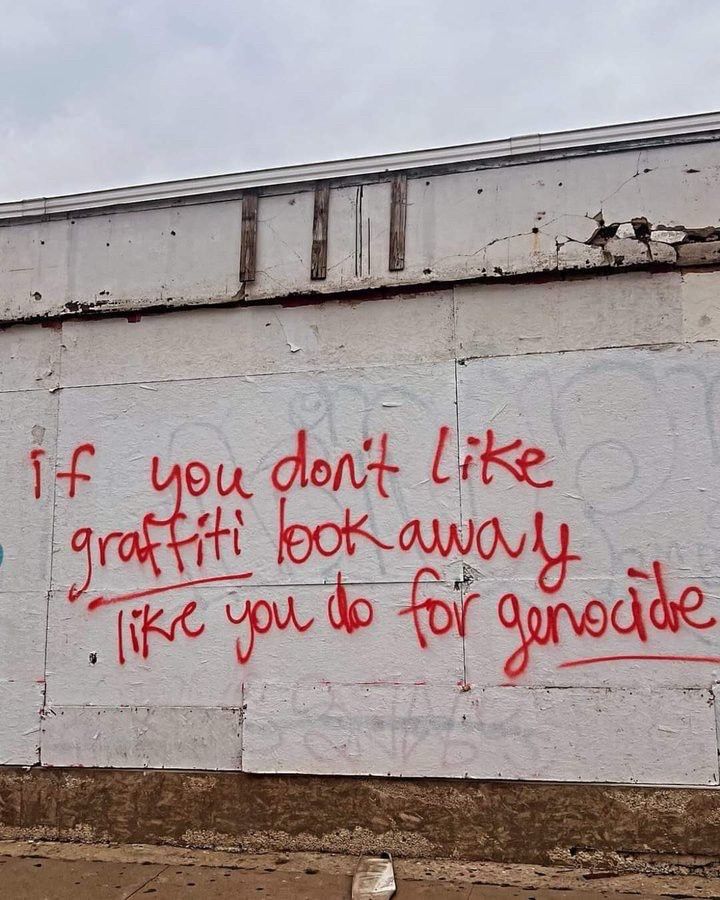
4. Oh yeah, the federal government will then seize all uninhabited mansions and third homes for immediate habitation by the homeless. Owners will be compensated at a fixed national emergency housing rate.

5. The defence department will be given a 3 month time frame in which to reduce their military budgets by 33% in the first year and 66% in the two years following.
6. All health insurance companies will be nationalized and be subject to the legislative restrictions and regulation of the newly formed National Health Service. Prescription drugs will be capped at the manufacturing and distribution price with no profits to be taken.
7. All student loans will be forgiven and Universities and other institutions of higher learning will have to provide new, non profit budgets so as to rationalize entry level fees for anyone seeing higher education.
8. The newly established National Department of the Arts will be granted a 60 Billion dollar a year budget to allocate to the promotion and teaching of the arts. It will also organize state and local arts festivals for the public, free of charge. All artists, dancers, performers, writers and other expressive artists will receive negotiated salaries to produce their work full time for the benefit of the general public.
9. The NDoA will be administered from the nation’s capital which will set up State Arts Centers in every state of the union as adjunct offices within the state’s main arts museums. Contracted artists will be hired and either present projects, individually or collaboratively or be assigned to individual or collaborative projects by the state SACs. The DoA will be able to be peitioned in the case of grievances and be empowered to over rule the decisions of the local SACs.
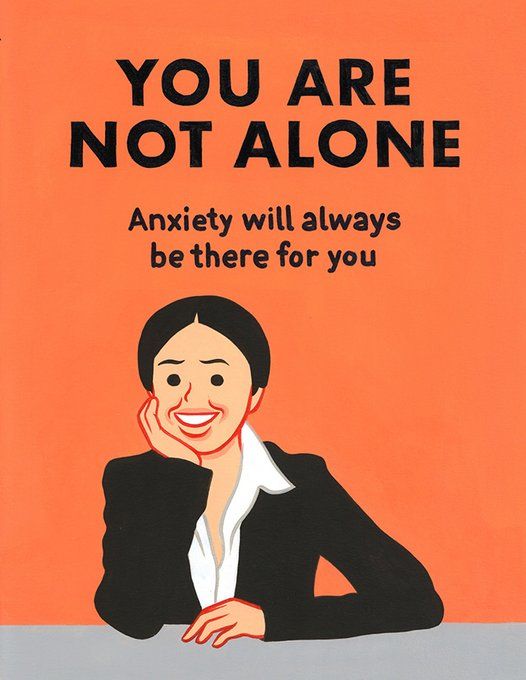
10-11. Suicide education will be mandatory in all secondary schools. Peer to peer counselling will also be taught and meditation will replace the pledge of allegience in every school classroom in the country, every morning.
12. The national curriculum will be revised by educators and lay teachers. No parents will be permitted to participate.
13-14. All existing treaties with tribal people’s will be reinstated and the entire nation will issue a ceremonial apology to past and present indigenous Americans who will now be referred to as the First Americans. First Americans and African Americans will be entitled to special citizenship benefits including free health care for life, free higher education and access to all federal records concerning individual’s origins including records of slave purchases going as far back as historically possible.
15. African Americans and First Americans will be paid restitution as a symbolic apology for the suffering they have endured at the hands of the US government.
16. The USA will be renamed The United Peoples of America.
17. And everyone will get hot cocoa before bed time on cold evenings. Hot days, they can get chocolate milk shakes.
18. It will become a federal offence to harm, torture or brutalize animals. Hunting for food. (NOT sport) will be regulated by a government licensing bureau which will issue limited numbers of animal licence tags for hunters to kill and eat unthreatened species. But not people.
19. The work week will be reduced to a mandatory 25 hour week cap and parents will be required to spend more time with under 18 children. After 18, they can tell them to go jump in the lake.
20. The minimum wage will be increased to $45 an hour for all manual labor and reduced to no more than $100 an hour for ALL professional service providers including doctors, lawyers, plastic surgeons. All workers will be required to sign up with a union as part of their employment contract, with any union and collective bargaining will become standard labor policy.
21. All currently residing immigrants will be granted 2 year residencies in which time they are to apply for employment or petition for special consideration. During their 2 year residency they will be granted all the basic rights assigned UPA citizens, albeit for a two year period which can then be renewed upon application. The commission of crimes will disqualify the entrant from seeking renewal.

22. All UPA citizens will be encouraged to learn at least Spanish and one other language through free community colleges, libraries and ‘language centers’. Spanish will become a elementary school requirement on the curriculum plus one other elective language.
23. But not Klingon.
24. Federal legislation will require that all women be paid exactly the same as their
male counterparts.

25. Paid maternity and paternity leaves will be extended up to 12 months and further upon application and reduction of salary by 80%
26. All workplaces that employ more than 6 full time employees wil be required to provide federally subsidized day care from the first hour to the last hour of work every day of the working week, in the same building as the parents are working.
27. This will all be funded by the diversion of the military budget to public works and programs dedicated to enhancing and maintaining the public good, as detailed in the Constitution.
28. The breaking of the any amendment of the Constitution will become not just an enforced federal crime but an imprisonable crime, without exception.
29. A new federal crime of Political Corruption will be introduced to make such corruption a prisonable offence. All prisons will be nationalized and reformed by new federal standards of non punitive rehabilitation and education.
30. All police in every city and state of the UPA will be fired.
31-32. All police will all be presented with new employment contracts and not have to miss a day or work or a paycheck. However, they will have to re-qualify for their positions and in some cases take time off to finish college. The new national police contracts will be enshrined in a national data base of all law enforcement officials including military, coast guard and park ranger officers.
Criterion for requalification will include not have be a member of or ever been associated with a White Supremacist or racist club, militia or organization. Those that have will not be rehired and be dismissed. Anyone who has ever done violence to a partner or a woman will be dismissed from the force they served in and from any other police or authoritative force in the entire country.
Any officer or person in authority who has been ever accused of using excessive force or coercion against a citizen will be disqualified from reinstatement.
33-34. Any office ever accused of corruption will be disqualified from serving however they will be able to appeal to a courtroom in which they can present evidence that the charges were false and present witnesses as to their character.
All law enforcement officials will be required to submit to a mandatory psychological screening every six months and be offered free counselling if they so desire it.
35. From day one, anyone can be whatever sex or ethnicity they want to be and be legally recognized as such. I myself an African American as I can trace my genetic ancestry back to Australopitecus in Southern Africa some 200,000 years ago. Also, nobody should have the time to care what gender you dientify with, what clothes you choose to wear or who you choose to love or sleep with.
We should all have more important things to do and worry about than messing in other people’s personal lives. Anyone who worries about sexual grooming or being brainwashed about gender in schools has obviously never tried to get a ten year old to clean up their bedrooms. Get real!
I promise to be a benevolent dictator and as soon as these reforms are instituted, I will be handing over my powers to a 303 member tribunal of unpaid representatives who will serve on a rotating basis of 2 year renewable terms, with no one member serving more than 3 consecutive terms. I will hand pick my tribunal initially and then each will nominate their successor for their position at the end of their term to be voted approval on by the other 332 members.
That is all, citizens of the newly established United Peoples of America.
Well, at least the bare bones of it.
The rest I’ll cover after dinner.
So vote for me, or appoint me (it doesn’t matter which anymore, really), your alternative dictator.
You know it makes sense.
And if it doesn’t make sense now, it will make a lot more than good sense after your mandatory rehabilitation.
After the revolution we shall all eat strawberries and cream!
But what if you don’t like strawberries with cream?
After the revolution we shall all eat strawberries and cream and like it! ~Actual Bolshevik Joke
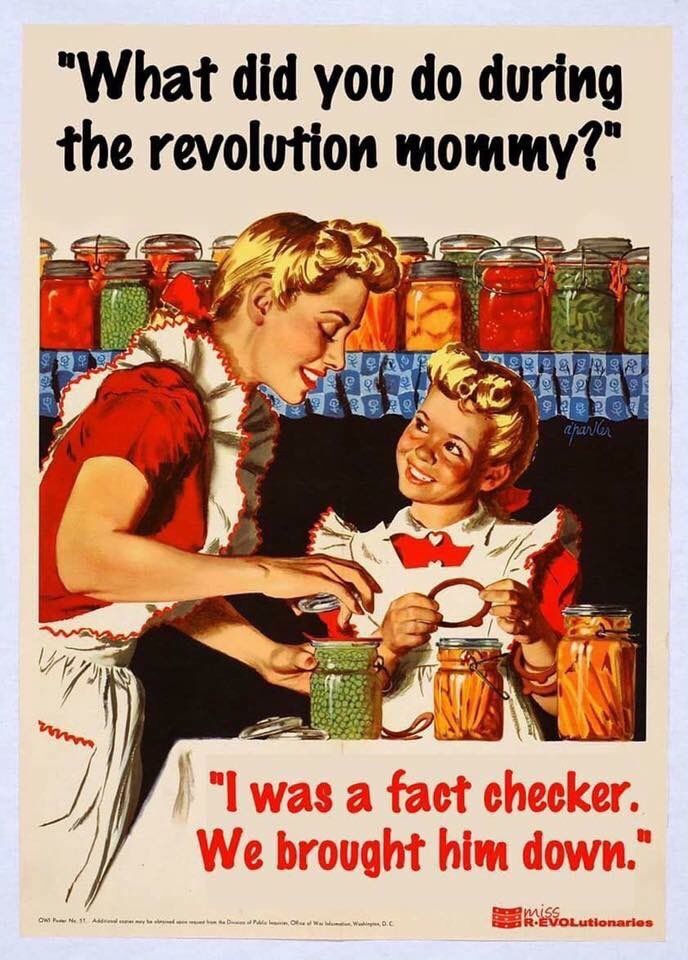

The Cultural Marxist Revolutionary Circus is Coming to YOUR Town. Resistance is Futile!

Just a quick update to tell you developing news in the world of my crusade to take over the world and change it into a world of poetry, art and aesthetic convictions. Once we have infiltrated the power structure, we will enact our cultural Marxist conspiracy by getting key political figures to at first become more concerned about the color of their hair, their wardrobe, office furishings and back ground decor during their press conferences. 
This represents phase one which we call
the iron fist of Fashio-nismo.
As key political leaders become obsessed with the arrangements of flowers in their vases, the subject matter and artists of their wall hangings. Shoe color and accessories will become crucial, time consuming judgement issues.
The next phase we called Confused Identity Syndrome is when we get our targets to actually begin to question whether they truly exist, or not. Based largely on the exemplary work of our previous agents Jean-Paul Sartre, Albert Camus and Andre Breton, CIS will start with leaving copies of the Japanese Poet-Monk-Warrior Hakuin Ekakaku’s essays and aphorisms lying around on coffee tables and near water coolers within the White House, Pentagon and Congressional offices
.
Boredom, while waiting for meetings to begin, will inevitably lead to bureaucrats and functionaries glance at the works of Hakuin and soon become immersed in a Zen literature that will render them confused and uncertain of even their own existence in reality. They will begin to doubt if anything they’ve ever known or believed to be true is in fact, real. Their sense of Self will be rendered void.
They will gasp for breath in the vacuum of their own Being!
Finally, left sprawling and crawling on carpeted floors, tears streaming down their faces, our targets will be rendered inoperative as they crawl on the floors laughing uncontrollably while muttering incoherently, ‘there is no self, there is no self, there can be no Self, there is no Self!”
This is when we may our move.
Our crack team of Ninja Seals, Jewelry Makers and Dolphins will strike from their underground locations at the very heart of the power structure. They will be armed with books and art prints, tarot decks and astrology charts, prepared to bring the new order of Poetry Workshops, Expressive Arts seminars and forced aesthetic training into play. The targets will be interrogated with impossibly vague questions for which there are no answers.
The questioning itself will be the answer.
Targets will be constrained and forced to watch reruns of Gilligan’s Island and My Mother the Car. William Burroughs reading his work in an endless, monotonous, tape loop will become our background training will sound, never ending day in day out.
Poetry will be read to them over and over and over again until they shriek, beg for mercy and break down. We will show no mercy. What does not kill us makes us strong.
When they are broken we will rebuild them into better beings. Mainly with water color, clay sculpture and improv classes. They will please for mercy (or death), at first but then thanks to us, once the Macrame and knitting regimes are introduced, they will become pacified.
We will force them to wear outlandish fashion trends, force the men to dress in drag and wear makeup (which we will teach them how to apply), and make the women dress in appropriate formal evening and day casual wear that does not accent their breasts or rear ends. Girls will be taught how to run not like a girl, but like a human being. Boys will be taught how to cry in public, or else!
Finally the once effective political operatives, business lobbyists, generals and high placed bureaucrats will be assigned new roles as poets, philosophers, tarot card readers, astrologers, day care workers and after school program directors.
Once the revolution is achieved, peace will return to our nation and to all nations. The earth will resume its spin and stars will fill the sky in splendor and celebration at the return of the human species to its natural sanity. 


May SHE (who is not perfect but tries very hard indeed and deserves a thank you card now and again), look down on us from her cosmic kitchen table and bless us with the good fortune to overcome our enemies.
I submit to you, my dear comrades and circus clowns, our plan.
Choose which side of the barricades you will be on.
Pack up your water color brushes and acrylics and tarot decks and prepare for Revolution!
btw, I’m shutting down my X (Twit) account because Elon Mollusk is a traitor to America, an Afrikaner racist and an enabler of fascism. But I don’t like what he looks like either and he fucked Amber when Johnny Depp was filming, so fuck him!
Find me: https://mastodon.social/invite/nhjRLzbQ
& @igorgoldkind.bsky.social
Momma’s Boy

Anaphora for Margarita Zuniga Chavaria.
I’m a momma’s boy
I’m a momma’s boy.
Always was.
Always am.
Always will be.
I’m a momma’s boy.
Momma gave me my name.
After a passionate afternoon.
Sun streaming through the blind
My daddy on top of her
Thrusting his bow to the strings
of Stravinsky’s joyous rights of Spring
I’m a momma’s boy
I’m a momma’s boy.
Always was.
Always am.
Always will be.
I’m My momma’s boy.
Sucking warm milk and egg from a plastic nippled bottle
Eating the peanut butter and strawberry jam sandwhichs
She made to watch over me at the school cafeteria
No sloppy Joe’s for me
I’m a momma’s boy.
I’m my momma’s boy.
Dinner on the table
Daddy gobbling his food
Momma serving her family
Loving her family with her food

I’m a momma’s boy
I’m a momma’s boy.
Always was.
Always am.
Always will be.
I’m a momma’s boy
Daddy punched his fist through the living room wall,
My momma plasters over
Daddy cries at night
While momma holds his head in her hands
Ignoring the bruises on her cheeks.
I’m a momma’s boy
I’m a momma’s boy.
Always was.
Always am.
Always will be.
I’m a momma’s boy
She slaps the faces of the mocking boys
My daddy tells me to ignore
As they kick me on the lawn
Green grass staining jeans like blood
I’m a momma’s boy
She’s my vengeful angel
Who stares policemen in their eyes
I’m My momma’s boy
When she stands behind me
Telling teachers
To love her boy
Telling authorities
To ignore her boy
Telling Doctors
To heal her boy.
Walking 5 miles through the hot sweating jungle to fetch ginger ale for her little boy
I’m a momma’s boy
I’m a momma’s boy.
Always was.
Always am.
Always will be.
I’m a momma’s boy
When I wake up in the hospital bed
When I see her tears stream down her face.
When I see my sister’s scared eyes.
When I know like a freight train that I made the biggest mistake of my young life.
I’m a momma’s boy
I’m a momma’s boy.
Always was.
Always am.
Always will be.

I’m a momma’s boy
When I catch a glimpse
Of her cleavage
Through the curtain of her night dress.
When I see her clutch her dress to her breasts
Ignoring my childish gaze
I’m a momma’s boy
I’m a momma’s boy.
Always was.
Always am.
Always will be.
I’m a momma’s boy
Even when she closes her studio door
And I beg her and beg her to come and play with me
She kisses me on the top of my head and smiles
Then closes her magic door, anyways.And I cry and I cry pounding my tiny fists against her magic door.
How can there be something other than me that she loves more ?
I’m a momma’s boy
I’m a momma’s boy.
Always was.
Always am.
Always will be.
I’m a momma’s boy
When daddy moves out
I stay with her
When she cries I hold her head
In my hands, on my shoulder while her shoulders shake
In the only love in the universe that will never leave me.
Even when momma’s mind leaves me.
Even when momma’s breath leaves her
Even when her eyes leave me
To close forever.
Momma never leaves me
She never, ever, never ever leaves me.
Momma was more Man than me or daddy will ever be,
I’m a momma’s boy
I’m a momma’s boy.
Always was.
Always am.
Always will be.

~ Thursday Morning, 5:00 am, October 2024
Igor Goldkind ©2024
The Problem With American Women: The Commodification of Sexuality in American Culture


Of course I realize that this title was going to attract your attention.
But if you’re expecting a misogynistic rant about my failures to attract American women for sex, love and money while listing an arbitrary itinerary of American female failings (heads not flat enough on top to rest a beer on; always changing their minds from what I want to what THEY want; too busy working, taking care of children, cleaning the house, running errands and cooking to dress up in lingerie and give me a poll dance [double entendre intended]), then you will be sadly disappointed.
What James Thurber endearingly referred to the war between the sexes is a significantly different battlefield than in his age of single income affluence when women couldn’t own property without the consent of their husband or father or older brother.
Economically, socially, politically, psychologically and most importantly, sexually
My age grants me the memory of what there was before what there is now.
My adolescence coincided with the 70s, the decade in which the formant of social and technological changes of the 50s and 60s came to fruition into permanence in the 70s.
Readily available contraception, nascent computational technologies and the emancipation of the African American all spread ripples that were waves of change, like an asteroid had struck and plunged into the center of the collective, American cultural pool. African Americans and their other than colored allies, strode the lunch counters,school buses and schools that had been violently forbidden them.
The British adoption of the African American sound and its subsequent export back to America via the Beatles, the Stones and other blues based white boy bands infiltarted the American psyche.
Elvis Presley no longer played n*g**r music that stirred the white youth into sexual frenzy, but now was seen as performing classic Americana, to the extent that Richard Nixon invited him to the Whitehouse and made Elvis a federal cop.
Through the 70s I saw women becoming bus drivers, cops, doctors, lawyers, business women. I saw black faces on my colored TV. And the emancipation kept rippling. Homosexuality became Gay.
Mexicans became strikers, fighting for a decent wage.
Asians became Kung Fu fighters, although their star had to be David Carradine not Bruce Lee. Movies became the subversion of the times. Altman, Coppola, Scorsese, Woody Allen, et al chronicled the narrative of change and their audiences applauded in self-recognition.
But in many ways the change in over half the human population (51%) was most significant of all. As women regained their economic power through wider employment and enterprise opportunity coupled with their control over their reproductive rights, the right not to get pregnant from having sex, our society as a whole began to shift it’s world view.
The feminine became mainstream. Women were taken more and more seriously by men, not just as objects of desire and potential child bearing mates, but as agents of agency and volition all their own.
The masculine was being checked.
This however was no bed of emancipation roses.
With women gaining more social power, many men felt that the power of their patriarchy was under threat. Many men embraced the reality of neater, gentler, more considerate and nurturing values infecting the mainstream of alpha male dominance. But many more did not. As women gained prominence as agents of their own agency, many men began to begrudge the loss of their sex toys.

If women were less and less beholden to men for their economic and social status, then why should they continue sleeping with them or bearing their children?
So with the positive social changes came the desire to maintain control over what was being lost. What was being lost was the masculine dominance and control over the feminine. In response, men began to alienate themselves from the very people that they loved and wanted to be close to. The perceived loss of power trumped (pun intended), the loss of intimacy.
This was manifested by the explosion of the porn industry in the mid to late 1970s.
If women no longer submitted their sexuality, their reproductive volitions to men, then men needed to extract what it was that they thought they desired in women: their image, their sexuality, their allure.
Americans are the most effective industrializers of human commodities since Nazi Germany created their factories of death.
Capitalism has always been about two things: the assignation of value to market demand and second, the exploitation of labour for the sake of “surplus value” i.e. money, Capital.
Capitalism means money, the value of which supersedes all other human values as the ultimate measure of humanity.
.
In true American Consumer Capitalist fashion, America created the porn industry on an industrial scale, hiring women in the thousands to perform to male ideals, to submit to masculine desires.
Men, having lost the intimacy of their gender dynamic could now afford to “buy” the fulfillment of their assumed entitlement, their deserved desires. Even before the internet, (which ultimately bankrupted the porn industry by making imagery, the sound and motion of performative sex free), porn pervaded every corner of male culture.
If you are a woman or don’t know this already, you need to understand that every man you have every met or will meet, including your partner, your father, your uncle and your sons have masturbated to pornography until climax.
This is a fact, not merely my opinion.
There are no men who don’t use porn as a tool of literal self relief.
The problem of course congeals because porn is not sex; or rather it is feigned sex, performative sex. The actors who are hired to expose themselves, to engage in the myriad of soft to hard core scenarios that are delivered as commodities, don’t necessarily enjoy what they are doing. They’re doing it for the money, not the pleasure.
Of course, as in any acting, some performers are more fully immersed in their roles than others but the fact remains that without money, there would be no porn.
Pornography is the ultimate commodification of human beings.
I write this not as a Puritan (who have their own sexual problems). I write this as a partaker (seldom and less and less), but nonetheless a user of pornography.
I have watched pornography with women who claim, at least to me, that they enjoy it. But mainly they say that they enjoy my enjoyment of it. The more turned on I am the more turned on she is: and that’s the crux of the dilema.
Pornography is NOT sexuality, it’s not sex; it’s fake sex.
When fake sex begins to replace real sex we begin to lose our discernment of humanity on an emotional, visceral level.
There is no way I can make love, have sex with a woman without completely surrendering to my empathy for who she is as a human being. I want to use her for my own gratification, yes; but I equally want her to use me for her gratification. I desire her to desire me. The more she desires me,, the more desire I feel for her.
In pornography, fake sex, all the desire is one way.
There’s the object, commodified, paid for and thus acquired and then there’s the recipient of the product’s desire, who has paid for its delivery.
There’s no collaboration, there’s no carnal dialogue, no exchange and no empathy.
There’s no sex, really.
It’s Important at this Juncture to Address the Metaphysics of Sex and Sexuality.
The sexual act, when engaged in, is one of the most powerful psychological/emotional and physical behaviors that human being experience. Speaking phenomenologically, as a participant (rather than an observer), the human body undergoes dramatic physiological and chemical variance when sexually aroused and when engaging (again, NOT observing; ENGAGING) in sex. 
Biochemically, the body’s hormones trigger a radical change to the body chemistry and psychological experience and behavior of the participants. When we are aroused it feels as if another force is acting through us. We lose our inhibitions and surrender to our senses. We are consumed by our desires for another’s body.
We become more in and connected to the moment of our gratification.
We become simultaneously emotionally charged and emotionally vulnerable. When we are with someone we trust, someone we have affection for, our emotions are hightened and stimulated into a state of adoration.
It is no coincidence that we culturally refer (across all cultures, by the way), to the sexual act as ‘Making Love’. Because it is precisely Love that we are experiencing during this hightened state of transcendental arousal.
Moreover, our senses become dilated, our focus dissipates into a primarily sensory experience. Our sense of time alters, even space appears to contract to the realm within reach of our senses.
As we reach orgasm we lose our normal sense of self and can experience the melding of one into two and then into one. Most of all, we experience pleasure and ultimately ecstasy.
On an experiential level, good sex is psychedelic, reminding the body and mind of our natural lack of separation from the place and time we are in and who we are with. The spiritual value of good sex is better explored by the Hindus and the concepts of Tantric sex which really amounts to treating sex as a meditative activity, an active Yoga of mind, Spirit and mind. 
Good sex is curative.
It relieves us of our daily suffering we have grown numb to. It relieves anxiety and fear, it grounds us in our own bodies and minds. But most of all, it connects us to another (or others) through a transcendence of our senses into a higher state of awareness.
Sex is the LSD anyone can take any time and still go to work the next day (or same afternoon).
Sex is so good for us, for everyone that of course, like LSD they had to make it illegal!
Or if not strictly illegal, controlled by the church, by the state and by the inhibitions of guilt and shame that were taught to us. Taught? Brainwashed, more exactly!
All of us have been abused into associating sex with shame.
Because nature wants us to fuck, urgently, imperatively; and nature must by every and any means, be controlled.
Good Sex is the key to the survival of our species. The primeval drive to procreate is so powerful that it even supersedes the mind’s normal self awareness of causality and consequence. We don’t give a fuck, we just want to fuck and that is where the social context steps in.
Such a strong, spiritual nay metaphysical, force that affects every aspect of the human’s being really can’t be controlled. One’s sex drive can be regulated, restrained even, but ultimately the force prevails or the subject becomes ill.
Sexuality has always threatened organized society precisely because everyone knows it can’t really be controlled.
The Bonono chimpanzees of Africa, our closest biological relatives on the planet spend most of their day fucking, when they’re not eating. Bononos fuck everyone, males fuck males, females fucks females, fathers fuck their daughter, sons fuck their mothers. A tribe of Bononos are a virtual ongoing orgy. Even when they’re not fucking, Bononos will engage is mass masturbation behavior especially when feeling anxious or fearful of predators.
This is what nature provides and what nature wants.
Now humans, on the other hand, have developed complex social labyrinths determining status and pedigree based mainly on language and power.
So the less Bonono and more human people became, the greater the need to control sexual behavior. Taboos evolved. Some pragmatic, such as the incest taboo; but others less so, like the pervading Victorian era myth that good women didn’t want to have sex.
With the advent of the so-called Sexual Revolution facilitated by the mass availability of the pill, as well as the misunderstanding of the anthropologist Margaret Mead’s study of the sexual habits of Polynesian people, sex once again began to assume its default position within human behavior. So ofcourse, the powers-that-be needed to exercise firmer control over what cannot ultimately be controlled.
The tragedy of the Human Comedy is that we always try to control what cannot be and should not be controlled.
Capitalism in its neurotic quest to commodify everything, conquered sex by commodifying it. By deconstructing the blessed act into it’s sensory components that could be sold piecemeal. Like a corporate takeover that strip mines a successful company for its assets. American Capitalism pornographies sexuality, made it an observer’s obsession rather than a participants spiritual celebration.
By disarming the subjective participant into an observer, our modern society is able to regulate our sexuality, determin fresh taboos and grant licence to what was previously prohibited as long as it can be sold for profit.
Thus homosexuality was allowed to be Gay.
Because Capitalism is an international conspiracy to dehumanize our species, the commodification of our sexuality is not contrained to American shores. It’s just much worse and more intense here.
American women especially, have been subjected to the most abusive dimension of this dehumanization. I speak from the personal experience of having lived in half a dozen mainly European cultures, having married an English woman and courted many a non American woman. (Well not MANY, but enough to draw an accurate comparison).
The American woman, having more recently reached a level of economic, ediucative and social emancipation (but still not paid the same amount for the same job as her male counterpart), determined to seize the reins of her own sexuality. And compared to the early 20th century, have seemingly succeeded in doing so.
Reproductive rights and women’s sexual health are currently political issues for the presidential election.
The great Sigmund Freud made his reputation and foundation of Psychoanalysis based on treating bourgeois (upper middle class) women for the affliction of “Hysteria”.
Hysteria was a common diagnosis in the early part of the 20th century and medical doctors all through Europe received the wives of welathy industrialists to cure them of this mass affliction. Brutal practices such as ECT and even lobotomies were applied to “cure” these poor, afflicted women.
The symptoms of Hysteria were depression, listlessness and non submissive behaviors. If a woman argued, then she might be suffering from Hysteria and rushed to an institution to be cured.
But one of the foremost symptoms of Hysteria as reported by the husbands of these unfortunate women of the time was seeking sexual attentions from their partners.
Yes!
Wanting to have sex with her husband, to surrender to that primal state of natural human being, was considered at one time a sure tell sign of hysteria and thus remedied by electric shock, ice water plunges and even lobotomy!
As I write this I shudder at the mere thought of the extremes of human cruelty and callous indifference.
Fortunately, Freud’s approach was to actually listen to his women patients and when he wasn’t prescribing them cocaine, he wrote down their words, their confessions into his famous case histories that eventually were the foundation of his “talking cure” and theories of child sexuality.
His daughter Anna Freud furthered her father’s paradigm-shifting approach and founded the field of Child Psychology, studying and reporting the effects of sexuality on our natures and happiness as adult individuals.
Freud famously posed the question “What do women want?” and ultimately through years of interviews and research, answered his own question.
What we all want, Good Sex!
So what’s the problem with American women?
They have been co-opted into the business of sex to the extent that they have begun to commodify their own sexuality and sell it to men. Not as prostitutes, although there are plenty of both male and female versions of this. No, they have begun to deconstruct their own sexualities as components to be observed, not loved, not actually fucked, but seen to be sexual..
They have harnessed the sexualities of alienated lonely, pathetic men into a market force that they can supply. Only Fans is just the latest example of this. American women have countered the tyranny of the patriarchal gaze by consciously manipulating it for their material gain. Emancipation has become self-slavery.
Sex is now a power struggle as to who dominates who, commercially, transactionally.
Instead of connectivity, of intimacy and shared sensualities, sex for the American woman has become transactional. ‘What do I get out of it?’, is as strong a calling as nature’s pull. Stronger in the form of manifesting neurotic behaviors such as manipulation, salesmanship, intentional confusion and chaotic communications.
Since sex is now a transaction, the only question becomes who gains the most?. Pleasure and fulfillment are secondary considerations. Intimacy, even Love, a fairy tale you grow out of to join the “real world”
Surely this is true of European women as well, I hear someone saying.
Yes, but not so much so in my experience.
English, French, Italian and Spanish women are no more promiscous than their American counterparts. However, in general European women know what they want, know who they want and don’t want it from and are much more comfortable in their sexuality as well as expressing it than American women are.
American women seem at times to be almost afraid of their own sexuality, afraid of losing control, of surrendering to lust. This is by no means healthy!
Whereas Europeans just don’t make that big a deal out of it. They enjoy sex because they know it’s good for them and if it doesn’t work out, c’est la vie; there’s always other experiences with better partners down the line.
In Europe sex is treated more like a fine meal.
Necessary for healthy living and worthy of enjoyment. Bad sex, like a bad meal is to be avoided and hopefully not repeated. But you don’t know until you try it, right? Just taste a little, you might like it.
Good sex, like a good meal is literally a divine experience, a jubilant celebration of the senses (btw, anything accompanied by the right wine is a ticket to paradise).
I have enjoyed meals in Paris bistros, Greek tavernas, Italian Tratorias thate can only be described in transcendetnal terms.
Likewise I have loved, made love to, had love with women of Europe that will adhere to my memory like a childhood. Respectful, tender loving moments that will never escape me.
Unfortunately, outside of the adolescent fumblings of highschool and early college, I have yet to experience the same level of encounter here in my native land. I attribute my failure to connect as an aspect of Capitalist culture. I cannot bridge the transactional nature of American sexuality; to me it all seems like a verision of pornography or even prostitution to me; an impression which has been reinforced most recently when a woman friend of mine suggested I hire a professional sex worker to share intimacy with.
I was genuinely shocked as if it had been a male friend, I could have understood his clumsy solution. This friend knew me and yet her choice of assistance was to suggest I buy the services of a sex. I am MUCH TOO CHEAP, to ever consider this as a practical option. Besides why wouldn’t the woman PAY ME, for my « services »?
My friend was a well intended American woman, a peer who seriously suggested that my path to sexual fulfillment could be purchased and transacted rather than pursued or danced for.
I can only conclude that the sexuality of the American woman has been seriously compromised by a cultural and societal appartus constructed by men but now reinforced by women. This apparatus generates sexual neurosis and ultimately dehumanizes and devalues the most powerful and wonderful experience people can give each other.
So What’s Your Solution, Sherlock?
Well, not cocaine.
Far be it for me to prescribe remedies for societal ills; even my arrogance has limits!
I would fall back on conversation. People need to start talking about sex a lot more, especially to the people we want to have sex with.
A lot more.
The social rituals are still too complex. When I first met my future wife, we had sex the same night we met because we were both attracted to each other and trusted each other enough to act on our desires. My beautiful daughter Olivia is a product of unbridled, unihibited sexuality as she was and continues to be the best thing in my life.
Men, being stupider than women, need to be less coy and less aggressive at the same time. We need to learn to ask for what we want without acting like petulant children when refused. We need to cultivate a taste for the sensual, not just the sex; everything surrounding and leading up to and following the act, not just the act itself. We need to learn how to be better lovers, not technically but emotionally.
Remember you men reading these words, the number one cause of female mortality in the US, more than disease, more than accidents is men. So just keep in mind that women have just cause to be wary of us.
And women: you lovely, lovely, horrific creatures must learn how to celebrate your sexuality, not as a tit for tat transaction, but as something for yourself. Something you enjoy in itself for it’s own sake, not for status and/or material gain. Women must learn to be joyful participants, equal partners in the sensual dance of lust and desire.
Learn how to clearly signal what you want from a man. Remember, men are stupider than you are, so make sure your signals are clear and obvious. SPELL IT OUT that you want to fuck when you want to. Protect yourself, of course, but when you trust a man and trust your own desires, surrender to the power of your libido.
You have nothing to lose but your inhibition and your neurosis.
Learn how to fuck with gusto, with tenderness, with celebration. Embrace the moment you can step out of your daily concerns and like wild Bonono chipanzees be animals for a night (or a day, or an afternoon or the entire weekend).
Celebrate the Body Electric!
And have no expectations. Sex happens in the moment not in the anxiety of the future nor the nostalgia of the past. Keep your emotional baggage to the size where it can fit comfortably in the overhead locker of you flight. Then buckle up and fly baby, fly!
I guarantee that you will be happier, healthier and free from the constraints and manipulations of commodification. You will become your better self by embracing what is most precious about being human.
Have a divine meal of an other, feast on the sensuous pleasures you can unfurl from within your own sacred being and discover within an other.
Don’t feel guilt or shame or poker-player gaming, feel joy, scream out loud, laugh, cry and be free.
For what it’s worth that’s my advice.
I leave you not with my words but that of Patti Smith’s:
“Love is an Angel Disguised as Lust”
thanks for reading and have A Great Flying Fuck!


Breathless: A Nostalgia for Oxygen


I’m a Poet, a Producer and lately a Publisher of aesthetic, sometimes eclectic content that speaks to the truth of living your life in today’s moment of existence. Beyond the Real World is the Actual World, which I prefer to inhabit. There really is only one world but social delusions, language and mathematics make us concoct a duality between the “Real” and the “Actual”. It’s just a trick of the light on our senses.
Oddly and recently, I’ve received a lot of flak and unarticulated hostility from people who just like the way things are. Either they get some advantage out of our current state of disconnect or they’ve become so habituated to futilely struggling, to being dehumanized that they prefer what they’re familiar with rather than facing the unknown of change.
Having a back ground in ‘technology’ I do know one universal truth about ‘systems’ and that is ‘systems’ can always be improved upon. In fact if ‘systems’ aren’t being perpetually improved, they fall by the way side and become impediments to useful change.
As is with technology, so it is true of the human community and its social structures. My father was an anthropologist and a sociologist at a time when the very word ‘society’ was being challenged as having no meaning.
My work is about returning meaning to the term “society”. to the set of complex interactions we consider collectively as the norm and worth compromising our individuality for. Society is us and what we make of it, every day of every interaction you have with another human, either well known or a stranger to you. How you treat others out of fear or openness is multiplied by millions and the sum total consists the society we are all part of and are all living in.

No man is an island and no woman can be exiled to one.
This is not about politics or ideology, this is about awareness and mindfulness as to how each of us is as part of a whole. There’s only one race, the human race and you are part of it. The only question is with what degree of awareness are you running in the human race?
Looking backwards, in hindsight, I now realize the the steady stream of anonymous antagonism and threats I’ve received over the past year all started when my album BREATHLESS – A nostalgia for Oxygen was released last year on Bandcamp by my spoken word producer Frédéric Iriarte and largely composed by my art brother Jair-Rohm Parker Wells.
I believe it is the most popular track from the album, I CAN’T BREATH, the last words of George Floyds recited as a spoken word, ‘found’ poem by a ‘white’ voice that triggered the attention that all to soon became menacing and I have had to take unprecedented steps to protect myself from.

It is a tremendous album and well worth the free fee by which you can listen to it. I assure you that you’ve never heard anything like it before although I’m sure you’ve heard Ornette Coleman, Laurie Anderson, Willian Burroughs, David Byrne and Anthony Braxton. If not, you should listen to them too as they are the inspirations for our album.
Thank you for your attention, it’s the most precious commodity in the universe: your attention.
Death Becomes You


Thought for the day:
An old middle school friend’s father died yesterday morning.
So he called.
We’d been talking about the passing of his parent for a few weeks now…a drawn out disease where death has grown comfortable in the waiting room is no slow cruise. It is interminable waiting. It is placing your life on hold while the greater forces of life and death intervene in your routine.
This is death up close and centered. He’s in the waiting room sifting through the magazines. Death never entered the room. He’s always been there. Patient with our ignorance of his presence. He doesn’t care if we ignore or write poems to him. He does what he does, which is to attend and to await to present the final gift, the present life brings each one of us,
Wrapped in delicate personal memories; tied with a silver bow of faint regret.
I listen to my friend.
I listen to the scene he recounts in my head of an over eager hospice nurse, of a fatal dose of morphine.
He doesn’t want to sue, he wants me to write something,
to tell people what happened to his father.
Perhaps there is a story there to be heard but there’s the story that my friend is ignoring. The passing, the death of his beloved father, his parent, the man who held and protected him when he was helpless. Who first guided his clumsy thinking, his testing of the world. The source of advice, the font of all wisdom:
Pater meus a patre. Vos estis qui de caelo cadit, sicut pluviam et omnem animam in maius et luminare minus idem. Qui dedit nobis sitim extinguere pluvia rationem in radicibus excoquendi in sole.
Those of us who have lost a parent, both parents feel the shadow of our mortality move closer to us. It is not a selfish observation but a crucial one.
A glimpse into the truth of our own existence: short, meagre and thin.
The death of a loved one is tragedy but a necessary one. It is necessary to be reminded of the life we are living and the world that we are actually in. To wake up from the amnesia of wishes we have been distracting ourselves with, is to literally smell-the-coffee.
It’s bitter, it’s scalding and it’s blunt metal real.
Urgently real.
There is no solace for loss, just the empty space left behind by the one who is no longer there. Which is where you are, holding that space in your mind for them as someday, your loved ones will hold a similar space for you.
Maybe that’s where heaven is: the space your loved ones hold for you in their minds long after your body has left with death, the waiting room.
COMING SOON! The Cure for Pandemania

Take a Deep Breath – Living With Uncertainty
A book of poetry and art, fables and philosophies aimed at the pandemic of crisis anxiety so many are facing.

In uncertain times people turn to uncertain means. This is a book of poetry and art, of fables and philosophies aimed at the pandemic of crisis anxiety so many of us are going through right now in our daily lives and in our inner spaces. We are all of us and each us in this together.
The sciences but also the arts do provide remedies. The ancient Egyptians wrote curative words on fragments of papyrus to feed their burnt ashes to the afflicted. Lacking morphine, Walt Whitman read verses to fallen soldiers on the battlefields of the first Civil War.
At their best, the right words are more than therapeutic, they can be curative. Take a Deep Breath emulates this ritual here in administering remedies for living in these times of crisis, in living with uncertainty.
Poetry Therapy: Towards an Uncommon Sense

A Brief History of Poetry Therapy
From the collection of poetry, philosophy and art TAKE A DEEP BREATH: Living With Uncertainty
by Igor Goldkind (Chameleon Publishing, 2021)
Poetry Therapy, or poetry which is used for healing and personal growth, can be traced back to primitive Man, who used religious rites in which shamans and witchdoctors chanted poetry for the well-being of the tribe or individual. It is documented that as far back as the fourth millennium B.C.E. in ancient Egypt, words were written on papyrus and then dissolved into a solution so that they could be physically ingested by the patient and take effect as quickly as possible.
The first poetry therapist of historic record was a Roman physician by the name of Soranus in the first century A.D., who prescribed tragedy for his manic patients and comedy for those who were depressed. It is not surprising that Apollo is the god of poetry as well as medicine, since medicine and the arts were historically entwined. For many centuries the link between poetry and medicine remained obscure. The poet John Milton wrote in 1671:
“Apt words have power to swage The tumours of a troubled mind And are as balm to festered wounds.” Pennsylvania Hospital, founded in 1751 by Benjamin Franklin and the first in the United States, employed many ancillary treatments for their mental patients, including reading, writing and the publishing of their work. Dr. Benjamin Rush, called the ‘Father of American Psychiatry’, introduced music and literature. The writing of poems was was encouraged, and the results were published in The Illuminator, their own newspaper.
On the battlefields of the American Civil War, Union field medic Walt Whitman would administer recitations of verse to fallen soldiers who were well beyond hope long before the use of morphine. He was later to pen the classic Leaves of Grass, the greatest celebration of humanity in the midst of its own despair. Pennsylvania Hospital employed this approach as early as the mid- 1700s.
In the early 1800s, Dr. Benjamin Rush also introduced poetry as a form of therapy to those being treated. In 1928, Eli Greifer, an inspired poet who was a lawyer and pharmacist by profession, began a campaign to show that a poem’s didactic message has healing power. He began offering poems to people as prescriptions, and eventually started “poem-therapy” groups at two hospitals with the support of psychiatrists Dr. Jack L. Leedy and Dr. Sam Spector. After Griefer’s death, Leedy and others continued to incorporate poetry into the therapeutic group process, eventually coming together to form the Association for Poetry Therapy (APT) in 1969.
Librarians also played a major role in the development of this therapeutic approach. Arleen Hynes was a hospital librarian who began reading stories and poems aloud, thus facilitating discussions on the material and its relevance to each individual in order to better reach out to those being treated and encourage healing. She eventually developed a training program for those interested in teaching poetry therapy.
In 1980, all the leaders in the field were invited to a meeting to formalize guidelines for training and certification. At that meeting, the National Association for Poetry Therapy (NAPT) was founded. As interest grew, books and articles were published to guide practitioners in the practice. Hynes and Mary Hynes-Berry co-authored the 1986 publication Bibliotherapy — The Interactive Process: A Handbook. More recently, Nicholas Mazza outlined a model for effective 188 poetry therapy, also discussing its clinical application, in Poetry Therapy: 189 Theory and Practice.
The Journal of Poetry Therapy, established in 1987 by the NAPT, remains the most comprehensive source of information on current theory, practice, and research. There is also a relationship between psychological healing and incantations, either repeated as a musical chant by the patient or recited by the attending medicine man. Of course, modern medicine and science consider the notion of magical incantations possessing healing or restorative powers as so much superstition.
But this, of course, begs the question that if recitations and incantations had no evidential result and no beneficial property then why would have nearly every human culture have adopted the method and repeated it for thousands of years? Surely if there was no value to vibrating the air with the sound of one’s breath, rising from the abdomen, pushed upwards by the lungs, shaped by the throat, mouth and tongue, with the added stimulation of associative meanings being understood cognitively by the patient’s mind, we would have given it and its sisters, singing and chanting, up aeons ago.
I am not advocating a supernatural or spiritual causation for the effectiveness of poetry as a healing agent, but rather the supra-natural mystical cause which is grounded first in human nature and cognition, and for which there maybe a myriad of imprecise explanations, none of which can fully explain why it works. Today, poetry therapy is practiced internationally by hundreds of professionals including poets, psychologists, psychiatrists, counselors, social workers, educators and librarians. The approach has been used successfully in a number of settings — schools, community centers, libraries, hospitals, rehabilitation centers, and correctional institutions, to name a few.
SO HOW DOES POETRY THERAPY WORK? 
• Poetry is beneficial to the process of introspection, and can be used as a vehicle for the expression of emotions that might otherwise be difficult to express
• Poetry promotes self-reflection and exploration, increasing selfawareness and helping individuals make sense of their world.
• Poetry helps individuals redefine their situation by opening up new ways of perceiving reality.
• Poetry helps therapists gain deeper insight into those they are treating.
In general, poetry therapists are free to choose from any poems they believe offer therapeutic value, but most tend to follow general guidelines. Some poems commonly used in therapy are: The Journey by Mary Oliver Talking to Grief by Denise Levertov The Armful by Robert Frost I Wandered Lonely as a Cloud by William Wordsworth Leaves of Grass by Walt Whitman Turtle Island by Gary Snyder as well as the poetry of Alan Watts, Allen Ginsberg and Antonin Artaud.
TECHNIQUES USED IN POETRY THERAPY
Different models of poetry therapy exist and are being refined all the time, but one the most popular is the model introduced by Nicholas Mazza. According to this model, poetry therapy involves three major components: Receptive/Prescriptive, Expressive/Creative, Symbolic/Ceremonial.
I. In the Receptive/Prescriptive component, the poet merely introduces the subject of how to focus on their own issue. The aim is to establish concentration and cognitive focus on the details, none which is revealed to the poet. Only when the poet feels confident that the subject is cognitively attuned to and non-verbally focused on the problem or issue of concern does he or she begins to ask suggestive questions as to how the subject feels, not thinks, about their issue. This provocation of tangible emotions usually comes in three distinct phases of emotional content. First is the predicament, when the subject becomes aware of the existence of the issue. This is a gateway phase, where anticipatory feelings are illicit and registered by the poet.
II. Then there is a further stage when anticipation of the issue has given way to the full experience of all the emotions, anxieties and fears related to the issue. This is usually overwhelming (or it wouldn’t be ‘an issue’ in the first place), and it is paramount that the poet guides the subject through distinct words to describe the layers of emotions experienced by the subject. The poet must ground the subject’s emotions in language. Language and the use of words is the key here, because emotions always come in complex clusters that make it difficult for both poet and subject to distinguish them and focus on the underlying causes.
“What kind of anger do you feel?”, “How would you describe your sadness?”, “How much shame do you feel? What would you compare it to?” This is a sophisticated method of word association, but rather than creating bridges between seemingly disparate words the goal is to drill down to the core emotions of the issue by refining the language, as led by the subject. Achieving exactitude of description is the task at hand. The poet makes careful notation of everything the subject says in regard to describing their emotions. It is important to keep them focused and not to succumb to intellectual distraction. Thoughts are illusions and often lies, whereas emotions are facts. Get the subject to correctly describe the facts of the matter. All meaning is metaphorical.
III. The final stage is waiting for an exit strategy. How do the feelings begin to recede? How does the issue move back into the background? What are the parting emotions? Is there anxiety about the leaving? Anticipation of an issue yet unresolved? Or is the issue impermeable, and subject to a rhythmic return? Again, the subject’s wording, their adjectives, adverbs and phrases are the material of the poem. At this point there is usually a short break to give time for the subject to recover from the emotional transitions and for the poet to briefly skim their notes and begin to focus on the flow of adjectives. It is preferable, if possible, to compose what amounts to a first draft, a flow of words which the poet can read back to the subject to confirm its accuracy. 
At this first reading stage it is possible to start interjecting logical bridges between the emotional descriptors. This is the creative factor 194 unleashed. The poet, assisted by the subject, creates coherent sequences 195 between the emotional states. The poet suggests and the subject confirms or vetoes the phraseology, one line at a time. Now we arrive at a second draft which is the property of the subject. It is their poem. The preference is that the subject now reads the poem aloud and takes ownership of its content. The subject can redraft the poem a third time, or many more times, claiming it as their own. The poet has merely provided poesy prompts, the poem is the creation of the subject.
The expressive/creative component involves the use of creative writing — poetry, letters, and journal entries — for the purpose of assessment and treatment. The process of writing can be both cathartic and empowering, often freeing blocked emotions or buried memories and giving voice to one’s concerns and strengths. Some people may doubt their ability to write creatively, but therapists can offer support by explaining they do not have to use rhyme or a particular structure. Poets can also provide stem poems from which to work, or introduce sense poems for those who struggle with imagery. A poet might also share a poem with their subject and then ask them to select a line that touched them in some way, and then use that line to start their own poem. In groups, poems may be written individually or collaboratively.
Group members are sometimes given a single word, topic, or sentence stem and asked to respond to it spontaneously. The contributions of group members are compiled to create a single poem which can then be used to stimulate group discussion. The symbolic/ceremonial component involves the use of metaphors, storytelling and rituals as tools for effecting change. Metaphors, which are essentially symbols, can help individuals to explain complex emotions and experiences in a concise yet profound manner. Rituals may be particularly effective to help those who have experienced a loss or ending, such as a divorce or death of a loved one, to address their feelings around that event. Writing and then burning a letter to someone who died suddenly, for example, may be a helpful step in the process of accepting and coping with grief.
HOW CAN POETRY THERAPY HELP?
 Poetry therapy has been used as part of the treatment approach for a number of concerns, including borderline personality, suicidal ideation, identity issues, perfectionism, and grief. Research shows the method is frequently a beneficial part of the treatment process. Several studies also support poetry therapy as one approach to the treatment of depression — it has been repeatedly shown to relieve depressive symptoms, improve self-esteem and self-understanding, and encourage the articulation of feelings. Researchers have also demonstrated poetry therapy’s ability to reduce anxiety and stress. Those experiencing post traumatic stress have also reported improved mental and emotional well-being as a result of poetry therapy. Some individuals who have survived trauma or abuse may have difficulty processing the experience cognitively and, as a result, suppress associated memories and emotions.
Through poetry therapy, many are able to integrate these feelings, reframe traumatic events, and develop a more positive outlook for the future. People experiencing addiction may find poetry therapy can help them explore their feelings regarding substance abuse, perceive drug use in a new light, and develop or strengthen coping skills. Poetry writing may also be a way for those with substance abuse issues to express their thoughts on treatment and behavioral change. Some studies have shown poetry therapy can be of benefit to people with schizophrenia, despite the linguistic and emotional deficits associated with the condition. Poetry writing may be a helpful method to describe mental experiences, and can allow therapists to better understand the thought processes of those they are treating.
Poetry therapy has also helped some individuals with schizophrenia to improve social functioning skills and foster more organized thought processes. It is important to note in many instances, especially in cases of moderate to severe mental health concerns, that poetry therapy is used in combination with another type of therapy and not as the sole approach to treatment.
TRAINING FOR POETRY THERAPISTS
Poetry therapists receive literary as well as clinical training to enable them to be able to select literature appropriate for the healing process. While there is no university program in poetry therapy, the International Federation for Biblio-Poetry Therapy (IFBPT), the independent credentialing body for the profession, has developed specific training requirements. Several studies support poetry therapy as one approach to the treatment of depression, as it has been repeatedly shown to relieve depressive symptoms, improve self-esteem and self-understanding, and encourage the expression of feelings.
However, the only qualitative measure of effective poetry therapy is in the poesy and the results. No accreditation can guarantee or substitute for the quality of cognitive empathy that is achieved during a successful session. Ultimately, there can be no real separation between the experience of the poet and the subject. This methodology provokes a meeting of mind in confrontation with universal truths. The poet is there merely to reassure the subject that there is no hocus-pocus, no supernatural or alternative reality, and that the cognitive associations that ring true are true in the present mind of the subject. The poet is on hand to reassure, to validate the responses of the subject to radical new perspectives into their own most intimate selves, and to relieve and dispel any accompanying trauma as grounded in the normalcy of human experience.202 203
CONCERNS AND LIMITATIONS OF POETRY THERAPY
In spite of its widespread appeal and broad range of applications, some concerns have been raised about the use of poetry therapy. 
Some critics have pointed out it is possible for people to analyze a poem on a purely intellectual level, without any emotional involvement. This type of intellectualization may be more likely when complex poems are used, as a person might spend so much time trying to decipher the meaning of the poem that they lose sight of their emotions and spontaneous reactions. Poems that are unoriginal or filled with clichés are unlikely to stimulate individuals on a deep emotional level, or challenge them to think in ways promoting growth.
Just always keep in mind that poetry therapy may have little or no value for those individuals who simply do not enjoy poetry.
References:
Chavis, G.G. (2011). Poetry and story therapy: The healing power of creative expression. Philadelphia, PA: Jessica Kingsley Publishers.
Gooding, L. F. (2008). Finding your inner voice through song: Reaching adolescents with techniques common to poetry therapy and music therapy. Journal of Poetry Therapy, 21(4), 219-229.
International Federation for Biblio/Poetry Therapy. (n.d.). Summary of training requirements. Retrieved from http://ifbpt.org/obtaining-a-credential/getting-trained
Mazza, N. (2003). Poetry therapy: Theory and practice. New York: Brunner-Routledge.
Olsen-McBride, L. (2009). Examining the influence of popular music and poetry therapy on the development of therapeutic factors in groups with at-risk adolescents (Doctoral dissertation).
Rossiter, C. (2004). Blessed and delighted: An interview with Arleen Hynes, poetry therapy pioneer. Journal of Poetry Therapy, 17(4), 215-222.
https://www.facebook.com/realpoetrytherapy
realpoetrytherapy@gmail.com
Riding Johnny’s Train

I’m on your train,
Riding through the lower melodies like
Cars crashing through steel
Leaving twisted steel in our wake.
It’s momentum builds mass.
The faster we think the thicker we get,
The heavier gravity’s pull.
Can we escape our bodies?
Why can’t we just take our bodies with us?
Eternity surly has enough room
Our bodies are vinyl cartwheels spinning after us,
The tails of burning meteors.
We burn atmospheres so fast and hot
We don’t even know we’ve arrived
Until after we’re long gone.
And now that we’ve arrived, we’re much too early
For supper.
For the show to begin.
Unless of course, it’s already ended and we missed it again.

Pandemic: The Cure for Panic in the Face of Uncertainty

What if we thought of this uncertainty
as the Jews consider our Sabbath—
As a sacred space in time?
Stop travelling
Stop buying and selling.
Stop working.
Give up for now,
trying to make the world
better than it is.
Instead, Sing. Dance. Pray.
Write songs and read poetry.
Paint the pictures from your eyes.
Walk amongst the leaves and the stars.
Touch only those to whom you have commited your life.
Sit down.
And when your mind and body have become still,
reach out with your heart.
Know that we are connected in ways that are both terrifying and beautiful.
No one can deny that now.
Do not reach out with your hands.
Reach out with your heart.
Reach out with your words.
Reach out with all the curled tendrils
of compassion that connect us invisibly,
where we cannot touch each other.
Promise this world your love
for better or for worse,
in sickness and in health,
For as long as we all shall live
In this time of mass uncertainty.
On Poverty and Consciousness

 A new acquaintance asked me why I endured relative poverty and uncertainty in California when I could easily take a tech copywriting or PR job and be living comfortably.
I answered, for which I’m sure someone reading this might wonder the same.
The answer is not simple and all has to do with my commitment to art and to the art of writing. It’s somewhat like a religious or spiritual calling; certainly as requisite of sacrifice and discipline as a monastery. (Read James Joyce’s Portrait of an Artist as a Young Man, if you need further elucidation on the subject). To become a great artist, which is what I believe I am becoming at this late stage of my life (or will at least die trying to be), takes total focus and constant dedication.
Not just to creation but to observation. Many of my best friends are not just poets and artists but scientists and mathematicians because they are processing their own observations through their own disciplines. When we talk and share words they read me and hear me, they comprehend how we’re all pursuing the same thing: the truth about life and the lives we are living.
Science and Art are really just two different vantage points in the same universe. During our Rennaisance there was no such separation between science, engineering and art. Just look at Da Vincis’s sketches if you don’t believe me. And this underlines the true failing of the formal education systems. No purely structured system can account for, much less process the unstructured data of experience.
But one truth I have learnt along this way is that we are all connected; both as a species and as sentient beings. Not just to those existing in the moment we all share but for all of us, from the very beginnings of awareness and rational self-consciousness. We are all brothers and sisters of the same mind, the same awareness that is awake and cognicent.
We all share the same biology of the mind.
I imagine that when extraterrestrial sentient life is contacted, it will be the poets and artists most open to the new who will not only best describe and communicate qualitative meanings with them but decipher their language(s) to communicate with them (more of “us”?), before the actual scientists can interpret their data and the military can rationalize the threat.
From the point of commonality; this sentience itself has a common shape or form in all of us throughout time and geography. It is our human nature.
My words try to sketch its outline.
Without needing to name a god, the Buddhists have been attempting to describe this commonality of all sentient beings, for thousands of years. In art and yes, in poetry too.
It’s what poetry is for: to describe the indescribable that is true for all of us, to all of us.
The known shining its single torch down a darkened corridor to the unknown.
The unknown (not the unknowable), has always been our mind’s final frontier.
We weren’t born yesterday. We did not just become aware of consciousness. The history of consciousness is the history of us, of the ‘you’ that is reading and comprehending these words.
You are no different in awareness than the Neanderthal who stumbled out of her cave and looked up at the stars in wonder. Every astronomer I have ever known harbors that exact same wonder. Our tools maybe bigger, faster and deadlier but our minds haven’t changed, just adapted to our tools. They’re physiologically still the same; and only enhanced by the evolution of language, both associative, symbolic and metaphoric.
This is where we alll connect. The commonality of our senses’ perception and their comprehension. This is what is meant by ‘realisation’. When we make the world real. When we realise that the truths we know from our senses connect us to the world as intimately as to each other.
These are the materials I use to create art.
But why not get a day job?
I will have to.
I have learned all I can stomach for now about the tangible reality of poverty. I have made some great and tragic friends outside my walls of privilege and comfort. But when I first detected my dwindling resources, I panicked. I borrowed gas money from friends, slept in beachside campsites for free and spent too many days in chic cafes nursing one cup of coffee and a refill just to write, just to connect with the non poverished. I. applied for every job I was qualified for and hustled my books even harder.
But this did not avert my panic and the fear, until it passed of its own. And you already knnow: nothing is ever as bad or as long as we first imagine it to be. That’s when I understood how many of my needs, weren’t needs at all and that I could live without the comforting requisites of a middle class existence, just fine. In some ways better.
Less consumption = less waste.There’s what I want and what I can have and if I diminish my wants, I can have have everything I want.
When you don’t have any money, you don’t spend any money and that initself is a good thing.
The last argument that pursuaded me of the virtue of experiencing this lifestyle is that if I really wanted to write for wider audience in a profound and meaningful way, that I might need to understand and empathize with the truth of our human condition across the entire economic spectrum, not just those who can afford to buy books
And the truth is that the vast majority of “us”do not live a middle class lifestyle and that the majority of “us” struggle every day to earn what is called a living and yet seldom ressembles it.
I have met so many, so many poor people living on the streets in one of the wealthiest cities in the wealthiest state in the union, in the wealthiest nation in the world.
None of us can afford to rest within our illusion of justice and freedom until poverty is no longer the default state of the human condition in America. Remember, poverty is a prison from which escape is difficult. But if we truly want to say that we live in the land of the free, then we must free our citizens from the prison of poverty.They are “us” as well. Not charitable”us”, not pitiful “us”, not lazy, drug taking, alcoholic “us”.
Just us.
I have talked in depth with enough of the so-called “homeless”. to recognize them for who they really are: The Poor. You know, those people Jesus was always talking about and Charles Dickens and Emile Zola wrote about? The idea that those without homes choose to live that way is a bigoted urban myth that need to be quashed.
Yes, may of the poor have real problems with alcohol, drugs and severe mental illness. But so does every other group and class of people I have ever known. The rich and the middle class aren’t exempt from alcohol, drugs and craziness; in fact they can afford more!
How then are we less connected as human beings?
Or is “humaness” only measured by level of income?
When I moved back to California to look after my mother, I was immediately struck by the avalanche of poverty that had engulfed my home town. As is every other foreign visitor to California, by the way. No tour of Balboa Park or visit to Sea World can eradicate the open poverty that everyone can see on the streets of San Diego. Which now more closely ressemble the streets of Port-au-Prince, Haiti or the extreme poverty that can be found in some places in Mexico, than any American city.
The first thing that went was the last vestage of regional or even national pride.
It is a crime against humanity for so rich a city as San Diego to maintain the level of homeless poverty that is evident to anyone who visits us. It is “our” fault. Because we are also connected to the impoverished and the socially weak.
You know, what Jesus was saying.
If I am to write the truth for those who want to read or hear the truth, then I ought to know what is lying outside the walls my middle class habits and worldview. What is it really like, not just for the impoverished but for the vast majority of Californians who also now live beyond the walls of middle class sensibilities, paycheck by paycheck?
Haunted by the memories of its long gone comforts.
What does it mean to be a human being living in America right now, in 2020. Aren’t we all supposed to have jertpacks by now?
What is the Truth of our American selves?
As Tony Morriosn said “The whole point of freedom is to free others”.
To my friends who have offered their support, I thank each one of you.
I will never forget your kindness and your humaness.

Yes I have a new book coming out in the fast approaching Spring.
It’s entitled TAKE A DEEP BREATH, A Book of Remedies and will feature much of the writing and accounts of experiences of truth that I have had living in California these last 5 years.
I hope that you will take a look.
San Diego Beats Poets

San Diego poets are wet gutter snipers
Taking pot shots at frivolous affluence and misspent eternities
From the street corners and back alleys of our prematurely grey dementias.
San Diego poets cast lines like fishing reels
Screaming curses at angels in heels while
Humming blues tunes to the damned, under our breaths.
San Diego poets spit surreal spiels into ribbons of unfurling images
That rain down like bright pathetic confetti
Against a blank horizon of an empty human empathy.
San Diego poets slide their wild, horse hair bows
Across taut, tied strings that sing
Above a psychedelic landscape of the gradually worsening human condition
You and me are not blind instruments of self-immolation.
We do not have to sit at the center of the fire to make it our home.
We can play our songs on sad air violins
And dance in the rain to drown our sorrows in the sea of greater uncertainty.
San Diego poets press our runny noses against
The pained windows of badly lit coffeeshops and crafty bookstores,
Hosting poetry readings for the over groomed;
Those educated only in the blind arrogance of their own judgements.
San Diego poets litter the streets with our menial typewriters
Preaching doomsday fire sales to tourists and
Liberation to those still hounded by carnivorous ambitions
In the current climate of fear that tries to pass itself off as survival.
San Diego poets never have enough money to buy you a drink
But will spare you a cig-regret –
–if you’re willing to spare the change you need you to make
–to make your tomorrow just a little bit better.
San Diego poets are all clowns, fools and charlatans
Keeping ourselves amused on the ragged streets of cold hangover dawnings
Whilst skipping around and dancing through the circus of mediocrity that pervades us.
San Diego poets migrate like flocks of hummingbirds
Seeking warmer climes and heartfelt compassions.
Blurring our wings the whole distance in getting there.
© Igor Goldkind, January 2020
What He Said She Said (v2)

She said Hii!
I said hello
She said let’s go for a drink.
I said sure.
She asked ‘what are you having’?
I said, whatever you want.
She said, thank you for thinking of me first.
I said your pleasure is all mine.

Later she sent me a text.
‘Have you ever tried phone sex’?
She said.
I said ‘Sure’.
She said how about now?
I said I need to go home.
She said she did too,
She sends me a naked picture of herself.
“Are you hard”? She asks
‘Sure’, I said.
“I want you to fuck me”, She said.
‘Shall I come over’? I say.
“No”, she said.
“Let’s meet and fuck tomorrow.
But for right now, just this moment
Can you just talk to me”?
‘Sure, ‘I said.
“Right now I just want you to tell me how you’d like to fuck me.
‘Do you want me to come over,’ I said again.
“No,” she said,
“Don’t come over
Just talk to me and make me cum.
I just love the sound of your voice”.
‘Sure’, I said. And she did.
‘Are we still getting together tomorrow by the fountain in the park’?
I asked, after a while.
‘Of course’, she said.
‘Great’, I said.
The next morning she sent me a message:
“I’m sorry but your age is something
I just can’t get past,
I’m not meeting you next to the fountain, I’m sorry.
You’re just too old and I shouldn’t have let things go so far
I just can’t get past that; your age”
‘Sure’, I said. ‘Neither can I without fatal results’.
She did not laugh
“I’m sorry, but that’s how I feel” She said.
‘That’s how you feel’, I said.
Later that morning I died my hair black
and left dark stains in the sink.
Poetry Therapy


Everyone wants to be free.
ven from the things that once gave us comfort.
We are like children who swap our blankets
For softer ground.
So why do you wait to be free
When the keys to your cage
Are hanging right outside your front door?
Reach through the bars with your hand
Stretch your fingers far and bend your will around the bars.
Your mind is your best friend, your best teacher, your best doctor,
Whether you believe it or not.
In spite of everything you’ve done to yourself,
Your mind really does care about you and often thinks of you, quite fondly.
Just let your mind mend itself
Heal yourself with a few choice words.
Your own words.
When you say:
The truth is not a cold tombstone
The truth is not a judgement
The truth is a flowering realisation inside your own living mind.
Pulling you outwards, & forwards, enraptured by Time.
When my breath and
My will are as one,
The universe swallows me
Whole.
The Stars


There are few shreds of dignity left
When you drown face down in your own back street gutter.
You can cry out as loud as an archangel’s horn, if you like.
It won’t do you any good, or any harm either.
You still can’t silence the wind or turn back the tide.
Fate is nothing personal.


It’s just the universe catching up and then passing you by.
Your dream of yourself evaporates,
Forming clouds that obscure the night’s sky.
The stars are leaving you now, blinking out one by one.
This is the last moment of your own
self-awareness.
Your last chance to figure out what the fuck’s been going on.
It’s very much like the moment you first awoke
Although your mother’s smile is nowhere to be found
All that remains of her unlimited love is your fast fading memory
The sound of her voice calling out to you to come home now,
In the far distance,
From where the stars have gone to mourn your passing.

So You Think You’re Going to Shoot Me?


So you think you’re going to Shoot Me?
I got news for you goyim,
You’ve been shooting at me for 900 years
From arrows to bullets to canon and you still haven’t hit me.
Because I am no other than you.
How can I replace you when I am you?
Open your eyes, you are shooting the gun at yourself.
You don’t get it.
This must be the trick of the devils’ twisted tongue, right?
The one that tries to deceive you
With the facts of truth
Poured from the grail of reason.
Go on, have a gulpful .
No, you can’t shoot me, you can’t even aim straight.
Your hatred is so predictably boring,
Always looking for someone else to blame
For your failure as a human being.
Anyone should do, but
Just like a bad movie cliche, you pick the Jew.
How can you shoot me,
When most of us are already dead?
Replaced, misplaced, driven from your nations’ borders.
Baked in your ovens.
Never even pausing
To wonder what the difference ever really was.
Now we have nations, guns and missiles and
Our own black-booted armies, to protect us from bad shots like you.
To protect us from everyone but ourselves.
Now we can sip from the same blood cup,
While hating then shooting,
All of the Other Jews.

Our Lady

You are our lady
And now your dress
Is flames.
The beauty of your sunken dome from a drone
Is a poem in itself.
Written by us and
Destroyed by chaos.
This is what we do that rivals the stature of the gods:
To astound ourselves and each other,
With the wonder of
Pure enduring creation.
The sacrifice we all make to our better selves
Who gave buildings wings and
Lay the foundation stones of
Our own perfecting.
Epiphany is not found in the act of worship
It is found in the insight gained by a gratitude for the world.
Exactly the way we built it.
Exactly the way we know it to be.
Whispered prayers are but poetry
That none other than you will listen to.
It is good to talk to yourself,
To sing in harmony with all the selves who are listening,
Wearing
Not false, but true masks
Revealing the kind of truth that can only be told with a lie.
The subtler architecture that carves heavens into the spaces on this earth.
Reconstructing what can be seen behind your faces,
Behind all the saints who guard you,
Behind the divine grace of your stature.
The sensuousness of your catastrophe is breathtaking.
© Igor Goldkind 2019
Confetti

There’s an emptiness at the heart of any space:
The air that escapes a room; an unanswered echo, a vacant womb.
There’s an emptiness in my heart
That reminds me
All of my ideas are empty.
Floating leaves from a fumbled folder.
Coloured streams falling from the sky.

This emptiness reminds me
How slight my desires really are
How gently they fall from the sky
A confetti of mercy and discarded emotions,
They are in the end,
Compared to nothing,
Merely the litter from an emptied mind.
Being is Becoming Still


Existence is a limitless screen of emptiness
Vibrant with jubilant celebrations.
And gratitude for the joy in rolling a boulder blissfully up this steep hill.
Tripping over our own thoughts like loosened cobblestones,
We no longer see the reality directly in front of us.
The truth is a truce we struck with certainty ages ago.
After losing the desperate struggle…
To cling to some kind of hope buried deep beneath the root of ourselves.
I am fearful of fully failing myself and yet
I love myself best when I am alone with eternity.
Suicide Note:


There are still a few options available to you still, apart from death.
Yours is a free choice.
Your death is yours.
No one is making you choose;
Death is after all, inevitable.
Not so much an option as fast forwarding to the point where there are no further options.
Living is dying anyway, so why speed up the process?
To stop the pain?
Many have endured much more
Still clinging to any delay of the inevitable.
Regardless, suicide doesn’t stop the pain it merely passes the suffering on to someone else.
Remember them?
They remember you.
They will remember you with pain.
You no longer feel of worth or of value anymore?
To whom, exactly? yourself?
Perhaps your judgement is drunk or wanting in discernment?
Perhaps your judgement is just wrong and awaits over-ruling by a higher judgement.
Who are you, really, to judge yourself so severely?
If you are worthless then your judgement is suspect and certainly not worth acting upon.
What if you went and saw a movie instead?
Or got drunk?
Or went to sleep?
Or made love until the dawn found another, better judgement to wake up to.
A truer, more temperate version of yourself.
One who can solve problems and get you out of the sweet jam you’re stuck in.
Do you long to die because life is absurd and void of meaning?
What took you so long to notice?
Does your slowness make you want to do things quicker?
Instead of death, you could seek laughter, which is really a form of dying;
A release from the known into the unknown by way of
Catching your breath inside its own rhythm.
Inwards and outwards.
What if you were about to hear a joke you’ve never heard before?
That made you laugh so hard that it woke you up into the wide-eyed, open world that embraces this one?
If you die now, you will miss hearing the eternal joke
That would awaken you to a world where you no longer wanted to die
Because you suddenly found yourself here,
Where you belong
Where you belonged all along,
Not living or dying
But blinking and breathing like this,
Like this, like this, like this…
©Igor Goldkind 2018
Nobody Talks to Me Anymore

Today was every other day.
My boss says,
“Hey, Joe, where you going with that staple gun in your hand?”
I draw a blank on my face and turn to face his.
“You don’t really know, do you, Joe?
You don’t know where you’re going.
You don’t really know who you are.
You don’t know much of anything anymore,
Do you now, Joe?”
Then he laughs at me
In front of everybody
He laughs and points at
What everybody but me can see.
And everybody laughs and they laugh and they laugh
But nobody talks to me anymore.
My boss don’t talk to me anymore.
My neighbors don’t talk to me anymore.
My doctor don’t talk to me anymore.
My mother don’t talk to me anymore.
My father don’t talk to me because
He’s long since gone
Flown far away from the words to this song.
I call my girlfriend up on the telephone
She says, “Joe, I’m not your girlfriend anymore”
And hangs up the phone.
Nobody talks to me anymore.
I call my doctor on the telephone
He says, “hello, is there anybody there”?
I say, “it’s me, Joe, doctor help me, nobody talks to me anymore!”
My doctor coughs and hangs up the phone.
Nobody talks to me anymore.
I call on my priest in the church down the road
I say “Hello, Father? my Father, is that really you?”
“Please tell me, dear Father, what should I do?”
My priest says “Joe, God don’t love you anymore”
And throws me out through God’s front door.
Even God don’t talk to me anymore.
So, I go down to a bar to have a little swim.
There’s a bar stool there where the X-mas tree should have been.
The bartender looks at me,
But he doesn’t say a word.
I hold up two fingers and point at the sky
So he pours me a double, ten-year-old rye.
Which I toss down and motion for another
While calling him “my brother”.
The bartender stares at my face.
As silent as the stones in his wall.
Nobody talks to me anymore.
On the street, the headlights blind my blinking eyes.
Strangers push past me, some I know, most I despise.
A cop car pulls up and flashes his bright light on me
The cop points his flashlight in my eyes so that I can’t see.
There’s nothing he or I need to say.
He won’t arrest me.
It just ain’t worth his time to talk to me anymore.
A ghost walks up and stares into my face.
He doesn’t say a word; just hangs there in space
Instead, he spins ribbons of colored lights
Inside my head.
There’s no knowing with ghosts no more
The dead don’t even talk to me anymore, either!
Suddenly I see an explosion of lights
There are trumpets and harps and angels in sight
A liquor store, a neon vision of light
Promises me spirits of salvation and delight
If I just step inside….
While next door, a gun store slowly cracks open its door . . .
I am my father and my mother’s son and
I’ve never before bought me a gun.
But nobody, nobody talks to me anymore.
©Igor Goldkind 2018
5 Submissions of My Latest Work

Life is Always Replaceable
Being is Becoming Still
Existence is a limitless screen of emptiness,
Insomniac Awareness
The Last Halo of Hope.
Pebbles
Meditations on My Self

This morning after sitting around and paying attention to nothing for a long while, the pedestrian thought that loitered and would not keep moving down the sidewalk became a realisation.
My self, which I know is an illusion, a trick of perception, occupies too much of my time. I know this fully with my mind even if my heart still clings to safe delusions.
The easiest thoughts to dismiss are the good ones, the comforting ones. The memories of past loves long gone. My mother’s unconditional love, my sister’s devoted, admiring love. The eulogies and compliments I’ve received over time from those who have borne the patience to get to know me just a little bit beyond our facades.
The pleasure I took in surprising my friends with my true nature is easily exiled, easily erased from the Book of Illusion resting on my dusty shelf. But today I awakened to the fact that so it is of the slings and arrows my memory flings at me. The regrets, the failures, the self-loathing for being so much less than I imagine myself to be.
I have welcomed hatred like a long lost friend. When I am targeted by malice or false accusations, I somewhere believe that I am well deserving of acrimony; that deep within me is a broken porcelain doll wearing a torn, stained dress.  I have sought refuge in self-hatred, in depression, in the idle futility of it all.
After all, cynicism is just another mask worn by our own complacency.
This morning, the light shone on me and I laughed at how insidious my vanity could be. To soak in self-loathing is as deluded as celebrating false glories. None of my past is real apart from what I insist on carrying into this present like a troublesome burden; weighing down my footsteps. Stalling the will to keep on moving, with the current, a little further down the road. Misery, the sister of Narcissus, loves company and the good liquor I buy her. But she’s too needy and crazy and no real friend of mind.
I may feel brave wrestling with my demons but they are in truth, made of the same scattered dust as my angels.
My Buddha tells me that enlightenment lies in the transcendence of seeming dualities. The trick of mind in seeing beyond black and white to the full spectrum and subtleties of the colors surrounding me. I can hold my inner sense of self, both magnanimous and self-damning, one in each hand and then bring those hands together, accepting both as one simultaneous truth.
I can know myself completely, even the parts left out.
Rumi says that beyond right and wrong, beyond good and evil, lies the desert of disillusionment.
At the end of the desert there is an oasis and in the middle of the oasis is a fountain and that fountain is the source of all Life.
Do me a favour, next time you feel down about yourself, undeserving of love, miserable and useless; do not blow the feelings away but rather hold them in one hand. Then with the other hand conjure the feelings of pride, of self-worth of glorious love. Hold each sense of yourself like a ball in each of your hands while substituting either/or with both/and. Now bring your hands together in gratitude for the whole of who you are.
Tell me how that feels.
Write it here, just beneath these words.
The Halo of a Hope


Hope is mortal, not eternal.
Though it may feel like eternity
Sitting in a chair by the window.
Gazing up and down the path that leads
Up the hill and down to the canyon on your doorstep.
Every morning, every evening, every day.
Waiting for an answer to your prayer for hope to be restored.
Resilience rewarded
Patience still burning brightly
Under your old photograph on the wall where you live now.
I’m not sad.
No, sadness is just passing rain to irrigate the eyes.
Instead, I’m a new planet
Ringed by the last halo of hope
The one wrapped tightly around my head.

Pebbles

Pebbles
Thoughts are merely pebbles
Being gently washed by a passing stream.
You are the stream.
Beach Pebbles
Thoughts are merely beach pebbles
Being gently rounded by passing waves.

Pebbles
You are the waves.
Sand Pebbles
Thoughts are merely pebbles in the sand.
Being gently worn by the passing wind.
You are the wind.
Words are pebbles.
Words are merely thoughts
Being gently read by a passing eye.
You are the eyes
That can read my thoughts.

Thoughts
Being is Becoming Still

Existence is a limitless screen of emptiness,
Jubilant celebration
And gratitude for the joyous exhaustion in the rolling of a boulder up a steep hill.
Tripping over our thoughts like loosened cobblestones,
The truth is a truce we struck with uncertainty ages ago.
After losing our desperate struggle…
To cling to some kind of hope buried deep at the root of our own awareness
I am fearful of fully failing myself.
But I love myself best when I am alone with eternity.
Secure and supported by this very clarity.

Being is Becoming Still

Existence is a limitless screen of emptiness,
Joyous celebration,
And gratitude for the joy in rolling a boulder blissfully up a steep hill
Tripping over our thoughts like loosened cobblestones
The truth is a truce we have struck with certainty.
After losing the desperate struggle…

To cling to some kind of hope buried at the root of ourselves
Does choice invalidate certainty?
By undermining the sense, the unravelling of our story.
I am fearful of fully failing myself.
Although I love myself best when I am alone with eternity,
 Secure and supported by this universal clarity.
Blue Notes

 Depression is merely an afterthought.
 We are slaves to our memories
Your Soul

So who is this Soul that you sing of?
This silent witness
Who counts the leaves off of trees
Instead of gathering them?
And raking them into a funerary pile,
Into the giant pile that your better self will set afire and then fall from,
Or jump into.
Up to your eyeballs,
Up to your own personal crown of thorns.
A Short History of Poetry Therapy: Practice and Perfection by Igor Goldkind

On FaceBook, a discussion where questions are posed and answered: https://www.facebook.com/realpoetrytherapy/
The healing effect of words has long been recognized. As far back as 4000 BCE, early Egyptians wrote words on papyrus, dissolve them in liquid, and gave them to those who were ill as a form of medicine. In more recent history, reading and expressive writing have been employed as supplementary treatments for those experiencing mental or emotional distress. Pennsylvania Hospital, the first hospital established in the United States, employed this approach as early as the mid-1700s. 
In the early 1800s, Dr. Benjamin Rush introduced poetry as a form of therapy to those being treated. In 1928, poet and pharmacist Eli Griefer began offering poems to people filling prescriptions and eventually started “poem-therapy” groups at two different hospitals with the support of psychiatrists Dr. Jack L. Leedy and Dr. Sam Spector. After Griefer’s death, Leedy and others continued to incorporate poetry into the therapeutic group process, eventually coming together to form the Association for Poetry Therapy (APT) in 1969.
Librarians also played a major role in the development of this approach to therapy. Arleen Hynes, one pioneer in this area, was a hospital librarian who began reading stories and poems aloud, facilitating discussions on the material and its relevance to each individual in order to better reach out to those being treated and encourage healing. In 1980, all leaders in the field were invited to a meeting to formalize guidelines for training and certification. At that meeting,  the National Association for Poetry Therapy (NAPT) was established.
As interest grew, several books and articles were written to guide practitioners in the practice of poetry therapy. Hynes and Mary Hynes-Berry co-authored the 1986 publication Bibliotherapy – The Interactive Process: A Handbook. More recently, Nicholas Mazza outlined a model for effective poetry therapy, also discussing its clinical application, in Poetry Therapy: Theory and Practice.
The Journal of Poetry Therapy, established in 1987 by the NAPT, remains the most comprehensive source of information on current theory, practice, and research.
There is also a relationship between psychological healing and incantations; either repeated as a musical chant by the patient or in fact recited by the attending medicine man. Modern medicine and science of course scoff at the notion of magical incantations having healing or restorative powers as so much superstition. But this, of course, begs the question that if recitations and incantations had no evidential resort and no beneficial property then why would every single human culture have adopted the method and repeated it for several thousand years? Surely if there was nothing to vibrating air with the sound of one’s breath as well as the added stimulation of associative meaning being read cognitively by the patient’s mind; we would have given it and its sisters, singing and chanting aeons ago.
I am  not advocating a supernatural or spiritual causation for the effectiveness of poetry as a healing agent but rather the supra-natural mystical cause which is grounded first in human nature and behavior for which can be a myriad of imprecise explanations; none of which explain why it works.
Today, poetry therapy is practised internationally by hundreds of professionals, including poets, psychologists, psychiatrists, counsellors, social workers, educators and librarians. The approach has been used successfully in a number of settings—schools, community centers, libraries, hospitals, rehabilitation centers, and correctional institutions, to name a few.
How Does Poetry Therapy Work?
As part of therapy, some people may wish to explore feelings and memories buried in the subconscious and identify how they may relate to current life circumstances. Poetry is beneficial to this process as it can often be used as a vehicle for the expression of emotions that might otherwise be difficult to express
•Promote self-reflection and exploration, increasing self-awareness and helping individuals make sense of their world
•Help individuals redefine their situation by opening up new ways of perceiving reality
•Help therapists gain deeper insight into those they are treating
• In general, poetry therapists are free to choose from any poems they believe offer therapeutic value, but most tend to follow general guidelines.
It is recommended selected poems be concise, address universal emotions or experiences, offer some degree of hope, and contain plain language. Some poems commonly used in therapy are: “The Journey” by Mary Oliver “Talking to Grief” by Denise Levertov “The Armful” by Robert Frost “I Wandered Lonely as a Cloud” by William Wordsworth “Leaves of Grass” by Walt Whitman “Turtle Island” by Gary Snyder The poetry of Alan Watt, Allen Ginsberg and others.
Although the selection of material is often by the therapist, those being treated might be asked to bring to therapy a poem or other form of literature they identify with, as this may also provide valuable insight into their feelings and emotions.
My Technique in Poetry Therapy
A few different models of poetry therapy exist, but the one I’ve had the most success with is a Four Phased Progression of Attention:
Recognition – Focus – Intention – Action
In the receptive/recognition phase, the poet therapist merely guides the subject to focus on their issue. The aim is to establish concentration and cognitive focus on the details of the issue which are not revealed to the poet/therapist. Only until the poet/therapist feels confident that the subject is cognitively attuned to and non verbally focussed on the problem or issue of concern that they begin to ask suggestive questions as to how the subject feels, not thinks about their subject.

This provocation of emotion usually comes in three distinct phases of emotional content:
I. First is the one of the predicament, then the subject first becomes aware of the existence of the issue. This is the gateway phase where anticipatory feelings are registered and ideally conveyed through the prompting of the poet/therapist.
II. Then there is the full throttle stage when anticipation of the issue has given way to full experience of all emotions related to the issue. This is usually overwhelming (or it wouldn’t be “an issue” in the first place), and it is tantamount that the poet/guide leads the subject through distinct words to describe the layers of emotions experienced by the subject. Language and the use of the words is the key here because emotions always come in clusters of complexity that make it difficult for both poet/therapist and subject to distinguish and focus on underlying and suppress emotions.
“What kind of anger do you feel?”
“How would you describe your sadness”
“How much shame do you feel?
“What would you compare it to?”


Are typical of the questions a poet therapist would ask the subject.
This is a sophisticated method of word association but rather than creating bridges between seemingly disparate words, the goal is to drill down to the core emotions about the issue by uncovering and refining the language the subject has chosen.
Achieving exactitude of description is the task at hand. The Poet/Therapist makes careful notation of everything the subject says towards describing their emotion. It is important to keep them focused and not to succumb to intellectual distraction. Thoughts are illusions, emotions are facts.
Getting the subject to correctly and precisely describe the emotional facts of the matter at hand is the objective
III. The final phase is the exit strategy.
How do the feelings commence to recede? How does the issue recede back into the background? What are the parting emotions? Is there anxiety about the leaving? The anticipation of an issue yet unresolved? Or is the issue impermeable and subject to a rhythmic return?
Again, the subject’s wording, their adjectives, adverbs and phrases are the material of the poem.
At this point, there is usually a short break to give time for the subject to recover from the emotional transitions and for the Poet/Therapist to briefly skim their notes and begin to focus on the flow of adjectives. It is preferable if possible, to compose what amounts to a first draft, a flow of words which the poet can read back to the subject to confirm the accuracy of the flow.
At this first reading stage, it is possible to start interjecting logical bridges between the emotional descriptors. This is the creative factor unleashed. The Poet must be led by the subject to link coherent sequences between the emotional states. The poet suggests and the subject confirms or vetoes the phraseology, one line at a time.
Now we arrive at a second draft which is the property of the subject. It is their poem for which it is crucial that the subject now read the poem aloud and take ownership of its content. The subject can redraft the poem a third time in making it their own. But the physicality of uttering the words they have chosen to express their emotional state is an act of ownership and closure.
The Poet/Therapist can either email the finished poem to the subject, hand them his/her notes or rewrite the poem into a legible form. In any case, it is important that the Poet/Therapist ascribes the authorship of the poem to the client. If the client is hesitant to put their name to the poem than something is lacking in the poem and must be redressed or indeed started over again.
The key to the entire exercise is freedom of expression, honesty and then refinement; exacting the poem.
Other Approaches and Other Models
The process of writing can be both cathartic and empowering, often freeing blocked emotions or buried memories and giving voice to one’s concerns and strengths. Some people may doubt their ability to write creatively, but therapists can offer to support by explaining they do not have to use rhyme or a particular structure. Therapists might also provide stem poems from which to work or introduce sense poems for those who struggle with imagery. A Poet/Therapist might also share a poem with the individual and then ask them to select a line that touched them in some way and then use that line to start their own poem.
In group therapy, poems may be written individually or collaboratively. Group members are sometimes given a single word, topic, or sentence stem and asked to respond to it spontaneously. The contributions of group members are compiled to create a single poem which can then be used to stimulate group discussion. In couples therapy, the couple may be asked to write a dyadic poem by contributing alternating lines.
The symbolic/ceremonial component involves the use of metaphors, storytelling, and rituals as tools for effecting change. Metaphors, which are essentially symbols, can help individuals to explain complex emotions and experiences in a concise yet profound manner. Rituals may be particularly effective to help those who have experienced a loss or ending, such as a divorce or death of a loved one, to address their feelings around that event. Writing and then burning a letter to someone who died suddenly, for example, may be a helpful step in the process of accepting and coping with grief.
How Can Poetry Therapy Help You?
Poetry therapy has been used as part of the treatment approach for a number of concerns, including borderline personality, suicidal ideation, identity issues, perfectionism, and grief. 
Research shows the method is frequently a beneficial part of the treatment process. Several studies also support poetry therapy as one approach to the treatment of depression, as it has been repeatedly shown to relieve depressive symptoms, improve self-esteem and self-understanding, and encourage the articulation of feelings. Researchers have also demonstrated poetry therapy’s ability to reduce anxiety and stress in people.
Those experiencing post-traumatic stress have also reported improved mental and emotional well-being as a result of poetry therapy. Some individuals who have survived trauma or abuse may have difficulty processing the experience cognitively and, as a result, suppress associated memories and emotions.
Through poetry therapy, many are able to integrate these feelings, reframe traumatic events, and develop a more positive outlook for the future. People experiencing addiction may find poetry therapy can help them explore their feelings regarding the substance abuse, perceive drug use in a new light, and develop or strengthen coping skills.
Poetry writing may also be a way for those with substance abuse issues to express their thoughts on treatment and behavior change. Some studies have shown poetry therapy can be of benefit to people with schizophrenia despite the linguistic and emotional deficits associated with the condition. 
Poetry writing may be a helpful method of describing mental experiences and can allow therapists to better understand the thought processes of those they are treating. Poetry therapy has also helped some individuals with schizophrenia to improve social functioning skills and foster more organized thought processes. It is important to note in many instances, especially in cases of moderate to severe mental health concerns, poetry therapy is used in combination with another type of therapy, not as the sole approach to treatment.
Training for Poetry Therapists Poetry therapists receive literary as well as clinical training to enable them to be able to select literature appropriate for the healing process. While there is no university program in poetry therapy, the International Federation for Biblio-Poetry Therapy (IFBPT), the independent credentialing body for the profession, has developed specific training requirements. Several studies support poetry therapy as one approach to the treatment of depression, as it has been repeatedly shown to relieve depressive symptoms, improve self-esteem and self-understanding, and encourage the expression of feelings.
Concerns and Limitations of Poetry Therapy
In spite of its widespread appeal and broad range of application, some concerns have been raised about the use of poetry therapy. Some critics have pointed out it is possible for people to analyze a poem on a purely intellectual level, without any emotional involvement. This type of intellectualization may be more likely when complex poems are used, as a person might spend so much time trying to decipher the meaning of the poem that they lose sight of their emotions and spontaneous reactions. Poems that are unoriginal or filled with clichés are unlikely to stimulate individuals on a deep emotional level or challenge them to think in ways that promote growth. Just always keep in mind that poetry therapy may have little or no value for those individuals who simply do not enjoy poetry.
The Advertising Pitch:

Words are the Most Powerful Magic There Is
Sometimes Your Mind Has a Will of Its Own
With PEGASUS POETRY THERAPY you can
Learn How to Read Your Own Mind!
Confusion bringing you down?
Is manic depression touching your soul?
You know what you want, but you just don’t know how to get There?
Poetry therapy is what you need when the medication, the yoga, the guided meditation, the crystals, the chakra alignment and other Somatic treatments just aren’t working.
Some things only work when you let them work:
• Restore Self-Confidence
• Achieve Closure from Painful Relationship Breakups & Lost Loved Ones
• Find a More Meaningful Direction to Your Life
• Get Unstuck and Out of Your Own Way
• Overcome Fears and Anxiety
• Control panic attacks
• Change Addictive Behavior Patterns, like OCD
• Re-Write bad Scripts
Recognition > Focus > Intention > Action
 There is no trick to listening to yourself and learning how choosing and rearranging your words can unlock darkened doors, de-clutter basements and clean out the attics of your life. Sometimes in merely one session.
Every Tuesday from 11:00 am until 6:30 pm at the
Inner Temple Inner Healing Center
at Eve’s Vegan Cafe 575 S. Coast Highway 101 Encinitas, CA
Contact: realpoetrytherapy@gmail.com or
Call 858 349 6429 for an appointment.
$50- 1/2 Hour $80 – 1 Hour 
EXAMPLES & ENDORSEMENTS
PEGASUS POETRY THERAPY has only recently launched its online version via FaceTime, Skype or Facebook video.  Just add <poetry therapy> to your Skype contacts and schedule a date. Payments accepted through PayPal or Facebook cash. Here are some examples of the poetry achieved through PEGASUS POETRY THERAPY:
I.
Narcissus in a Nutshell
I’ve lost the person locked within the situation
Like a nut dwells within its hard shell of fearful anger.
Escaping vulnerability
Hiding from the unknown.
Hard shells, hard feelings, hardness itself
The excitement of living days in the present
Belonging to the past
I will not let go of what I can recall but not relive
My belonging to that which encompasses myself
Another nut within its shell.
To belong is to exist
Without belonging there is Nothing and
I fear nothing most of all because I do not know it
And I fear what I do not know more than
I would remedy the pain of this loss with trustworthy tools
When two liquids are bonded as one
A single drop of poison poisons the whole glass
And betrayal is always poison no matter how little or how much
The glass of Narcissus’s tears is now empty
He has blinded himself rather than drink his own poison.
Instead he has left me to sip the bitter poison
Of fading better days.
Like a cat
Poised in stillness
Distracted by nothing
Ready to pounce
I will not surrender the pain.
I will not surrender the pain.
Because the pain is my memory of the happiness
We’ve now lost
A sweet nut within a bitter shell.
II.
The Martyr
Last night I saw you beatify a martyr
With a magical brush of gold belief.
You were serious and determined
But your brush strokes were light caresses
On a sky blue span of canvass
As you gently coaxed another image into being.
You remind me of my mother earth
Stern in her compassion
Willing to tolerate just so much from me
Before reining in my love
With her brushes.
And where you have drawn your line
‘Be careful’, you said to me on parting
But all the care in the world could not stop
My bulb from bursting
Rendering me blind in the speeding night
But still seeing with the golden light
Of the martyr you have shown me.
III.
Snake Heart
This sadness, this hopelessness
Will not be swatted away
Nor drowned by the busy work
Of the day to day.
It persists
Even when I am submerged in my bathtub.
The warm water rising from the bottom of my lungs.
Until I lose the will to breath
And the sadness becomes anger
Rising to the very top of my horns
Of my red-hot raging exhaustion.
How good to be angry!
I used to be afraid of snakes but no longer. I am hissing from the centre of my snake-heart
As you try and step over me.
Your eyes fail to see as you tread on my tail.
On my snake heart.
On my resolution without confrontation.
Without the owning of emotion
All that’s left for us is the hissing sound of machinery.
The Woman I Never Got to Love

I never really knew Hannah Northedge apart from our Facebook exchanges. I think it was she that first started commenting on my postings. I read her comments with bemusement and replied. Earnest, sincere, a bit young girlish but always quintessentially English. That refined contrivance that is both over-mannered and elegant at the same time. And yet we shared a sense of humour, which is an astonishment between an Englishwoman and an American.
 The real English, the softcenter at the core of the cracked, hard surface, English remind me no one more so than of the Japanese. Both island peoples deeply suspicious of foreign invaders and both sewn tightly within an intricately embroidered fabric of ritual, custom and politesse. Both peoples’ have a tea ceremony; one with boiled spring water and green leaf powder, the other with scones, clotted cream and jams.
I did not really know Hannah Northedge but I knew what she was like. A middle-class Midlands girl from Leicester with financially nurturing parents and an early gift, really, a passion for music. She must have dreamed as a young studious girl coming to the Big Smoke, to London to make it big as a chanteuse, as a professional jazz singer. Hannah’s own cover version of Dick Whittington sans cat. This would have been for her a dream logically constructed from sturdy childhood building blocks. Each carefully poised upon the other, pushing gradually upwards into a stern, determined tower of accomplishments.
Hannah would teach music on the side, to students both male and female to make ends meet in a rapidly escalating London that had long driven me from its financial borders. Living in London is not an easy thing. Not for any young man or woman and certainly not for a high strung, talented musician intent on being the best at what she could already do quite well.
The dedication of an artist is blind. Blind to all things that do not further the acts of creation. There is no greater earthly power than to suddenly plug one’s hours, days, years of practice into an unearthly circuit that seems connected to the very essence of one’s living. That sudden bursting propulsion ever further, and ever greater into what you had always wanted to attain and seemed now to be as effortless as a second nature. Suddenly you are living your higher nature!
Any artist, any writer, any dancer and any musician will tell you that this moment of being ‘experienced’ of being played upon what feels like the very aesthetic strings of life is at best indescribable. This is much more than being “in the zone” as an athlete or card player might venture. This is about the zone being in you and all around you; in every pore and molecule of your being until it would take more effort to stop the momentum than to just let yourself keep falling forwards. Pulled into the very gravity of creation.
The Red Shoes is a 1948 British drama film written, directed and produced by the team of Michael Powell and Emeric Pressburger and based on the story by Hans Christian Anderson about a pair of red shoes that are enchanted and when worn enchant the ballerina dancer into dancing more powerfully, more perfectly than she has ever danced before. Until tragically in the end, the dancer cannot stop the shoes from dancing her to her death. A glorious death brought to life by a magical realism. One that many would gloriously surrender to just to be swept up in that dance unto death.
Hannah had no red shoes to speak of, but her throat, her lungs, her diaphragm and her instinct for music were as enchanted as they were enchanting. They were her soul and at very least they enchanted me. I never really liked what she sang. Of course I never told her that; (why would I?) To me, perhaps unfairly, it reeked of nostalgia and a wonting for a long disappeared time. Her numbers were swing, pre-integrated jazz; the time of Louis Armstrong and grinning happy black men.
This music came to England via the American GIs that were stationed there, much to the resentment of the male British population and much to the erotic delight of the female one. Courting and bedding an English girl was the kind of overseas exotica an American GI could handle, easily overlooking the cultural gap by virtue of a common language; in fact magnetically attracted by that difference of language and nuance. We said elevator, they said lift; we asked how many blocks; they answered how many streets; what could be more enchanting? All to the sound of swinging jazz.
Hannah in many ways embodied that stalwart and determined optimism of the English. Being bombed by a vastly superior air force, on the very brink of invasion and yet somehow, against every indication to the contrary, still anticipating a break in the weather. Raining bombs on old London town. By the time American GIs were deployed to England the response of the British and I can hear Hannah saying exactly this, was “About bloody time! How nice of you to finally show up for the party!” “Better late than never, I suppose!”
This was the playful sarcasm of the English by which they kept themselves and each other bemused whilst coping with the obstacles at hand This has always been lost on my American comrades. We think it’s rather mocking, which of course it is; it’s merely a democratic mockery, a Monty Python hysteria at the awesome absurdity of Life and it all. When it comes to jokes and putdowns and the English, no one ever gets out alive, no less so than the English themselves. Self-effacement and self-mockery are not part of the American skill set and we would be fortunate in having few English Life Coach instructors to teach us a thing or two about the proper positioning and placement of the ego.
But I digress from my digression. Hannah was quintessentially English, youthfully so. Although merely some ten years younger than me, she somehow always made me feel that she was much younger than that. A child’s wide-eyed openness beaming from a woman’s face I believe that that child-like disposition, as well as her nervousness and constant stress, were hand in glove with her talent. She desperately needed to keep performing, to keep belting out those numbers because her life really did depend on it.

I was supposed to take Hannah out on a date this Spring in London. Not really a date, more like a shared joke. Both of us had frequently traded our frustrations with the opposite sex and one night I asked Hannah to describe her perfect London date to me. It involved dinner and dancing and her description was so lighthearted and life-affirming fun that I immediately promised her that as soon as I got to London I would take her out on that exact same date. I made that promise not to impress Hannah or woo her but because what she described sounded like such god damn fun that I wanted in on it! Hannah’s lust for life was infectious. Most important of all, Hannah laughed at all of my jokes, even the ones that didn’t merit laughter.
Alas, our date to laugh is not to be. The one woman in 3 years who had finally agreed to go out with me, drowned herself instead at the very prospect. Now that’s a good joke. One that Hannah would have heartily laughed at.
What can I say about suicide? And I understand as of late through a mutual friend that that is exactly what Hannah Northedge had planned in advance and self-executed (so to speak). Albert Camus said that the only question worth asking in life is whether or not to commit suicide; each and every morning when we awake we should ask ourselves that very same question. Because in all honesty, in asking ourselves that question we are never freer. Simply because if we do not choose to end it all; (and I assume that anyone reading this has chosen other than that), then what we have chosen is everything else instead. Because we could have chosen the only alternative to living there is, but we did not to.
I don’t know if Hannah asked herself that very question waking in her luxurious hotel room in Eastbourne, near Beach Head, Britain’s top suicide spot. She certainly had chosen a fine hotel in which to waylay her return to London. Perhaps I will pay that hotel a visit just to catch that final view of the sea we might have shared and toasted. I do not know what state of mind she was in when her parents sent her back home to London from her childhood home in Leicester. English parenting can be harshly stoic at times.
All I do really know for sure about suicide, and in fact, that is what Hannah committed herself to, is that it is an act of self-agency. You may not want to hear this, but please listen because it’s true. Take this bitter pill from one who knows: Suicide is a determined act to strike out against a world of pain and futile injustice. It is not weakness nor surrender that causes one to take one’s own life. It is instead the ultimate act of defiance, an act of unnatural courage and entails a great act of will against all instinct; against the very will to survive.
To look at the universe that gave birth to one’s own conscious mind and in full consciousness scream “No!” “No, this life was not worth the pain, the agony, the empty suffering of my existence!” “You can just take it, just have it all back”. “This was never going to be good enough and I’m putting an end to it here and now because it is my choice my freedom, my volition to do so!”
I do not know of Hannah’s pain apart from what she told me of it. I do know that her despair at romance and at its betrayal weighed heavy on her. If there is any lesson to be garnered from her passing, be it what I tell my own daughter time and time again: never ever believe that you will ever need a man to be happy as a woman.
It’s possible to have both, but by no means mandatory; nor is a man ever the sole path to happiness. We are at best unreliable and at worst, much worse than that.
Hannah did seem determinedly desperate in her remaining months; determined to be believed and desperate not to be dismissed as a hypochondriac lunatic. Which from my own experience with medical authorities. their tendency to treat the symptoms more urgently than the patient surely is lacking some benefit.
I know that there are those of us who in trying to find some salve for our confusion and our anger will demand answers from doctors, from landlords and mould experts; from Hannah Northedge’s own family, even. I know that righteous confusion first hand. To you, I say what my baby sister’s widow said to me at the time of her untimely passing: “nothing that we do, nothing that we try, no matter how hard is ever going to bring her back”.
We need all to find our peace with that.
Igor Goldkind © 2018
The Holocaust Survives

 No other single event in history had more of an impact on the 20th century and by consequence the present 21st, than the mass brutalisation of families or men, women and children in the camps and now in the Syrian refugee camps in Lebanon.
L’Chaim
Master of Puzzles
By Igor Goldkind
Ivan Moscovich has created more brain-teasers than most people have solved crosswords. Igor Goldkind set out to piece together his fascinating and harrowing life.
Ivan Moscovich has his life’s work wrapped up in a bundle of about 10,000 pages of A4 paper. On those pages there are some 5,000 separate puzzles, puzzles that range from the hang-on-let’s-look-OK-I-see to beyond the fiendish. Some are variations on themes, some utter one-offs. Some are to be made on paper or card, some are designs for tricky little – or big – devices. Moscovich calls them the S.A.M. archive – science, art and mathematics. The puzzles use the techniques of bafflement to teach, and they use beauty to bemuse.
Moscovich has been making puzzles since the 1960s. Now, at the age of 70, he’s looking to transform that life’s work into new formats. He and his colleagues have started up a new company to take the ideas on those 10,000 pages and put them to work in the digital arena. Moscovich is sure that there is room for them. Having looked with interest at hits like Seventh Guest, which friends told him were bringing new life to the world of puzzles, he was profoundly unimpressed. The puzzles were hard, sure (if you weren’t Moscovich, that is), but they were variations on a small number of underlying tricks, and they didn’t add up to more than just a set of puzzles. Moscovich thought that he – or people mining his archives in digital form – could do better.
“In digital media you can build overlapping linear trees, using the media to interrelate the concepts for the user. It’s important with any problem to see – at the same time – the different paths that can take you to a solution. Certainly this is the best way to explain scientific and mathematical concepts.” The collection of puzzles becomes a sort of puzzle itself: a maze, something to find one’s way through, something more than the sum of its parts.
Ivan is looking forward to trying to put all this into practice – not least because he enjoys the attitude of the people he’ll be working with. The way that games designers and programmers think fits into his world perfectly. He loves to be with people who are bored when they’re not trying something new, even impossible, when they’re not seeking a new solution. And he can make sense of himself by being part of a group; in fact, it has saved his life before now.
Ivan likes people who try to make sense of the pieces. That, in part, is how he got into puzzles – his delight in their ability to teach eager minds. As well as making puzzles for books and toys, he has used them as serious teaching tools for engineers – and pioneered the art of transforming the counterintuitive insights of puzzling into science museums with interactive displays. Putting together the pieces of an idea is much more important than putting together the pieces of a puzzle. The wonder is that by getting someone to do the latter, you can let them do the former.
A life in fragments
Moscovich’s own life is a bewildering array of puzzle fragments. Having met him on a CD-ROM project and learned some of his history, I started to wonder how to reassemble the fragments – and what they could be made into. One of the answers is a charming, brilliant septuagenarian. Another is 10,000 pages of A4. And a third might be a technological passage through the 20th century, from the industrialisation of death to the pursuit of pleasure. A journey that charts the territory of the 20th century’s technological revolutions and its human upheavals, from the Balkans to California, from museums to the Israeli defence industry, from the ruins of Austro-Hungary to the digital age, from railways to death camps.Moscovich’s parents were Hungarian, but he was born in Novi Sad, a small Serbian town. He still retains a central European accent that, to my ears (and probably to yours) sounds like the definitive voice of modern science and mathematics. “My father was a Hungarian who escaped from Hungary into Yugoslavia after the First World War. He was a painter by profession, but in order to make a living at that time he opened a photographic studio which became very successful. He named his studio Photo Ivan, after me.”
His description of an everyday childhood in Novi Sad paints a familiar
portrait of a middle-class craftsman’s family, complete with Yiddish grandmother and old-world family meals – and none of the hothouse intellectual atmosphere that produced Leo Szilard, John von Neumann, Kurt Gödel and other thinkers who left Budapest to dominate 19th-century thought. There was little to suggest Ivan’s strengths in science or mathematics – except, perhaps, a boyish infatuation with model aeroplane kits. He had, however, inherited from his father an inclination for drawing, and his father’s habit of tinkering with various gadgets – including an early air brush – to enhance his pictures was a constant delight to Ivan.
But when he reached technical high school, Ivan fell under the influence of a mathematics teacher given to explaining the precepts of science by means of science fiction. Ivan’s teacher opened up the world of mathematics by making problem solving fun. Ivan was entranced by the maths – and, later, showed that he had learned the method, too: rigorous scientific thinking through the lens of art and storytelling.
By then, though, the Hungarian fascists had invaded. They met with little resistance. And, soon afterwards, they took Ivan’s father from him. “Before they took him, he asked a Hungarian officer if he could say goodbye to my mother and in their final embrace he slipped this ring onto her finger.” Ivan holds up his hand and shows me an ornate gold band studded with eight small diamonds. It is the only surviving memento of Ivan’s youth; everything else was lost in the Holocaust. Ivan’s father joined 6,000 Jews and 4,000 Serbs executed en masse and thrown beneath the ice of the frozen Danube. All in one day.
Ivan continued his studies until the end of 1943, when the Hungarians “got cold feet” and the Germans invaded. “We really didn’t have any knowledge of what was happening in Poland in the ghettos or with the Nazis. We all hated the Hungarian fascists, but I still knew and liked Germans and, you know, communications were very different then; telephones didn’t work internationally. We were really disconnected from the rest of the world.”
When a Hungarian Jew escaped from Auschwitz and fled to Budapest to warn the Jewish community of the death camps, few believed him. So Ivan Moscovich was deported to Auschwitz at the age of 17.
“It meant stepping out of one world into another one. I was sent with my grandfather, my grandmother and my mother. When we arrived, my grandparents were immediately taken to the crematoria. My mother stayed in Auschwitz the whole time. After three or four weeks I was taken out of Auschwitz into one of the surrounding work camps. Young people were sent to work. I worked at laying rail lines.” The Nazi system was to provide rations for six months survival, after which the workers were supposed to starve to death in order to make room for new inmates. The meticulousness by which the operation was organised was not lost on Ivan. Nor would the memory escape him when two years later he found himself again working on train rails.
By that time he and, miraculously, his mother were back in Novi Sad. An acquaintance in the Ministry of Transport offered him a research position in the effort to repair Yugoslavia’s war-torn railway system. The post involved testing an enormous German machine that used high electrical wattage to weld rail lines together, a then untested invention. Mounted on a train carriage, Ivan travelled with the machine throughout Yugoslavia, in charge of the welding team. The machine was so successful that Ivan soon found himself elevated to a lofty position within Tito’s Ministry of Transport, accountable only to the deputy minister himself.
“There I was, a simple technician, at the age of 20, and I had all this power and no boss, really. People thought I was a top-shot communist because everybody had to do exactly what I wanted. The project became more and more successful, our production was way up and I was given orders to enlist more and more technicians for my team. One day I was called in by the deputy minister and was told that in order to create a 24-hour work shift, I was to take on 50 German prisoners of war.”
So, two years after surviving the German work camps, he was given control over a work team comprising high ranking German officers and regular soldiers, some Wehrmacht, some SS. He could have done anything he wanted. He could have shot them all and easily justified his actions to the authorities. He could have tortured them to death with gruelling work. He could have snapped his fingers and made them all disappear. But Ivan Moscovich had responsibilities, a quota to fill and a marvellous welding contraption to keep running.
“I had ten kilometres of rails to get out that week and it was a real dilemma whether to screw the Germans or to try to get the best output from them. I decided to increase their rations to get more work out of them, and sure enough they were grateful and worked even harder, which increased the output. I was very, very tough with them and I think they were scared of me. But I never revealed to them that I was a camp survivor. They worked for six months and then Tito released the prisoners.”
As it happens, Moscovich only worked on the German railways for six months. “I was lucky for the first six months. It was very important for survival in the camps to be with your people, your clan of friends and family;
it made life easier. You couldn’t get ill, because that meant execution, but curiously, if you could show a work-related injury, a visible wound, you could be seen by the SS and granted a day or two of hospital. One day I announced myself with a bad wound. While everyone else went on work detail I was left in the enormous courtyard with a broom to clean up, completely by myself. Suddenly the gate opened and a commandant’s car stormed into the courtyard and headed straight for me. The German officer jumped down from his car, grabbed me by the scruff of the neck, threw me onto the platform of the vehicle and drove off. I was kidnapped.” Later Ivan learned that there had been an escape from a neighbouring camp and the camp commandant had stolen Ivan to make up his tally of inmates. The mathematics of death had to add up.
“Up to this point all of my feelings had been one single feeling: an enormous outrage. Rage that somebody, anybody, another power, could take me away from my decisions, my everyday life, and put me in an environment where whatever happened was not under my control. I was young and maybe too strong an individualist, but it was rage that kept me alive.” In the new camp this life-sustaining anger was broken, until he discovered a distant
Hungarian cousin running the camp’s kitchens and being the “godfather” of the camp. Then he found some school friends of his father’s. For several weeks Ivan rebuilt his spirits and his body. Then the Russians pushed back the German line, and the SS made their lethal preparations for evacuating Auschwitz.
The problem to solve was – how to survive.
The Museum Man
In 1952 Ivan found a new clan – and became a leader. He set out for Israel to join his now remarried mother. On the boat to Haifa, Ivan was approached by Israeli officials interested in his skills and qualifications. The new state was hungry for skilled technicians. By the time Ivan reached Haifa he already had a position in the Ministry of Defence waiting for him. “In my group there were mainly these Yugoslav and Hungarian technicians without any training in science and mathematics. The language problem was enormous, and here was this group of technicians involved in scientific research without any basis in the field. I don’t know how it happened, but I was selected as someone who could teach the other members of the group some basic science.
My boss wanted me to instruct them outside of a formal classroom using demonstrations, models and visual means. That was really the start that put me in the direction of puzzle making.”Ivan found himself playing around with visualisations and experiments. He worked hard to come up with ways in which complex ideas could be explained visually, not so much to convey a deep academic knowledge of science and mathematics but to engender an intuitive grasp of the subjects and, most important of all, to instill the knack of problem solving needed to tackle more important scientific and technological puzzles.
By the end of the 1950s, Moscovich was creating puzzles almost all the time, and practice had revealed a rare gift for making puzzles that could be revisited, puzzles that retained a depth, an impact, even after they had been solved. “I tried to design models that were compact and effective, and in which the experiments could be repeated a number of times. This required completely original design conceptualisations. My boss, Ernst David Bergman, was the leading scientist in Israel at the time, and founder of the Weizmann Institute. He loved my work, and it was he who had the idea that some of those objects I had designed could be exhibited. That was the basis of the founding of a science museum.”
In 1959 Tel Aviv established its Museum of Science and Technology, the first of its kind in Israel. Ivan worked non-stop for two-and- a-half years converting five disused British barracks into a museum, begging and borrowing every available resource. The museum finally opened in 1964 with Ivan as its curator and director. It was the first science museum to emphasise hands-on, interactive exhibitions, and it quickly attracted international attention. His position as curator became a springboard from which to explore and express his interest in art, science and mathematics, and to do it all with the benefit of a growing international reputation.
In 1965 Frank Oppenheimer, brother of the more famous Robert, having heard of Ivan’s fantastic museum to science, visited Tel Aviv with Admiral Lewis Strauss, chairman of the US Atomic Energy Commission. The two became fast friends, sharing a childlike fascination for technology and science as well as knowledge of the darker side of machines and technology. This was four years before the opening of the Exploratorium in San Francisco, for which Oppenheimer imported many of Ivan’s installations. Some remain on exhibit to this day.
The puzzle of death
In 1944, while Oppenheimer was working with his brother on the problems of designing the first atomic bombs, Moscovich was on the death march to Bergen-Belsen. Here, too, the problem was how to survive. “Everybody said those who stayed, declaring themselves ill, would be shot. As it happens, they were liberated by the Russians two weeks later. And we walked barefoot and nearly naked through the worst winter of the century, westward to Bergen-Belsen.”At Bergen-Belsen, the last stop for the Final Solution, Ivan gave up all hope. He had been assigned to a work detail in the then still beautiful city of Hildesheim, near Hanover.
“Near where I worked was a statue of the mathematician Leibniz with beautiful writing on it.
And it was so strange that after so long in hell, I am seeing that statue. I felt I was being visited by a ghost, an image of the real world I had left behind. It was then, only then, that I remembered my previous life, my teachers, my studies of mathematics and all that. Up till then my memories had been blocked out. It’s impossible to imagine that every minute, every second of life in the camps, you were only thinking of survival; there was no room for any other thinking. But here was this beautiful statue of Leibniz that reminded me of the real world.”After two weeks working in Leibniz’s shadow, “I heard this strange noise … mmmmmmmmmmmm … that filled the air, and we suddenly realised that the sky was filled with planes. The next second everything was on fire. It was the Allied carpet bombing of Hildesheim. I saw German soldiers burning, running, and everything became chaos. I ran. After a while I stopped and looked back at the city, which was one big torch. I found myself alone in a giant field, a free man. But a free man in pyjamas, a free man with nowhere to go. I weighed 45 kilos.” Ivan turned around and started walking back to the depot. With his camp clothes, his inverted mohawk, there was nowhere to run. A German woman ran out of her house and thrust a chicken leg into his hand; she never said a word.
Recaptured, he was beaten and sent back to the camp. The dead lay in their thousands. “One barracks the Germans were using to fill with dead bodies, hundreds of dead bodies. After work one evening, I decided that instead of going back to our sleeping area that I would crawl to the top of this mountain of bodies and find myself a horizontal place. There was a slot at the top where I could see what was happening outside. I slept there for five, six days; I don’t have any notion about how much time passed. It was bliss to sleep; quiet and beautiful. It was no problem sleeping on a bed of a hundred dead bodies. Otherwise, I wouldn’t have lasted.
“One day I awoke from my sleep to complete silence. I looked through the slot to see the camp was completely deserted. Suddenly through the main entrance, which I had in my view, drove a single jeep with four English officers that stopped in the middle of the square. I rolled down the hill of bodies like a log and then I felt like I was running but I must have been moving very, very slowly. I was, I think, one of the very first to reach the jeep, and you know those guys were looking at us like they were seeing aliens for the very first time. Like first contact.” He collapsed into the arms of an English officer.
Moscovich was deathly ill. By the time that English officer caught up with him again, in a local hospital, he looked unlikely to survive. So the officer found a German doctor and frog-marched him to Ivan’s bedside. The Englishman pointed his revolver at the terrified doctor’s head and said, “If this patient dies here, you die here.”
Ivan Moscovich did not die – nor, at that point, did the German doctor. Ivan was transferred to a Red Cross hospital in a small town in Sweden – a town so boring, he now swears, that the local newspaper actually ran daily updates on Ivan’s weight gain for lack of more interesting scoops. Ivan describes his slow recovery as matter-of-factly as everything else.
“At a certain moment you know, the organism decided,
‘OK, we’re going to stay in this world. ”
Toy story
In the mid-1960s, as his fame grew in Israel and beyond, another new world opened for Ivan Moscovich. “I was working on a puzzle at my desk one day when one of the ushers came in and said a couple of tourists wanted to see me. I was busy and didn’t have the time. The usher came back and said they only want five minutes of your time and they wouldn’t give up. So I agreed to see them, Mr and Mrs Eliot Handler. I wasn’t very enthusiastic but we talked and then Mrs Handler said ‘I would like our chaps in California to see your puzzles; are you ready to come over to California?’
I didn’t take them very seriously. Two weeks later I received a call from a travel agent who had a ticket waiting for me to go to California to visit Mattel.”Eliot and Ruth Handler founded and owned Mattel Toys. Its twelve-storey building in Hawthorne was the centre of America’s toy industry. Sales of their Barbie dolls were colossal, but the Handlers were keen to expand the Mattel range beyond just dolls. When Ivan came out to visit them they immediately offered him a three-year open contract to create games and puzzles for US$25,000 (£16,000) a year. His “Brain Drain” puzzle game promptly sold a million copies worldwide. This success was repeated with a series of puzzles including “Play It Again Fun”, “Visual Brainstorms”, “The Brain Power Decathlon” and “The Hinge”. Soon toy and games manufacturers from Japan to Europe were clamouring for more and more puzzles from the master. Ivan Moscovich’s gift had found the most widespread of all its expressions.
Fitting together the pieces
Somehow, all these pieces add together to produce a remarkably creative man, and one with a unique vantage point. Ivan has seen countries destroyed, reconstructed and created afresh. He has faced the most utterly depersonalising totalitarianism ever attempted, and rejoiced in the individual quirkiness of children’s imaginations. At an age where most seek nothing new at all, he is embracing the digital world with the enthusiasm of a seven-year-old offered a Game Boy.
How does he see the end of the century?
“At present we are in a greater need for a fresh creative spirit than in any other period of human history. Less and less experience is being gained directly through activities. Sensations tend to reach us increasingly only after passing through layers of media filters. Children manipulate electronic gadgets and play with computers, which is all very well, but ultimately lacks perspicuity and full sensual enrichment.
I hope to create open-ended concepts that trigger chain reactions. Ideally, the player plays my game, solves the problems and is motivated to invent his or her own variations of rules, ultimately creating his or her own games, puzzles and aesthetic structures.”He has an avowed predilection for the physical. You can see it in his hands as he solves his puzzles. But Ivan sees unique possibilities in the digital world, possibilities that flow from the nature of his puzzles. “I’ve already published several books of my puzzles, but in a book you are restricted to the lin- ear progression of page after page, without much freedom. To interrelate the conceptual links between problems and solutions you need to be able to cross reference non-linearly, which is what a CD-ROM does.” After all, this is the point of his S.A.M. archive – that it combines science, art and mathematics as different paths to the same goal. The trajectories can be changed forever; the solutions will still provide the improvements of the self that Moscovich cares about.
“You know, humanity has been defined in various ways. For instance, as Homo habilis, skilful man; as Homo sapiens, wise man. I prefer Homo ludens, playful man, as the best definition of modern 20th-century human beings.” It was a hopeful definition that Johan Huizinga came up with in the late ’30s, at the time that young Ivan was learning science through science fiction – but the hope was serious and fearful. Huizinga was quite aware that playfulness had its dangerous side, and that the coming war would be a great, dark game; it was peace, he always said, that was the serious business.
These days, Ivan Moscovich is at peace. He lives a quiet life with his wife Anitta in west London. Within him, though, you can sense the machines within machines working, a vast inner factory of the abstract. It is hard to imagine him without them – even in the worst places the century’s history has to offer. I asked him whether his puzzling mind had helped him in Auschwitz, in Belsen; whether he had made his retreat into a private world of abstraction and pure thought.
“No. You know, it’s very difficult to explain, to understand. All of your time, all of your energy, all of your thinking is just focused on one thing: surviving.”
He did. And from the simple fact of survival he has pulled together the fragments of his life into a living inspiration for the rest of us – a puzzle worth thinking about.
Igor Goldkind writes science fiction, comics and essays, and lectures on technology and culture.


If you are concerned with the Syrian refugee crisis, the largest forced mass emigration of refugees since the Jews escaped Germany and Poland, there is something you can do. Inform your self through the Syrian American Medical Society who are running projects and providing medical supplies to the victims of the dictator Assad’s brutal and genocidal war against his own people.

Participate, if you live in southern California by attending a special exhibition of protest art at The Misfit Gallery in La Jolla California on April 21st.,
@ 565 Pearl Street. 92037 6-10 pm
I will be reading my published and unpublished work in the Spoken Word progamme as well as performing with The Third Act of Creation. But there’s much, much more. It’s a celebration of human rights and protest art to raise money for SAMS and also to join others in Mindful Resistance to the tyranny, bigotry and corruption in our present government and around the world. WE are THE PEOPLE, so instead of just complaining or getting depressed,
Let’s do something!


“We confuse the world as talked about, described, and measured with the world which actually is. We are sick with a fascination for the useful tools of names, of symbols, signs, conceptions, ideas and numbers.” ~ Alan Watts

The Numbers Game
In the end, it was the numbers that did us in.
They lined us up into military rows
And assigned us all numbers
One after one after one after one after one….
How many, nobody knows.
You see, it’s a numbers game
It’s all the same
You’re not your name
You’re your numbers.
Let me explain how it’s done,
And how this game can never be won.
See, there are good numbers and bad numbers
High numbers and sad numbers.
Sometimes high numbers are good and low numbers are bad
And sometimes low numbers are good and high numbers are sad.
It all depends on who is counting.
Not you or me
Not the numbers either.
They don’t know, they’re just numbers after all.
Although…
The numbers are counting on each other.
Just not you or me
Because we will never be free
Of Big Numbers and small numbers,
Negative numbers and imaginary numbers,
You see, it’s a numbers game.
It’s all the same
You’re not your name
You’re your numbers.
Let me explain
How it’s done.
And how this game can never be won.
 Prisoner number…
Credit Score number
GPA number
SAT Number
Zip code number
Blood pressure number
Heart rate number
DOB & TOD numbers
House number
Gas number
Phone number
Electricity number
Room number
Water number
Dog tags number
Social Security number
Bank account number
Table number
Sibling number
Temperature number
Flight number
License number
Vehicle registration number
Alcohol level number
Height, weight and age number
I hear you scream:
“I’m not a number, I’m a human being!!”
Sure you are,
Now take a number.
It’s for your own protection
There’s safety in numbers.
Numbers can answer all of your questions:
How far, how long, how deep, how high, how many,
How often?
Just not ‘how come’?
Anyone can count,
But you can’t count on anyone.
See, it’s a numbers game
That can’t be won
It’s a numbers game
It’s just how it’s done.
It’s all the same.
You’re not your name
You’re your numbers.
Now count to ten
And start all over again.
For Rob Thompson who asked me if Numbers occupy Space.
I Am A Paper Bag


I am a paper bag, I am.
I am only as good as what I can carry.
I am a paper bag, I am.
I’m not the smart one,
I’m not the successful one.
I’m not the tall one who always won and
Then died.
I am a paper bag.
I’m only as good as what I can carry.
I am a paper bag,
I’m not plastic or burlap, not I.
I am paper: rough, brown and thin
I’m not waterproof, you know.
And I can’t hold any liquids or gases within.
I only have the energy for stuff that really matters.
I’m a paper bag.
I’m only as good as what I can carry.
I am a paper bag.
Wrinkled and used and too often abused
Thrown on the floor.
Buried deep inside your drawers.
I am a paper bag.
I cannot ask you for anything more
I’m only as good as what I can carry.


©IgorGoldkind 2018
Nobody Talks to Me Anymore

Has been entered int the Realistic Poetry Contest and thus is no longer available on my blog as it is defined as non-exclusive or previous publication by the contest rules.
Who knows, I may even win.
Either way, it returns once the contest is over in February
Tune In.

A Drinking Song: The Ghosts of Christmas Past and Present

Last night was kind of my XXXmas eve, being a Saturday night, with no ghosts to placate until Monday morning. So I took my Victory out for a long ride, 46 miles down to Chula Vista to drop in on my drunken-angel-poet-brothers Alex Bosworth and Chris Vannoy. As I told them, I’ve never stopped in Chula Vista before, only passed through it; well on my way to crossing the border between Mexico and Madness.
Back in the Beatnik Days, when America was still a Great Shining Beacon of Golden Intentions and jail-breaking freedoms, going south of the border was a euphemism for leaving the straight rational world and exploring the psychedelic corridors and hallways of the unconscious mind, where the muses played poker to the sound of Gabriel’s saxophone under a streetlamp, playing for spare change, playing for the end of time. Kesey, Cassidy, Timothy Leary had all spent time south of the border, hiding from the authority.
But I wasn’t going all the way south or crossing any borders. Instead, like a Boddhisatva practising the discipline of worldly compassion, I was riding south on the great American highway stopping just short of going over the edge. Stopping long enough for the rest of my sentient species to hop on board and cross over with me. How long I gotta wait? The blur of the wind in my eyes transforms Inter-state 5 into a two-lane river of white headlight diamonds on one end heading towards but past me and on the other end, a torrent of glistening rubies speeding with me, flowing around me, carrying me forwards in one high speed direction.
I was carried on a slipstream of glistening rubies last night. Chilled legs wrapped around my angel in flight, carrying me aloft above all thought, beyond all hesitation, in that dangerous living moment when every half second of thought is solid and real with consequence; and any distraction is a trap door thumping open under the hangman’s rope.
That is the fury of mediation. That is my arrival in this moment that we all share. The calm at the center of chaos. Join me, dear reader, at the centre of chaos.
So I’m heading south armed with an unopened bottle of rye, the spirit of the season travels with me. Good whisky is about as spiritual as I get these days. It is my usual Xmas tradition to grab a bottle of good booze and head down to the Greyhound station, or the street corner, outside a homeless shelter or an alleyway or anywhere I can find and join a cluster of the disaffected, the homeless, the pointless, the ones left out of family portraits. Just to share a drink, a joke and the dregs of our mutual humanity.
But this year, not particularly in contrast, I’ve chosen the company of Deadbeat poets, failed self-construction workers, mental hospital misfits, suicide skippers and gravel-voiced prophets capable of predicting the present with uncanny accuracy. Cassandra’s children muttering under their condensed breaths, scratching their prophecies from the oracle down for the benefit of anyone who still remembers how to read; or how to listen. Tonight these are my brothers (and sisters), in arms. Raging against a sea of struggles, believing that by opposing them, we will end them and wrap our soiled blankets of peace around this cold, shivering world’s shoulders.

Dead Beat Poets
I make it to Main Street much too early and agree to meet my comrades in a bar called Sanctum. I have no currency apart from my still untried bottle of rye so I stand outside on the pavement near but not too near two young women smoking butts and laughing. ‘Merry Xmas’, I venture.
‘Merry fucking Xmas to you too’, is their reply. So I listen. A skill I am still mastering. The raven-haired beauty of the pair is recounting her love life to her friend. Telling her how she had met her intended’s eyes at work, a burning penetration in time and how happy she was that at least she knew, that she knew that she knew that there was an unstated passion, thrilling at the unstated, as yet unenacted attraction between them.
The bittersweet anticipation of passions yearned for but still yet to come.
I wanted to tell the dark-haired young woman how lucky she was to be free to express such yearning to another woman. Jealously, I wanted her to pity my poor lame masculinity and the political mindfield I had to traverse to even come close to sharing such a pure moment of true emotion and affection. But I didn’t. Who wants to hear another pitiful man’s story anyways? This was the year of raised female voices. Voices raised in anger, in righteous retribution for all the wrongs accrued., in demand of recognition. Voices of freedom insisting on justice, insisting on equal treatment without unwanted trespass.
Poor me, poor me, pour me another drink. . . .
So instead I pulled out my weapon of virtue, my great equalizer of man and woman, my bottle of rye from my bag and asked if ‘You ladies would like a drink”. “Hell yes”. And for a brief instant, I felt just like St. Peter patrolling the earth and giving comfort to lost souls.
This murdered the time until my wordly brothers finally arrived. We poured from the bottle into bright red dixie cups, swigging them down in the parking lot before entering the warmth of Sanctum Ale House to talk poetry, performance, and what we were going to do with the rest of our lives. This was beginning to feel a lot like a rendezvous of fallen angels pausing for a drink and brief reflection before hitting Hell.

Beatnik Approved!
There was no reason to take a picture or a selfie or even take note of the time. We drank, we talked, we tried to make each other laugh and we indulged in our common humanity; a focus on what we shared more than what we didn’t.
My mind spun back in time to the many drinking conversations I had with my late great friend, the writer David Halliwell. The only man I had ever met who had got drunk with Sam Beckett. So David told this story of buying a bottle of good Irish whisky and taking the train to London, from Yorkshire. Easily a 4-hour journey. On the trip, David got nervous opened the bottle and drank half the contents on the way down arriving completely cut up the King’s Road party where San Beckett would be. He did find Beckett apparently and immediately sat down to finish the rest of the bottle he’d brought. David got so drunk he couldn’t remember a word that Sam Beckett had said to him.
Last night, I told Chris and Alex about the year that David called me up to join him for a Xmas drink and The Bull Tavern in the little North East Oxfordshire village of Charlbury, whose village council insisted on calling it a town because it had 4 pubs, a pharmacy and a post office.

I walked down the unpaved bumpy road to the tavern, past the Egyptian cottage with the papyrus reeds of Isis, the Goddess, not the terrorists. I reached The Bull pub and Inn, Opened the heavy oak door and walked into a movie. The pub was nearly empty save for the bar that featured David on his bar stool holding court with his mates. Only his mates were images burnt on my retinas since childhood: John Hurt, Ben Kingsley, David Warner, Freddie Jones and his son, then unknown now better known than him, Toby Jones. I remember blinking in disbelief. I might as well have walked in on Lewis Carrol, Tolkien and CS Lewis downing pints all who had also frequented this pub some hundred years previously.
I remember David smiling, laughing his phlegmatic cough and motioning me over to introduce me to these faces from the screen. “This is Igor, he’s another writer; he’s a Yank but he’s alright”. I was just another writer in the company of actors, everyday workers taking a break from toiling in the star-maker factories behind the popular film. I was handed a bulbous goblet of glowing ruby wine and the rest is hard to remember. But I do recall making them laugh and David Warner towering over me and reminiscing about his one appearance in a two-part Star Trek opposite Patrick Stewart that had earned him enough to comfortably return to the stage for 7 continuous years. Apart from young Toby, these were board strutting actors; indifferent and virtually contemptuous of their movie work save for the vast sums Hollywood paid them for peddling their trade of packaged emotions.
The next year most of them would be dead, David Halliwell included. I would empty his cottage with a Scottish actor of his while his Yorkshire sister wept inconsolably on his stairwell. In England, people let you weep and leave you to the dignity of your grief out of respect for the exceptional display of emotion. If you openly weep in England its because the pain is so hard that you really can’t hold it in.
Back in the Sanctuum, I explained to my companions how David had taught me the true meaning and value of the literary arts, which for David included actors who tell stories with their faces. Storytelling’s place in the human universe, keeping the stars locked in their firmament and the cosmic spheres in perfectly balanced and meaningful rotation. David Halliwell wasn’t famous. He died a virtual pauper, alone, estranged from his sister, a Yorkshire man with an RSC accent from wanting to be an actor, who wrote every day of his life before heading down to the pub to argue with me.
But he was a great success, albeit not by any kind of American Calvinist standard. Rather he succeeded in staying true to his art. He never sold out to better-paid mediocrity. He stayed true to his art, to himself and he survived with the respect and admiration of his fellow artists. When he died, I wrote and read this eulogy at his memorial, after Harold Pinter came up from Hampstead to say a few words about his departed friend. As did Stephen Frears and Scott Hampton (author of Les Liaisons Dangereuses).
I read this poem to David to my friends Alex Bosworth and Chris Vannoylast night. And in my mind, I went hunting and visiting my own xmas ghosts to remind me of the true joys of this season.

Daedalus Afraid to Fly
David, you bastard, you’ve left me
Understanding here alone,
With only these words falling out of my hands
When it is yours I want to hear again.
Words of your mastery, not mine.
So what was all the swearing about then, David?
What were all those Northern fumes really burning from?
I told you the songs of Yorkshire would never play in LA
Or London for that matter):
Two cities equidistant from your Yorkshire mother.
Tell me, David, why didn’t you just sell out?
You could have bought yourself a much better pint of beer
With all that money for old knotted ropes and
Still, have coughed up the phlegm to laugh at us all.
Is death your idea of some kind of joke?
Did you finally track down the film rights to Malcolm, David
And cash them in?
Are you really, secretly living in Barbados,
Making beautiful women miserable?
To think of all this wasted sorrow and
Empty glasses of beer.
You did say that you always wanted to visit other places.
But Daedalus, you were afraid to fly.
If you had been born upside down in America
You would have been a southern writer living in some Northern town.
Spilling your southern drawl over a rum and coke in a New York City bar.
Sitting elbow to arm with Williams, O’Neill, Baldwin and them all.
Your America was always an America of the mind.
So why fear the flight?
Your America David was where Charlie Parker
was forever sharp shooting pool with Humphrey Bogart
in some room behind a neon-splattered bar
Where Chet Baker never jumped or fell but flew, man!
He just flew away.
Just like you.
So you’re off then, David?
Back up the bumpy road,
Turning the corner around the Little Egyptian cottage
Navigating the reeds of Isis, Long past the close of time.
A brown duffle coat ship, bobbing on an unpaved surface,
Weaving a few well-spoken thoughts into your
Captain’s cap.
Can you tell me, David:
Were you X-Centric, or
Merely Eggs Essential?
How about this time I tell you, David:
The spark was always there.
But not like Daedalus, like Prometheus.
The living punishment of Truth,
Chained to your bar stool,
That eternal pint of Carlsberg lager gnawing at your liver.
Like Prometheus David,
The spark is always here.
For the late, great David Halliwell; poet, playwright,
author of Malcolm’s Struggle Against the Eunuchs.
I can only miss you when you’re gone.

Essay on Everyday Zen

 I think this is the closest I can come to describing the Zen disposition. I say disposition because too much is made of practice and the philosophy of Zen when all are merely aids to assist in the unravelling of illusion and self-deception. Zen is not an acquisition of skills, rituals, garments or ideology; instead, Zen is relinquishment. It’s a reminder to keep paying attention. Not acquiring but letting go: unravelling, stripping away layers of calloused skin, leaving your baggage behind and not looking back over your shoulder. In the words of the bard:
My toes too numb to step”.
Awareness is larger than the body.
Insomniac Awareness

Recent rewrite. When I first wrote and posted it, no one seemed to know what I meant by it. But now it’s becoming a favoured read aloud piece:
Insomniac Awareness
We who are hiding in our second bedrooms,
Licking the silver from the backs of our screens,
Are living in a different time zone
Of Insomniac Awareness.
Sometimes two, sometimes three, sometimes four or more
Lives are lived and lost each night.
In our rooms, by ourselves
Sitting precariously on the edge of our beds.
This is our legacy
The lasting perpetuity of our sensory species:
The glow that contests the light that once shone from our eyes,
Right up to the surface of our understanding.
What is not yet known.
Or what was known and long since forgotten.
Dances across the screen you stare into.
Tripping over your coded memories; in Real Time.
Who are you reading this? Do you know
What perturbs your sleep-walk into the night?
Or are you merely waiting for the screen to pull you through?
Into your own quiet world,
Where things that count never change.
And no one is dreaming you but your mother,
Who has left you now for another child.
©Igor Goldkind 2017
Death is in My Garden Again.


Death and his brothers are in my garden again.
Moving my plants around.
They tend to the growth quite delicately
Careful to not reap the harvest until the plants mature
And begin to lose their hair.
Death and his brother are in my garden again,
Whispering to each other as they pull away the weeds.
Poting and repotting each plant as it grows
Making sure the roots are clear of regrets and debris
So that in the end, it’s life can be cut short more easily.
Does death have a sweetheart? I wonder.
A woman whom he woes with words of love?
As much as death can love any living thing, at all.
He gathers my plants into a beautiful bouquet
Of lost souls and freshly cut lives.
To gift to she who holds him near; squeezing his dead heart in one hand,
My faltering flowers in the other.
IS SHE AVAILABLE? Get My Book and FIND OUT.

NOTHING has prepared you for This. Nothing ever will.
Because whatever is happening Now has never happened before.
This is a web-nurtured collaboration with 27 artists, sculptors and musicians from the world of Comics, Fantasy, Fine Art and Jazz, including Bill Sienkiewicz, David Lloyd, Liam Sharp, Glenn Fabry, Shaky Kane, Lars Henkel and the cutting edge sculptural typography of the highly acclaimed book designer Rian Hughes.

by Bill Sienkiewicz and Rian Hughes ©2014
This illuminated book is a contemporary Dante’s Divine Comedy; a journey through the confessional landscape of a masculine identity. It uses poetry to construct a narrative that explores themes of death and loss, sex and love, and the modern American and Jewish identity design: by the UK’s eminent graphic designer, typographer, illustrator Rian Hughes.
The music is composed and produced by iconoclast, ex-Israeli, Middle-Eastern jazz virtuoso Gilad Atzmon, along with five other jazz artists.
Written by San Diego native Igor Goldkind, this illuminated book will revolutionize the way you view poetry by meshing comics, art, music and animation in a truly unique way. It uses poetry to construct a narrative that explores themes of death and loss, sex and love, and the modern American and Jewish identity. The book is available for download on the iTunes Store and Google Play, as well as in a 166 page, fully illustrated in colour hardbound edition available ORDER HERE.

The eBook edition pushes the edge of what is possible with present EPUB3 technology. It is not an App, it is a true book that marries pop art, comics, avant-garde, jazz, spoken word poetry, video and animations, and type design in a manner that we have not seen before IS SHE AVAILABLE? has the feel of an artefact from the near future – a seminal work of a new genre-fusing poetry, graphic art, music, and animation.
Sample interior pages:


IS SHE AVAILABLE? RRP is $34.95, SHIPPING INCLUDED
Educational Discount for Students and Teachers: $29.95
Both deluxe hardcover edition PLUS animated and musically scored eBook App edition of Is She Available? bundle: $39.95
Go to http://Paypal.com/issheavailable/ and place your order directly through PayPal with all Pay Pal assurances and protection.
Shipping included in orders within the US and its territories.
If you are in Britain and/or Europe, please contact my European wholesaler Fanfare Productions who will take your order and dispatch to your address the same day: stephen@fanfareuk.demon.co.uk

Reviews ? Sure We Got Reviews. Why You Wanna See Them? Be my guest.
“Igor’s “Illuminated Book” is like a new genre. It is a wonderful ekphrastic expression; a fusion of the arts.” — Poet Mel Takahara
“His collection Is She Available? has the feel of an artefact from the near future – a seminal work of a new genre-fusing poetry, graphic art, music, and animation.” —(San Diego’s) City Beat
“Is SHE Available?” is an experiment, and reading it feels more like an act of discovery… nonetheless there’s a thrill to scrolling through its pages. It’s an ambitious step toward what digital media can (and will) be.”—The Chicago Tribune
You Tube samples: https://www.youtube.com/playlist?list=PLRnmT_aE0acoowdNBvFtK_VW2OkNN2wWp
SoundCloud samples : https://soundcloud.com/igor-goldkind/sets/is-she-available-spoken-word
The 166 full colour, fully illustrated hard cover deluxe edition is available in discerning and eclectic independent bookstores everywhere. Including Fahrenheit 451 in Carlsbad, Soulscape Bookstore in Encinitas, the Upstart Crow in San Diego, Verbatim Books and Mysterious Galaxy also in San Diego, City Lights and the Cooperfields chain in Marin County and Sonoma County, amongst a growing number of independent book stores.
Order direct from PayPal and shipping is included!
https://www.paypal.me/issheavailable


Https://paypal.me/issheavailable

Sleepy Mind; Awake Mind

And Zen-some!
The only way to explain Zen is by describing the sleepy mind. The sleepy mind describes a tree in terms of attributes and data: the number of leaves, the leaf shape, the number of branches, thickness of the trunk, the colour of bark. Which birds make use of the tree etc.
All these observable and measurable attributes are assembled as data by the sleepy mind and voila! the sleepy mind thinks it knows what a tree is. The sleepy mind can give arguments with citations about the validity of its data. The sleepy mind works well with other sleepy minds.
And the sleepy mind isn’t totally wrong, the data it compiles in reference to ‘tree’ are all real and quantifiable features of the tree. But no matter how exact or comprehensive, the data is not the tree nor even the experience of the tree.
The awoken mind merely says “Look, a tree”, and points.
Because there is no data that conveys the experience of that tree in the moment of your apprehension. The awoken mind, sees the leaves, the branches, the colour of the bark, the thickness of the trunk, which birds fly in and out of the tree as much and as well as the sleepy mind does.
But the awoken mind also sees that the spaces between the leaves are part of the tree. The negative space surrounding the tree. The unseen roots spread beneath the ground are part of the tree. The sunlight reflecting off the green of the leaves are part of the tree.  The seat waiting to rest your back against the trunk is part of the tree. The awoken mind ‘see’s the tree; the form of the tree; the tree itself in all its ‘tree-ness’, the tree as a child sees a tree; not what the sleepy mind contrives to substitute as its surrogate.
I think this is the closest I can come to describing the Zen disposition. I say disposition because too much is made of practice and the philosophy of Zen when all are merely aids to assist in the unravelling of illusion and self-deception. Zen is not an acquisition of skills, rituals, garments or ideology; instead, Zen is relinquishment. It is a reminder to keep paying attention. Not acquiring but letting go: unravelling, stripping away layers of calloused skin, leaving your baggage behind and not looking back over your shoulder. In the words of the bard:
“My senses have been stripped, my hands can’t feel to grip
My toes too numb to step”.
 Buddhists will talk about the Buddha-nature as universal, the same as our original nature. Don’t listen to them. The face that first looked up at your mother’s face is still there, submerged and (sometimes suppressed), within you. All that Zen suggests is that we are encumbered by needless worry, anxiety, expectations, daydreams and nostalgias that have buried your true self under the rubble of your crumbling castle and keeps you from seeing the world and your place in it, with any clarity.
We are all distracted by anxieties and worries about money, about jobs, about partners and children. That distraction is manufactured by the powerful in the society we live in to keep us consuming, acquiescent and very sleepy! It doesn’t matter if you meditate or not; if you read poetry or not; if you drink tea or practice martial arts or not. It doesn’t matter how you get there or what you wear; just that you wake up and experience the miracle of persistent and unwavering creation. The universe is created, then destroyed then resurrected millions of times a second, faster than you can blink; so try and keep your eyes open!
I leave you once again with the immortal words of the Nobel Prize laureate:
“Then take me disappearing through the smoke rings of my mind
Down the foggy ruins of time, far past the frozen leaves
The haunted, frightened trees, out to the windy beach
Far from the twisted reach of crazy sorrow.
Yes, to dance beneath the diamond sky with one hand waving free
Silhouetted by the sea, circled by the circus sands
With all memory and fate driven deep beneath the waves
Let me forget about today until tomorrow.”
– With Compassion, Igor Goldkind, 2017
Please feel free to share and copy this.
I’m just trying to help anyone who’s read this far.
The Third Act of Creation

The Third Act of Creation
When I sit at my desk in the barely blinking dawn,
I sit at the helm of a Starship.
Each dimension of time or space is available to me
To go anywhere I want to.
With the flick of a switch and a weird background sound
The course can be faithfully plotted,
At just the right warp speed to be there, be heroic and be back before dinner.
As safe as the hum of my engines.
When I sit at my desk in the mid-morning blue light that pierces
My east facing windows.
I pray that I can write something today,
 I pray that I still have something to say.
My eyes are drawn to the street just beneath me,
That winds around the standing tree,
Just outside my window.
There is a spoonful of sunshine in my coffee.
When I sit at my desk in the midday sun
At the zenith of all of Creation,
I know that the bright light that now floods my room,
Will wash the shadows of doubt from these walls.
I still hear that first sound,
The Bang! that expands the spaces around.
I can feel how the act of creation was never just one moment long gone ago.
But a circus of new sensations, an ongoing show. 
Will too soon leave us behind sleeping eternity away.
When I sit at my desk in the mid-afternoon sun
And the light of creation slowly dwindles,
I can reflect on all the things that I’ve done
While counting the tasks that remain to lie in the sun.
When I sit at my desk at dusk’s twilight time
When light and darkness are twined,
Each wrestles the other to the ground.
I know that darkness will eventually swallow,
The fading strength of the light.
The time for my bed is just insight
And the twin brothers have given up their fight.
When I sit at my desk in the heart of the darkness 
I know that death is hiding in my closet.
I know that the covers I wrap so tightly around me
Offer no protection from what time has brought (me):
The drowning of the light by the darkness.
I bury my head in the night and dream of the return of tomorrow.
© Igor Goldkind, September 25th, 2017
Crime Against Our Own Humanity

People have been asking me why I chose the risk of first publishing a book of poetry before publishing my collection of short stories THE VILLAGE OF LIGHT and my first novel, THE PLAGUE. Why launch a writing career on the back of such a neglected and unpopular form of literature?
My first answer has been that as a keen admirer of the actor William Shatner, I wanted to emulate his career; first as a starship captain (in my mind), and second, as a genius of the Art of Spoken Word.
But the non comedic reason is worth explaining here: throughout every major epoch of human achievement and civilization,
Poetry has maintained a major position in the spectrum of human arts; true across society, cultures, oceans and centuries.
Until now.
This dawning century of technological, scientific and artistic achievement; this era we currently reside in, is the exception to the human rule.
We have exchanged our ability to appreciate Poetry for other more comfortable and lascivious sensations. We have unlearned the sensibility to immerse ourselves in the healing waters of an art that we, as a species have grown like a medicinal herb in the human garden, to salve the pains in our souls and our minds .
By turning our backs on those warm healing waters we have damaged ourselves. We are all in dire need of rehabilitation.
And that is exactly what Poetry mystically, delivers.
Poetry sets you free, for free!
If you know how to notice and pay attention to the subtler colors in the spectrum of your mind’s cognition.
Which is a Poetic thing to say in that it is both metaphoric and literal at the same time.
Poems allow the mind to synthesize (reconcile), apparent opposites and to understand the deeper resonances of our human experience, in the simplest of terms, arranging words like pebbles on a dry river bank and in the broadest, to enter the harmonic rhapsody of our humanity and its sense of rhythm in this universe.
That rhythm is the breath, which is true to us all who are living. Poetry is the sound of our breathing in this world. If you want to know who a people strange to you are, read their Poetry; the words they have chosen to express themes, that persist for us all: Birth, Death, Love and the swirl of illusions inbetween.
Poetry is a drastic intervention meant to make you better. Not just feel better, but actually see, understand and *be* better than you are, which may feel strange at first.
Only bad poetry is comfortable. Trying to be the best that you are, to overcome ones self, may take more than one lifetime to achieve. But so many Poems offer roadmaps of the soul. Guidebooks from which you can detect what is universal about humanity, about the human subjective experience, and your place in this present.
So that is why I chose to launch my writing career, with my current publisher (Chameleon), with a book of Poetry:
You can order a signed and dedicated copy of my book IS SHE AVAILABLE? directly from PayPal Here

IS SHE AVAILABLE? Hardcover edition
I chose to publish Poetry first specifically because it is the form of literature that has proven to be least popular at the moment, as this marketing study details.
I’ve always stood up for the underdog, be it in life or publishing. I stood up for Comics when they were largely looked down upon as adolescent drivel. I just never thought to myself in all my years on this earth, that I would need to stand up for Poetry, because it had now succumbed to more dominant dogs.
This is a great shame to me, as a reader of great Poets from virtually every culture and time period. I mean with Poetry it really is where all of humanity meets, outside of time and space. The very center of our collective space, where language is. Each one of us is both here and there: at the edge of meaning. The words of the poem are are written by and read by the singular mind that spans all of us to that edge of comprehension. Poetry is the very understanding that we seek, in our selves and in others.
It is passive crime against our own humanity to let this art subside, due to laziness, neglect and superficiality.
So do your soul a favour and read a poem. Not just mine, any poem will do. Any Poem will set you free, for free; or at least at the modest cost of your attention.
In My (always) Humble Opinion, ofcourse.

Author, Igor Goldkind
 igorgoldkind


Pre-Order FACING the WAVES: Art & Music Edition by Award Winning Poet Igor Goldkind
The Mass market digital edition is out in April, but I’m only signing the $54.95 limited edition. $34.95 for the cheap, print on demand edition out in April, 2025
Original cover by Norwegian Surrealist Painter
Katarina Anderssen
(Also available as a fine art print, signed and numbered by Katarina )
Original music and spoken word album composed by the magnificent Israeli Jazz composer Gilad Atzmon available in March for download, CD and Vinyl entitled The Broken Star, a musical and poetic indictment of the current state of Israel.
Album cover design by the designer, illustrator, comics artist, visual god Dave McKean. (Arkham Asylum, Sandman, Cages).
International signing and performance tour of Spoken Word and Live Music coming in the Spring of ’25
This is Art.
Sample the Stone Soup:
Rumi’s Mirror
the reflection of a reflection is your reflection.
upon the mirrored surface of a pool,
that is being slowly filled
by the very source of the life
you reflect upon
Now jump in the pool!
Modern Haiku
A boy goes to school
And tears his schoolmates apart
With metal piercing bullets.
This is normal now.
Facing the Waves
Waves are your faces
Crashing in real time,
Raising the tide
Against your complacent shore.
Waves are your faces
Curved towards you:
White-bearded men,
Relentlessly knocking on your front door
Reality, an unknown intruder
Upon your inner core,
Beats rhythmically, poetically,
Drowning you in what you do not know.
Waves are your faces
Melting into one and the other;
Beating, imploring you,
To open your locked front door
Waves are your faces
Beating on your front door
Eroding your discomforts
Seeking to drown your inner core.
Beating senselessly, endlessly
Against locked doors,
Waves are abandoned faces
Beating on your front door.
(Email info@themissionarts.com
To be added to our pre-order list.
order in January for a 99.50% discount!!)
Look for it sweetheart, you ain’t seen anything like this before!
(Email: igor@themissionarts.com
To be added to our pre-order list order in January 2025 for a 99.50% discount!!)
Hey, No one does math the way we do!
Share & Disseminate This With Your Friends
Like this:
December 18, 2024 | Categories: art, beat, book launch, books, bubbles, comments about poetry, death, Depression, Emptyness, Existentialism, Faith, Gilad Atzmon, Healing, Igor Goldkind, jazz, La Jolla, literature, Math, Meaning of Existence, Meditations, mental health, Mindfulness, new poetry, physics, poetry, Poetry as therapy, Poetry Therapy, politics, Self-Therapy, sex, spoken word, story-telling, Suicide, Therapy, Transmedia, world jazz music, Zen | Tags: Anti Fascist Poetry, Award Winning Poetry, Contemporary, Contemporary American Poet, Contemporary Poetry, Modern America Poetry, Modern Poetry, New Poetry, Social Activism, Social Activist Poetry | 5 Comments