The project is scheduled for release this MAY. It includes a deluxe limited edition hardcover. There is also a 14-track album featuring original music and spoken word. Additionally, there is a signed limited art print of the cover illustration by renowned Scandinavian surrealist painter Katarina Anderssen.
The moon before the Ginsberg morning. Negro skies before a christian dawn My voice itches for cigarettes and Tibetan hymns. I want the circuit of Blake, Whitman, Ginsberg and Dylan To course through my limbs
Electrocuting my fears and lame desires for acceptance. I want to feel holier than a cantor Or a Muslim call to prayer. I want fuzzy peaches where my balls are And a giant fist of a cock thrusting upwards
Between my legs I will infiltrate the dreams of daytime sleepwalkers With hummingbird vibrations Of sound, soul and spirit.
I will wait to grab a discount Lyft Neal will be at the crazy wheel And no fucking GPS For Moloch to deviate our destination From paradise To damnation.
The Naked Allen Ginsberg in Morocco image that will ironically get me banned on 2025 social media. Nothing has changed from 1955, same censorship same McCarthyites
“Igor, Why are you smoking and drinking your self to death? Smoking, if you don’t inhale cigars, can still give you bladder cancer. Tell tale signs are blood in your urine, often after about forty years of smoking.”
Writes Michael Brett
michael, thanks for expressing your concern and I will answer your question as thoroughly and honestly as I can.
Well, for one thing, I don’t have blood in my urine. Every body is different and reacts differently to different things. For example, my body does not respond well to cannabis although people are constantly praising its health virtues and persuading me to replace it for my consumption of alcohol and tobacco.
Maybe it works for them but not for me. I used to smoke cannabis, a lot of it. But if I smoke even a hit now, I lose focus for days. I become lethargic. I feel demotivated and lack self certainty.
I smoke strong chemical free cigarettes and high end Cuban cigars for. one main reason: The nicotine increases my focus. It also relieves the stress of coping with the seemingly endless stream of idiocies and obstacles that people and their bureaucracies hurl at me. If human beings weren’t so maliciously stupid, needlessly cruel, deliberately ignorant and undermining, I probably wouldn’t smoke at all!
Likewise alcohol, I now drink nearly every day, but only after I’ve finished working, so around 5 or 6 pm. I start work at 5-6 am each and every morning. 7 days a week. God took Sunday off which explains why the world is broken. Repairing the world is a 7/7 day a week vocation.
I drink only the best wine, tequila I can afford and only when I’m in Britain or Germany do I drink beer. British real ale and German Pilsners are living nutrients; unpasteurized and nourishing to the body as much as the soul.
I drink exceedingly but seldom get drunk and even more rarely suffer hangovers. The latter is down to the premium quality of the alcohol I consume. All natural, no additives. And yes, more expensive.
I drink for two equally valid reasons:
1. I’m in pretty constant pain in my extremities, mainly my legs and mainly my right leg. I was diagnosed with lymphedema last October. The American medical system has failed miserably in getting me even a lymphedema specialist. It also hasn’t provided a proper treatment for my condition. Nor even effective pain relief.
American medicine is only about money and the doctors, nurses and health practitioners care about little else than you insurance coverage. It is a disgusting, mercenary, greed-fueled system that should be scorch-earth, burnt to the ground and built from scratch based on a nationalized health model.
But money breeds greed which necessarily breeds incompetence. Beware getting ill or needing any kind of mental or physical health help in America.
You won’t get it unless you’re rich and even then, there’s no guarantees when it comes to American health care, None at all!
So I drink as much as I do as a means of self medication. When I find decent medical treatment for my condition in Europe, I will probably reduce, but not eliminate my alcohol intake.
In spite of my excessive drinking and smoking, my last physical in November, 2024 was according to my nurse practitioner, a 4 star ⭐️ ⭐️ ⭐️ ⭐️ result!
Blood, urine, stool test all came up trumps (and I don’t mean Dumb-Hitler). Blood pressure a little elevated but within normal parameters, cholesterol down, liver super fit, lung capacity excellent, could lose about 15 pounds of excess wait but I apparently have the body of a 35 year old.
That’s what having the right genes from a mixed racial parentage and background gets you!
2. The second equally valid reason I have for drinking in excess is that I’m lonely. My last girlfriend, a Mexican beauty and mother of 2 from Jalisco dumped me because I wasn’t rich and had no intention of getting rich. We were still trying to be friends but I think she more recently decided that the time she spent with me was time she was losing finding a millionaire. She’s not greedy as she’s looking for a millionaire not a billionaire. But as with everything in America, money lies coiled at the roots of all value, even Love.
I am desperate for feminine companionship. Not overtly, but inwardly desperate. I prefer the company of women to men. I think that women in general, are better human beings than men are. I was raised by a strong, intelligent and independent mother and I am passionately attracted to the same type.
I loved my baby sister, Natasha, now deceased, am on warm speaking terms with my ex wife and love my 25 year old daughter Olivia, more than my own life.
I treat women with respect, with consideration, with affection and when they are open to it, passion.
However, this has proved no formula for success.
This is partly due to culture and geography. Being trapped in Southern California for the past 8 years has been an emotional and sexual nightmare.
California women are by nature, defensive, suspicious to the point of paranoia (much of which is justified, considering mentality of Californian men!), spiteful, callous, cruel and rarely know what they want romantically, socially and most certainly sexually.
It is akin to a pandemic level neurosis. I’m sure it is caused by the dominance of excessive consumption capitalism. America is a Nation run amok with Hungry Ghosts wandering aimlessly in constant hunger for commodities that never satisfy. So that the sad ghosts are compelled to consume more and more and more. As well as waste resources, energy and everything around them; including other people and even themselves.
I detect this neurosis most in women, because I am not physically attracted to men and therefore expose my self to more slings and arrows of overpriced fortune from women. Beautiful women; inwardly and outwardly. I say this because what underlines all the female Hungry Ghosts is money. An insatiable desire for money and the companionship of men who can provide it.
My experience and impression is that without money, the Californian branch of the human tree would wither and die from lack of procreation.
I’m not calling Californian women prostitutes. No, they’re far worse than that: they only give of themselves, their love, their affection, their emotional investment to the IMPRESSION of wealth and money.
Actual prostitutes are more transactional. California women are constantly playing games, with themselves as much as others. They live in a cacophony of mixed messages, confusion, self-loathing and passive aggressive spite.
Many appear to both fear and despise men at the same time. But rather than just leave us alone, they like to play cat and mouse games of allure and refusal as a means of compensating for a sublimated sense of power.
I am not the only man who thinks and feels this; btw, before you start hurling more misogyny cards in my hat. Men, especially foreign born men, confess the exact same conclusions about Californian women when there aren’t any women around to overhear.
Even feminist women, who I admire and prefer, have great difficulties expressing what they want and Don’t want from a man. There’s deep insecurity at the heart of the west coast female that more often than not, manifests as passive aggression and occasional overt aggression.
For evidence of this just read the comments from women that will inevitably follow in reaction to this post.
I will find a lover eventually, if not a partner, somewhere in Europe or possibly north Africa, soon enough. Of that I have no lack of self certainty! I was happily married to an English woman for some 18 years.
I have a great deal to offer the “right” woman: intellect, humor, tenderness, insight and genuine affection. I have never been told that I am other than a passionate and satisfying love who gives more than he takes. Whose greatest pleasure is to give pleasure to the point of repeated climax. I am a gourmet chef for whom the greatest act of love (apart from the very act of love) is to cook a favourite meal for a friend for my family, for my lover.
I am very industrious, ambitious and am well on my way to making my career as that of a best selling author and successful poet.
But most of all I am kind.
I do not suffer fools gladly and I state the truth no matter how critical the truth is or how easily offended the recipient.
I feed and house the homeless when I can. I enjoy talking to young people both young men and young women who I speak the truth to regardless of what their elders or authorities think.
I am a critical thinker in the tradition and spirit of Socrates.
I question authority.
ALL authority.
I try my best to alleviate the suffering of others.
I regularly meditate.
I adore the arts and all forms of music (apart from breakfast cereal jingles).
I am the best Poet I have ever been in my life and my life is far from over!
I have very close ‘girlfriends’ and “admirers” in Holland, the UK, France and Algeria. Some are with partners and therefore our relations are Platonic for the time being. Others have issues of faith that prevent them from acting on their attractions and some. I just haven’t met…yet.
But I am actively looking, just not in California or the US, ever again. So for both health and romantic reasons, to quote Robert Hunter “I’m going where the weather suits my clothes”!
The Mass market digital edition is out in April, but I’m only signing the $54.95 limited edition. $34.95 for the cheap, print on demand edition out in April, 2025
Original cover by Norwegian Surrealist Painter
Katarina Anderssen
(Also available as a fine art print, signed and numbered by Katarina )
Original music and spoken word album composed by the magnificent Israeli Jazz composer Gilad Atzmon available in March for download, CD and Vinyl entitled The Broken Star, a musical and poetic indictment of the current state of Israel.
Album cover design by the designer, illustrator, comics artist, visual god Dave McKean. (Arkham Asylum, Sandman, Cages).
International signing and performance tour of Spoken Word and Live Music coming in the Spring of ’25
This is Art. Sample the Stone Soup:
Rumi’s Mirror the reflection of a reflection is your reflection. upon the mirrored surface of a pool, that is being slowly filled by the very source of the life you reflect upon
Now jump in the pool!
Music by Gilad Atzmon Digital Graphics by Mayssan
Modern Haiku A boy goes to school And tears his schoolmates apart With metal piercing bullets.
This is normal now.
Facing the Waves Waves are your faces Crashing in real time, Raising the tide Against your complacent shore.
Waves are your faces Curved towards you: White-bearded men, Relentlessly knocking on your front door
Reality, an unknown intruder Upon your inner core, Beats rhythmically, poetically, Drowning you in what you do not know.
Waves are your faces Melting into one and the other; Beating, imploring you, To open your locked front door
Waves are your faces Beating on your front door Eroding your discomforts Seeking to drown your inner core.
Beating senselessly, endlessly Against locked doors, Waves are abandoned faces Beating on your front door.
(Email info@themissionarts.com To be added to our pre-order list. order in January for a 99.50% discount!!) Look for it sweetheart, you ain’t seen anything like this before!
(Email: igor@themissionarts.com To be added to our pre-order list order in January 2025 for a 99.50% discount!!) Hey, No one does math the way we do!
prelude to the storm San Diego is a city-by-the-sea with a population of 5 million. It has spaghetti freeways numbered like 5, 8 and 805. These firmly establish the metropolis as a driving town. I grew up in San Diego in the 60s and 70s. We first rented an apartment in Point Loma named Loma Palisades. I attended Barnard Elementary School, which has since been converted into high priced condos, like everything of value in San Diego. Life was relatively laid back. The beach, particularly Ocean Beach, was close by. I began attending the early Comic con meetings in Ken Kruger’s science fiction, comics, and porn bookstore. My new friend Barry Alphonso joined me at the nerd-meets. The founder Shel Dorf would regularly give his moral sermons to us geeks, freaks, and comic book hounds.
I didn’t actually read comics at the time. I was kind of snobbish about them. However, my friends Barry and Bryan Smith did. They consumed comics ravenously. My parents didn’t give me an allowance. They were strict about where their kids spent their hard earned money. Science Fiction was another story. This genre I consumed like a dehydrated camel at an oasis. First Edgar Rice Burroughs and A Wrinkle in Time but soon it was Harlan Ellison, Theodor Sturgeon, Arthur C. Clarke, Isaac Asimov, Philip K. Dick (who I barely understood), Philip Jose Farmer, Kurt Vonnegut and then there was Ray Bradbury. Of all the fantasy, horror and SF authors I read, it was Bradbury who spoke deepest into my soul. I saw Bradbury as a kindred spirit. Along with Baudelaire, Poe, Rimbaud, Malarme and Zola who I also consumed with ravenous glee.
But Bradbury’s poetic novels forge my writing and poetry to this day. The Illustrated Man, The Martian Chronicles, and the devastating Something Wicked This Way comes. These stories infected my dreams. I recall having vivid dreams of sitting next to the illustrated man. I also dreamed of being on the carousel of youth in Wicked and meeting the Martians on Mars. It was his short film “Dial Double 0” about an actual artificial intelligence (NOT that misnomer marketing term AI!), born in a phone box haunting a terrified man with phone calls that animated my imagination. That and the first series of Star Trek (yes, I am old enough to have seen the first series when it was broadcast, sitting next to my dad who was equally mesmerized by heroic space exploration. My actual dad and I bonded over Star Trek AND Ray Bradbury.
Deeply profound imagery, is what Bradbury delivered and my being the son of a painter, it was the paintings he put in my head that I could not get enough of. My father, a professor of Anthropology at SDSU, encouraged me to read. He had taught me how to read English. I learned Spanish first in a Costa Rican Catholic school. My father loved Science fiction, being a scientist and he reveled in the fact that I would empty the SF section of the downtown library every two weeks when we took a family outing to the library. I eventually met Ray Bradbury at the age of 14 (or 13). It was thanks to my serving on the Comic Con steering committee. Walking up to the man in the ice cream suit and white fedora took all the nerve my nerd self could muster. He was standing by himself on the first morning of the Con, next to the El Cortez interior swimming pool. (Not in-door, but outside under a windowless sky light in the center of the hotel lobby. I walked up to Mr. Bradbury in terror. Here was this magician, this shaman of words who had entered my dreams at night and took me to far flung peaks of aesthetic bliss mixed with mystery and terror. Of course Mr. Bradbury was always Mr. Bradbury to me. Even when I got older and saw him briefly before his death, I never called him ‘Ray’. I deemed it to be a desecration of his powers.
I did summon the nerve to get him to sign my first edition paperback of Something Wicked This Way Comes and found him shining his benevolent smile into my eyes and face. He wasn’t a powerful, dark, intimidating wizard after all! Ray Bradbury was a kindly, warm, sincere man who cared about his fans. The artist as saint. He returned my paperback to me and smiled. I knew that I was safe from his dark magic. I could venture to ask him what I really, desperately needed to know.
“Mr. Bradbury”, I said before he turned to go to attend to his convention duties. “Mr. Bradbury, can I ask you a question?” Ray Bradbury stopped in his tracks. He turned back towards me. Leaning over my form, he replied, “Why of course, young man. What is it that you would like to know?” I hesitated for a split second. It occurred to me that he was mentally anticipating a question about one of his stories, some character, or plot twist. But I had a bigger question in my 14 (or 13) year old hungry mind.
“Mr. Bradbury, tell me, how can I become a writer like you? Is there a special school I need to go to?” Now it was Ray Bradbury’s turn to be enchanted; by little old me. Mr. Bradbury motioned me over to two pool lounge chairs cruxed by the blue fluoride pool of creation. He sat down and faced me. He examined my face intently. Then he uttered these words: “First, young man, you’ve got to get the name of my profession correct. It’s not writing, I’m not a ‘writer’, I’m a re-writer. The vocation is called re-writing for a very good reason. Because that, my son, is what you’re going to spend most of your waking life doing. Some of your dreaming life as well!” I became so mesmerized by meeting my hero. I didn’t remember what he said after that. It was about a 20 minute conversation and then he left to attend to his celebrity duties.
And That, My Friends, is how I became a writer. I was baptized by the worldly experience of a kindly, white-haired, be-speckled magician. He wore an ice cream suit and a white panama hat in the San Diego sun that blazed all around us, through the skylight at the very center of the El Cortez Hotel in the summer of 1972 (or 73). The El Cortez Hotel of legend, mystery, and comic book panel has become over-priced condos. This change happened because money is money. Culture and history are really just for the poor.
THE REAL STUFF NOW: (Hold onto your Horses!) As the previous heading sign-posted, this was all just the prelude to the true subject of my dissertation:
Which is in fact, the Poetry Futures Poetry Festival I attended only yesterday, hosted by the San Diego Poet Laureate Jason Perez and held at the Cross Cultural annex of the UCSD campus. There was no publicity covering the event, no posters or flyers to guide the poesie aficionados, but I was able to navigate my way to the upstairs set of conference rooms.
On my way up the stairs I found myself at pace with a young, well dressed Asian man with horned rim glasses. I asked him if he knew where the poetry festival was being held. He smiled an affable smile. “That’s where I am going as well,” he said. He reassured me that I was heading the right direction through this academic labyrinth.
Upon entering the reception room and pausing to shake Jason’s hand to thank him for inviting me, I found that the horn rimmed well dressed Asian man was actually the poet Lee Herrick! The Poet Laureate of California! Which I really cared nothing about. What I cared about was that he was an honest, good poet who had truth to tell in his writing. I had only read a few of his poems in an academic journal but he was the real thing. An adopted Korean child who had grown into a gentle, sensitive man.
Lee was not only a formidable wordsmith but the very man I had wanted to connect with in order to further my plans for the first international poetry festival to be held in San Diego: The Balboa Park International Poetry Garden Festival .
But more about that later. I plan to leave San Diego in 2025. However, I am also resolved to leave a lasting monument to the culture of quality in literary arts. A yearly Poetry Festival could continue long after I relocated back to more civilized climes. In conjunction with the festival, I also want to organize a poetry competition. The proceeds from this competition would go to building a Rumi’s Poetry Drinking Fountain in the center of the Prado. This fountain would be accessible to the general public. It would feature a stone sculpture of the Greek Pegasus, the symbol of poetry.
Donald (Dumb Hitler), Trump’s triumph in last November’s election convinced me. I realized that I was no longer suited to the American nightmare. For the first time, he secured a majority of the popular vote by only 175,000. I knew a nightmare was about to be unleashed. The day after the tragic election results, I made two long distance phone calls:
The first to my ex wife, Felicity Brooks, the Managing Editor of Usborne Books with whom I had a tempestuous separation some ten years previously. As soon as she answered the phone, I didn’t have to say a thing. “I’m so sorry, Igor, I’m so sorry about is happening to your country. What do you need to get out? I’ll help you with the home office to re-establish your residency and your work permit. I’ll even tell them that we’ve reconciled and are back together as a married couple. “Whatever it takes”, she continued.
“I’m so sorry, I know that you loved the US but the time has come to make the hard choices you have to make to survive”. My heart leapt at her kindness and generosity of spirit. How many men can count on their ex-wives as reliable friends? But I also understood what she was saying and why: Both of our parents had lived through WWII and understood the reality of political upheaval. They knew the plight of refugees escaping political oppression and tyranny. Now it was my turn to be a political refugee. My ex-wife knew that some forces in life are stronger and more important than mere marital squabbling.
The second call I made was to my never-actually-met-him Facebook friend, the musician Richard Torres. Richard was a punk rocker in the 1980s London scene and had had a hit. A big hit. But bad punk rocker that he was, he didn’t spend all his money on drugs, alcohol and womanizing. Instead, he betrayed his genre by buying a mansion in the Gothic quarter of Alicante, Spain!
What a loser!
3 years ago, I was illegally evicted from a house in Clairemont. This was after the passing of Louise Karsten. She rented me a cheap room in exchange for tending to her massive yard and building a vegetable garden. I also paid for the restoration of one of her three bathrooms. I had found myself vaguely homeless. Couch surfing from friend to friend and eventually anchoring myself to the outdoor couch of my bike mechanics overpopulated two bedroom rental.
His family and he were avid meth consumers. Every morning, I used the bathroom coming in from the front garden. I would be greeted by billowing clouds of smoked speed. I was invited to partake. Eventually, my polite abstinence proved to be an unalterable faux pas. I was inevitably asked to leave for not conforming to the social norms of their meth-smoking “community”. Which is directly relevant to my account of this festival.
After shaking hands with Lee, I wandered through the space. I was looking for poets to invite to my festival. They could teach as guest teachers at the Pegasus Poetry Workshops. It starts the last day of January 2025. They might even contribute to my new poetry journal, The Mission. I began to recognize some familiar figures of the San Diego Poetry “scene”. Poetry Underground had constructed a long table promoting their books and events. I avoided the eye contact of Anthony and “Sunny”. My last encounter with them was when they barred me from their underground open mic poetry reading. It was because I read my anti gun poem. THE BULLET FROM MY GUN. Anthony and Sunny founded Poetry Underground. They are proponents of the school of thinking that believes everybody who even tries to write a poem deserves accolade. I’ve always believed in support and encouragement for young artists; but support without critical discernment, without discipline, is no support at all.
Poetry takes work, not complacency. Each to their own but Poetry Underground’s so called “mental health” agenda leaves me a little bit worried. My concerns might not have a cause. However, it’s healthy to recognize your limits. By doing this, you can surpass them and grow as an individual and an artist. The slogan for Pegasus Poetry Workshops is straightforward. Poetry Underground blatantly rebuffed it. We will teach you the rules of poetry. Then, you will know how and when to break them. Poetry is not a nightclub, it’s a hard earned craft that requires discipline, focus and dedication, not constant applause.
My anti gun poem I read at my last ever ™”stand up tragedy” at Poetry Underground is reproduced above.
Anthony had took umbrage at my poem and its contents. He was especially upset at his audience’s reaction.
The audience was visibly excited by my heart-felt honesty. I had exposed the mental problems of gun obsessives. My poem highlights their detrimental impact on American society. We have too many guns and not enough gun control. The number one cause of childhood mortality in this country are gun deaths! That is obvious even to servicemen and women. However, Anthony did not see it that way. As MC, he seized the stage after my performance. He denounced my poem with a tirade about Second Amendment rights. My poem called out the gun nuts who want to spread even more death and mayhem. Gun violence is a reality, not an opinion in America. We experience a pandemic of gun violence every day in the US. This is a fact, not a perception. Gravity can be an experience, but it is not a perception or an opinion.
It is the truth.
I was pleased that my poem had triggered (sic) some kind of reaction but Anthony was adamant in his denunciation. As an ex military type, he had always eyed me with suspicion and barely concealed hostility. He could smell my liberalism and it made him sick. Some time later, I called Sunny to invite her and Anthony to my Pacific Beach Poetry Workshop. She found my invitation insulting. Her attitude towards me was evidently infected by the same hostility. She informed me that if I decided to return to their open mic ritual, “Anthony wants a word with you, first.”
That was enough for me.
Unlike some of the aspersions cast in my direction, I am an adamant pacifist and avoid conflicts at all costs. What I have learned is that if you turn away from “trouble” to avoid it, “trouble” will often follow you down the alley way anyways. It might even mug you from behind!
Needless to say, I never returned to the Underground. (Take notes, Dostoevsky!), These days, I keep my feet above, not under the ground.
The Poetry scene in San Diego is parochial at best; and that, relatively speaking is a compliment!
San Diego as a whole, is a metropolis sized city with the mentality of a small town. It has no real literary or arts scene comparable to San Francisco, LA, Oakland, Sacramento or even Fresno. In Southern California, artists are seen as stunted adolescents. They are treated as if they won’t grow up and get a real job packing groceries at Whole Foods. Most other major California cities have thriving poetry and expressive arts scenes. Poets stand together in brother and sisterhood and help and support each other.
San Diego Poetry “scene” has been and is still, more like an open dog fight between warring and self-aggrandizing factions. The gatherings and readings tend to be mutual admiration clubs of gratuitous glad-handing applause. It reminds me most of the participation awards of the 1990s when everyone wins just for having partaken. On a few occasions, I’ve heard a young poet with promise recite an amateur piece. I approached them afterward to encourage them to “Rewrite” and think about who they are writing the piece for. I am then admonished by the host poets and told off for being “negative”. Critical thinking is abhorrent to the San Diego poetry scene. Writing is too.
Curan was a rare exception. Sadly, he is now deceased. He was a white Buddhist gay poet. Curan ran the Mission Hills Library monthly workshop. He was genuine and real and we are publishing his work now posthumously in The Mission monthly. Curan was the exception. The rule in San Diego poetry readings is that there are featured “stars” backed by their publishers to sell products. And there’s the so-called “Open mic” monthly gatherings guaranteed for applause. This is regardless of merit, and discussion or feedback is profoundly discouraged. At one such “open mic” reading I asked the assembled audience of would be poets, to hold their applause. That if they wanted to give me feedback to approach me after the reading and tell me what they honestly thought. This caused the bah-bah-ing, amateur sheep to deride me as I was challenging their ritual. The veterans at the same reading openly mocked me for even suggesting such a trespass of their precious norm.
All of this petty-clique behavior is more worthy of a bad high school TV drama than a literary tradition. This has inevitably led to an impoverishment of poetry as a craft in San Diego. A vocation which in fact takes literally decades of hard work and endless failures to achieve anything of merit. Art is a vocation, not a dilettante’s hobby.
The owner of Verbatim Books was at the festival, there with her entourage. Of course, she avoided my path. I had tried to get her shop to stock my books. Then, on one occasion, I invited a homeless street poet reeking of alcohol. Former Beat Poet Laureate Chris Vannoy and I had heard him reciting incoherencies outside their reading. We asked him to come inside and recite his insane, psychedelic, beautiful ramblings. The owner did not take kindly to what she misconstrued as an attempt to sabotage her event. Apparently, you can’t be drunk and read poetry in San Diego. Sorry, Charles Baudelaire, Dylan Thomas, Charles Bukowski. You’re not wanted here!
After Avoiding the Poetry Underground & Verbatim, I said hello to Ted Washington who was going to be reading for the Fighting Poetry panel (which was my highlight of the festival. Ted and I have known each other for years. We do detect that we’re not exactly friends. However, we do share a begrudging respect for each other’s work. I would publish Ted Washington in a blink. His voice is angry, political and authentic, an African American raging against The Machine. Hey, we don’t have to be “Friends” with everyone. People don’t have to “like” each other; we just have to not kill each other. Poetry is a forum, a medium of expression wherein people with differences can air those differences in lyric, rhyme and reason. Jason’s Poetry Futures festival proved to be just that: political, engaging and inspiring. I met some great poets and some great human beings there. Mainly from LA, Portland, Anaheim and the Bay Area. I found myself applauding loudly, wildly at the voices of mainly women poets. I also found myself randomly running into complete strangers. We would exchange a line of verse in rhyme and reason.
“Strangers stopping strangers just to shake their hands.” Robert Hunter
The out of town readers were amazing, truly wonderful, sending shivers down my spine and music to my ears. In contrast, the academic poets both students and teachers, presented a stark contrast. Some of the UCSD graduates buried themselves in their own self-righteous academic graves. They pronounced their degrees like ancient Egyptian curses. These poets tried to conjure magic that wasn’t theirs or of any lasting potence. At best Art and Academia are uneasy bedfellows and can lead to abusive relationships as the only steady income an artist can muster while they perfect their craft is by teaching. Which is fine except that higher education in California (and probably throughout the US) is a business. The products are students and credentials that lead to paying jobs. That can be alright except when the credential is a token of conforming to an inorganic, bureaucratic entity that just wants to control the thoughts and actions of others. That’s when the relationship between art and academia becomes an abusive co-dependence.
Unrelated, Michael Klam and his San Diego Yearly Poetry Annual entourage of county editors were there too. I like Michael, even though I don’t have to. We’ve had over the years, a disagreement or two, but he’s always remained an affable sort. Besides, the Annual has published my poetry 4 years running and you don’t shoot the horse that lets you ride him. I gave up submitting to the annual a few years back mainly because ones poetry gets lost in its voluminous thickness. I don’t really know who actually buys the annual apart from the poets who are published in it. Some of its editors are friends and support what I do. Others despise me for my work, my dedication to critical thinking and my politics. I am devoted to Poetry and this poet’s life like it was my parent. Having lost both, Poetry has taken their place in loving me, in caring for me; poetry has nurtured my body, soul, and mind; without it I most likely would have taken my own life years ago. (If not for my daughter Olivia as well; who I could never inflict such trauma upon.
In the end, it is our children who save our lives from dissolution and despair.
The San Diego poet I now most admire is Sonia Gutierrez, who recognized me when she was first approaching the center, outside while I spoke to an Arab who happened to be the buyer for the La Jolla Barnes and Nobel and who I had given a copy of Is She Available? and was raving about it, asking where he could order more copies for his store.
Sonia Gutierrezwasn’t quite sure where she recognized me from but insisted that I was familiar to her. She asked me a question about where the event was (Signage, people, signage!!). Sonia Gutierrez peered at me and told me that I looked familiar. Later when I heard her read at the Fighting Poetry panel brilliantly hosted by Ted Washington, I recalled that the great Mexican muralist Victor Ocheo had introduced her to me over 5 years previous. Victor was always pushing me to celebrate my Latino, Costa Rican heritage. My uncle being the now deceased Costa Rican muralist, painter and sculptor Francisco Zuniga. (I come from Art Aristocracy!)
He wanted me to connect with other “Chicano” poets. This was the very first occasion I heard Sonia Gutierrez read. I was literally and pleasantly blown away. A non academic, self taught poet. She is now a poetry teacher. She exuded her culture like a wafting perfume. There are too many phony Chicanos in this world; too many Latinos laying claim to a uniquely Mexican American heritage. People like Peruvian painter Mario Torero who insists that he’s a Chicano “Artivista” when there isn’t a drop of either American or Mexican blood in him.
Sonia Gutierrez filled the room with sounds and almost smells of her Mexican heritage. She is a real poet in every sense of the term, as she serves her words up as a vehicle for her people’s history, her people’s culture, her people’s sounds. A woman’s sounds (like my mother singing in the bath tub, cantina songs), I wanted to embrace Sonia after her reading; and breath all of Mexico in. Instead, I invited her to come teach at the Pegasus Workshop as a guest teacher and gave her a blank cheque as to how to fill the two hours. I admired her spunk. She bluntly asked me if there was a stipend for teaching. There is not, as the workshop is a semester long and free to the public. The event is held on the premises of a public building, which the tax payers pay for. Poetry should be free. Poets do have to eat. Their words may feed the spirit, but the flesh is also wanting. Poets should be paid for their work. Buy their books, it makes a big difference!
So I told Sonia I would see what I can do. Her poem “Perspective” should be mandatory reading in San Diego’s classrooms. It is a monument to hypocrisy. It highlights the disingenuity of the new right as they sabotage our thinking, our ability to reason. They gaslight us into accepting racism and bigotry as just a matter of “perspective.” In today’s post Trump intellectual wasteland, all opinions are valid even house that would strangle opinion at its source.
Sonia Gutierrez filled the room with sounds and almost smells of her Mexican heritage.
The panel called Fighting Poetry was a little distracted by a ‘transitional” (transgender?) poet, who’s name escapes me. She was a striking woman with a beautiful face. But the transgender poet had marred her own face with a frozen smug, plastic smile. I have had friends within the transgender “community”, (Not my choice but It is their’s and I would fight to protect that human right.), But there was definitely something false, something wrong with this particular poet’s self presentation. She proclaimed the righteousness of her gender choice as if it was a weapon to be used on her audience. Her answer to fighting poetry, in which real truths were being told, was to lead the group in a contrived “breathing exercise in an off-the-shelf mindfulness.
Her poetry was mediocre although her pain and composed anger were real enough. If she had not taken affront I would have shared with her some constructive feedback. The politics of sex, of gender, and identity are volatile like nitroglycerin. A single misstep by a boring straight man like me could spell disaster. I chose to avoid the risk of confrontation.
A young Vietnamese poet, whom I have lost track of and could not find, breathed air into the room. She did this by reciting a poem that mixed English and Vietnamese words. The music beautifully infiltrated the comprehension of the poem. I am a devotee and follower of Thich Nicht Han, the monumental Vietnamese Zen monk. I have met, sat, and walked with him in London. I was well disposed to the sound of her vowels. Even without understanding the meaning of her words, they were sheer poetry.
The highlights for me were Jason himself. He bid farewell to his position as poetry laureate. Then I was captivated by the sublime psychological work of Lee Herrick. I had only read him before and never actually heard him read. His voice opened up his exploration of his own heritage, his own adoption and adaptation to my heart.
A lesson for us all: if you can always hear the poet read his or her work aloud, do it! The human voice carries the breath of the soul. Like Homer, we are all blind to the written word when it can instead take flight. It flies on the winds that come from within us into the wide, wild world. But don’t believe me when I sing Lee’s praises; Listen for yourself. Listen to the wings of poetry unfold and take flight!
Experience life’s moments on your own. The universe doesn’t expect much from us but it does want us to pay attention and listen….just listen. Thank you for reading this far, now please if you will, comment below.
Homeless Bound You’re a vagabond, a two bit clown You charlatan, Sleeping in your own feces What brought you to this hell-whole? This inner space of longing and despair? Longing for a warm embrace
Who are you man, with your upturned frown? With your magic crystal pipe and your temper’s dynamite? What happened to make you fall A-sleep through your own existence?
Who are these demons that have driven you here? Did you get their licence plate number? The ones you argue with all day on the street, The ones who drown you in fear and misery? The ones you are speaking to right now while I recite this poem. Who are the devils who make you shout and scream on the street corner on your pavement of shame? Who did this to you?
Which monster soiled your clothes? And chased you down the alleyway to where you hide from your life? Hide and huddle under your sleeping bag drenched in urine. Your Whole Food’s shopping cart full of dirty clothes and broken dolls. The dog you feed and care for more than yourself. Your debris of useless familiar possessions you could not bear to leave behind. Who drove you to this insanity, Or did you call an Uber? Was it me then, after all? Did I do this to you with my neglect? With my high minded judgement. With my stepping over your sleeping corpse? With my avoidance of your pleading gaze When I ignored you tripping over your own tied-together shoes? Was it me, because I did nothing when I could of? Because I was too preoccupied with my own useless, familiar self-possessions?
($85 a month of public storage). Is it because I ignored you when you tied your shoes together ?Or if I did see you and looked away, shaking my head At the slapstick clown you have become? Buster Keaton and Charlie Chaplin gone to seed Shitting in their own clown shoes.
You had a job once You had a wife once You served your country once. Now you serve the rats in your alleyways You’re a waiter serving up garbage and despair. A collector of cans and copper wire. Did you steal my bike today to trade to Judas for his silver? Are you Jesus betrayed so that the Romans might like us? (The best seats .at the orgy.) No, instead you are Sampson chained to the broken pillars of our “community”. You are David with a tangled slingshot, Daedalus with broken wings. You are my brother and my father. You are the son, I have forsaken. For the sake of a better car.
My shelter is my castle,
From who’s high, lofty turret towers I pour anguish down upon your head I pour my diarrhea of sanctimony Down upon your head! I write you off. I wish you were dead. Instead of haunting my street corners My pavements, my libraries and alley ways Plugging your phone in at Star Bucks Just to watch your cartoons all day With the phone Obama gave you to call for help. To call for your sanity to return.
I will call the police I will call the police I will call the police I will call the In-Sanitation department of human garbage. They’ll come in a truck to bag you up and haul you away, for the refuse that you are. They will throw you into jail cells without clocks or any measure of time. They’ll lock you up into tented cities far away from the children of humankind. Lest the children see what could happen to them if they will not tow the line.
Now you do have to live like a refugee! In these times of Oceanic Wealth That drown the poor in misery In squalor. In dead end jobs 3 at a time just to pay the uncontrollable rent. Who did this to you, you dusty pale ghost of your former self? Who beat your spirit down? Who lost you to become unfound? Who beat you to the ground? Who broke your holy crown?
Was it me? Did I do this to you? Was it me? When I forgot that you were me? Was it me? When I took silver for my humanity? Was it me? You are my father, you are my brother Was it me? You are my son that I have now forsaken For the sake of a better car. Was it me? Did I forget that you were me?
I have only had two editors in my life. One was the now deceased artist Eleanor Brooks. She was the widow of the great novelist Jeremy Brooks, and a friend of Ken Kesey’s and Robert Stone. Eleanor was a British Beatnik, an official Friend of Wales, and a former Duchess of Gloucester. She renounced her title and seat in the House of Lords to marry Jeremy, a commoner.
The other and now my current editor is Dr. Miles Krogfus. He won first place in a national poetry competition back in the 1950s. This achievement paid for his entire university education. AND his PHd in Yeats, an the Romantics. At 83, he can detect the Classical within the contemporary. He keeps my poetry disciplined within the legacy and structures of poetics.
Part of The Mission is to publish the monthly Mission. My newly incorporated company will include comics, poetry, prose, and art. Mile’s work will feature in it and then after a year, we will publish a book of his poetry.
Not for his sake or mine. For the sake of the American people. This is especially true for Americans under the age of 30. They have been denied the richness of art and culture. They continue to be denied access. Art and culture are how any civilized society tends to its emotional and psychological challenges.
I am utterly certain that many Americans are mentally ill due to poverty in arts and culture. Some are lethally so. This society has ultimately commodified arts and culture into extinction.
It is difficult to pursue a career as an artist anywhere. However, it is next to impossible in America. It didn’t always used to be this way. It’s a change I’ve seen happen slowly, really just in the last 40 years. The only socially acceptable vocation in America today are institutional ones or corporate jobs. Or science, engineering and technology. because we value our tools more than we do our fellow human beings.
We treat dogs like people and people like dogs in America.
Anything else is derided as “not a real job”. With the rare exception of musicians and recording artists who are viewed as potentially money-spinning. Painters and writers and sculptors are treated like complete shit. We are advised to stop practicing our craft. Instead, we should get jobs loading paper bags at Trader Joe’s for rich hippie vegan scum.
Once when I was being processed after being arrested in San Diego for one of my many nefarious crimes (I will die before I tell them where I buried the 4th body!), I was at the booking desk and I was being asked what profession I claimed, I said “Poet” and the desk sergeant guffawed, laughed loudly and turned to the other deputy as they both belly laughed.
THAT is what Americans think of and how they treat the arts in this tragic land.
All to the detriment of the mental health and well being of our society. Yes, the word ‘Society’ does actually refer to a real thing, you just can’t buy much of it.
The last time America had an arts-based culture that pervaded society was from the late 1950s until the dawn of the 80s. This culture was admired and emulated by other cultures far and wide. Whats loosely referred to as the 60s. Nobel Prize Winning Poet Bob Dylan completely revolutionized the music industry with his songs and music. He turned the Beatles onto LSD, and we all know where that led: cultural, spiritual, and social Revolution!
Ken Kesey wrote Sometimes a Great Notion and then Cuckoo’s Nest, was experimented on by the US military with LSD and decided that not only did he like it, he would give it to everyone else!
And the Merry Pranksters and the Grateful Dead were born, Giants of cultural upheavel and enduring art. Yes, I’m saying that Jerry Garcia wasn’t just a great guitarist like Jimi Hendrix. (Another America icon to the arts, our “Mozart” of the electric guitar.). He was an artist plain and simple. He intuitively grasped the dream nature of art, how to embrace chaos and allow the growth of form to emerge out of content. There was nobody ever like his band The Grateful Dead and there will never be another like them. Jerry Garcia was a Boddhisatava who changed the lives, improved the lives, alleviated the suffering of millions upon millions of people. For which he took no credit or accolade because he knew that it wasn’t him,, he had no ego, he was just Jerry doing what Jerry wanted to do.
Because “if you’re not having fun doing what you’re doing, you’re not doing it right!”
Jerry Garcia and Ken Kesey were artists using humanity and the people as their canvass. They improved people’s lives, period!
Ornette Coleman, John Coltrane, Miles Davis, Ton Carter, Sonny Rollins, Lee Morgan, Anthony Braxton (and too many more black musicians to list here), took the suffering and political humiliation of the African American people, absorbed it deep within their soul and then produced something more beautiful, more African American, more valuable than all the suffering of all their generations had endured could quell: Modern Jazz. The only uniquely indigenous American cultural product, ever. And it was our underclass, our N**g**s that produced it, that created our cultural heritage
White folk produced it and took most of the money and sometimes, on occasion aligned with it in emulation and imitation. But it was black people, African Americans who created it, from the blood and sweat of their masters lashes, the only lasting cultural worth America has every produced.
The Blues and Jazz will endure all of us for the next 2 thousand years. If humanity still exists in 2 thousand years, you can be certain. They will be listening to Jazz. Maybe ‘their’ Jazz, but they wouldn’t be listening to anything without the creative fountain of the African American artist.
Andy Warhol, Georgia O’Keefe, Jackson Pollock, (and please list painters that changed your life in the comments) didn’t just create visual art that sold for high prices. They changed the way people SEE and think about art. Consequently, they altered the way people viewed their lives as they are living.
Charles Olsen, Alen Ginsberg, Gary Snyder, Walt Whitman, Eugene O’Neil. John Reed, Dashiell Hammett, Raymond Carver, Carolyn Forche, Jack Kerouac. Lillian Hellman, Shirley Jackson, Dorothy Parker, Gertrude Stein, Bessie Smith. Billy Holiday, Lenny Bruce etc. etc. etc.
These were all writers and artists creating the raw material that makes up our soul. They weren’t just singing songs or spinning rhymes. They offered up, from the depth of their souls, the remedies for living. They provided the cure for our social illness! They taught us how to live better. They guided us in leading more rewarding lives. They helped us overcome the slings and arrows of our outrageously over-priced fortunes.
They were and still are our shamans. They are our urban witch doctors, our counsellors, and our therapists. Without them, without more generations of artists, we are all going to languish. We will whimper and suffer in our straitjackets, in one big WHITE lunatic asylum. It is ruled by the insanest WHITE king of them all: mad Donald Trump.
Today “art education” consists of “you better pick up a skill you can fall back on”. It has taken me 40 years of hard graft. Daily work, rejection, and overcoming rejection have brought me to this point. Now, I can look the cop in the eye. I can proudly say, “yes, I’m a poet, I’m an artist. You gotta problem wid dat”?
These days I mainly talk to young people, meaning people younger than me. Guys and gals, working odd jobs, standing outside of restaurants barking customers. Because San Diego is so fucked up, the management gets weird when I talk to young women my daughter’s age. People give me hostile looks. I’m asked not to return to the establishment to spend my money. Generational isolationism is a real social problem in San Diego. But I don’t give a shit, I’ll talk to whomever, whenever I want regardless of their age or mine. Unless they don’t want to talk to me and then I apologize and go away. But young people need their elders to give a shit about them, to talk to them to ask them what’s on their minds.
That is how a civilized, healthy society functions. You go to any other developed nation in the world. You’ll find ancient town centers in England, France, Spain, Italy, and Greece. In these places, the neighborhood’s children run free. Their parents sit at outdoor cafes or at tables or around fountains gossiping away. The children run free, feeling both free and safe. They know, without even being conscious of it, that they are the village’s children. They belong to the community, and the community will care for and protect them.
Socialist? You’re damn right that’s socialist. It is much better and healthier than the fear and paranoia that dominates current American parenting. Our teachers are prison guards. Our parents are overworked overlords. Our police are soldiers. They view every citizen and every member of the public as an antagonist. How many cops does it take to change a light bulb? None. They’d prefer to just beat up the room for being dark!
America has lost its soul along with its way. Now it is just about the money; not even about what the money buys, just the frigging money.
When I last ran a company (or more accurately, ran after my company to make sure it didn’t go off its own rails!), I used to hire what were then a new breed of worker: the code, the computer programmer, the software developer. This was very difficult for me. Although I served my investor’s interests and followed my detailed business plan, I knew little about actually writing code. At the time, I didn’t even know how to write html. It’s not a code, but a mark-up language for the web.
So I had to hire some dozen coders very quickly to execute an array of electronic publishing projects, on CD-ROM at the time as DVDs had yet to be invented. So I interviewed everyone who came to apply for a poisition as I did with all of my staff. Anyone who ever works for me, who is paid by me, has a direct contact with me. A direct human to human connection is crucial in order to maintain a cohesive working environment. I do not delegate Human Resources. Because Humans come first, before even the money.
So I would typically take two strategies to discern whether or not I wanted someone working with me. The first was to sit in front of a screen and a keyboard with the individual and ask them to show me what they did that affected the screen,. Like I was an idiot. I called it my “Colombo” approach.
If the young candidate (typically college graduates in their early to mid 20s), balked and told me that I didn’t know enough to understand what they did; or try to waffle me with computer code jargon or resisted explaining anything to me; I would thank them for their application and say I’d be in touch.
I never was ‘in touch’.
If you can’t explain what you do to a 12 year old child, much less your potential employer, then you don’t really know what you’re doing yourself
My second approach is relevant to the point of this essay. At the time I had secured over a million and a half £s in corporate investment. Enough to develop, produce and market an electronic publishing platform of 8 new interactive titles. I coined the term INTERACTIVE DRAMAS to avoid the computer game association. Ironically, it was the computer Game MYST that was our great inspiration. It inspired the development of these interactive titles. I had the superb artist, designer and my aesthetic mentor Dave McKean as my nonsalaried Art Director. I also had a team of hard working, London working class designers.
They were “My Boys”. (along with a couple of girls). My Boys is my reference to Garth Ennis’s superb comics series and now Netflix series (The Boys; highly recommended if you hat super hero movies as much as I do)
So I was a happening dude in London in the early 90s. Which was a success that was all too shortlived, as all successes ultimately are. Nothing lasts forever, baby, apart from the Moon, the mountains, the ocean and the stars.
But back to the interview process relevant to my point about money and its intrinsic valueless-ness. So I had a company cheque book at the time when people still wrote cheques. My candidate would come into my office and sit in front of me and I would ask the usual questions about their backgrounds and experience. Then we’d do the computer screen test. Finally I would lean forwards and look them straight in the eyes (and smile).
“Tell me, what is it that you really want out of life, what is the real reason that you’ve applied for this job; what do you want?” Without exception, the candidate would drop their guard and answer with one word: “Money”
And these were British kids, mind you. Working class, self-educated or middle class college graduates. Not Americans. With Americans, its ten times worse. Now the lesson would begin: I would smile and say
“But of course, what would be the point of going to a job every day if you weren’t being paid. I want money,, I like what money buys me”.
The informality would open the candidate up:
“I want loads of money, I want to be rich by the time I’m 30 and I’m so good at what I do, I’m going to make that real” (or some paraphrase to that effect). So then I would start the game. I would look seriously at the candidate and say: “Would you consider a million pounds enough money?” Inevitably, they would be confused by the question. I would repeat myself while I opened my desk drawer and extracted the company cheque book. “Would you consider a million pounds enough money to make you happy to achieve your dream?” The answer was always the same. So I would begin to write out a cheque so that they could see my writing, for a million pound on the company cheque book, logo and all. Then I would rip the cheque out and being to hand it to the candidate.
“I’m going to give you this million pounds, it’s yours and you can call the bank right here and now to verify that the cheque’s good. It’s a real cheque for a million pounds and I’m going to give it to you, right here and right now on one condition.”
The candidate was never sure how real this game was but they knew for certain it was a real cheque; one guy actually called our bank and was told that the funds were liquid. But I wasn’t taking any pleasure in the startled eyes and nervousness of these young people. Instead I had an invaluable lesson to impart.
“One condition and the money is yours”, I repeated. And I would hand them the cheque so that they could feel reality in their own hands. Some would ask “What’s the catch”? Some wouldn’t. Then I would explain:
“You can have this cheque. You can have a million pounds on one condition. You must accompany me directly to the airport. We will go without interruptions and with no stops. At the airport, we will grab the first flight to Cairo. Once in Cairo there’s a helicopter awaiting us (there wasn’t, I lied). The helicopter journey will take some 3 or 4 hours to the heart of the Sahara (‘Sahara’ means desert, so to say Sahara desert is redundant). Once we have reached the centre of the Sahara, we will land. Or we will hover about 5 or 6 feet above the desert. You will jump a short distance. The sand will cushion your jump. And then we are going to leave you in the middle of the Sahara with your cheque but no water, no phone and at least a hundred mile walk to the nearest oasis.”
And then the punch line, which I would deliver while meeting the person’s eyes full on:
“So what is your million pounds worth to you now?”
The AHA! Moment (the one word that Allen Ginsberg wrote on my first edition City Lights copy of Kaddish when he signed it and invited me up into his room; I didn’t go, its another story. Always been a touch homophobic)
The day to day epiphany available to all of us any time of day, “if you look at it right”. The moment of realization of enlightenment and understanding happens when you grasp not just something new but when everything you had been thinking crumbles away. Everything that you thought to be true up to that moment crumbles away. Those scarlet begonias are a touch of the blues.
And your mind is just blown wide open to the fact that what you knew was certain wasn’t very certain at all. You can’t hide that moment on your face. And I knew with utter certainty that the look on my candidates face was their passing grade. If they ‘got it’ I could work with them.
I’m friends with some of my ex employees to this day and recently one of them, a girl now a woman, reached out to me to remind me of my little employment game and how it made her start to see her life in a totally different way.
I told her that no thanks were needed. That I was just doing my job The best way I knew how. Thanks for reading. Leave your comments below and I will respond. Still human that way.
In Episode 6 of Joseph Campbell and the Power of Myth with Bill Moyers: Masks of Eternity, Moyers and Campbell discuss the common experience of God.
This is the absolute truth. No one comes closer to identifying it. It is what pedestrian minds refer to as ‘god’. And yes, I do know better than believers because I’ve spent my entire life contemplating this concept. Not ‘God’ but Being.
My earliest conscious memories began when I was 5 or 6 years old. I wanted to know what THIS was all about. What was the explanation, the reason for existence? Why THIS and not something else. I demanded an explanation.
At 9 I asked by father, a distinguished academic with 2 PHds (in Anthropology and Sociology), if he existed.
“Of course I exist”, my bemused daddy answered as he drove his Ford Cortina, his family in tow, to La Jolla Shores.
“But Daddy, how do you know you exist?”, I countered.
My father gave me a sideways glance to determine whether or not I was teasing or serious.
I was serious, deadly serious.
My father knew everything. He should be able to tell me how he knew that he existed. From there, I could derive some conclusion about the nature of all existence.
That’s what parents are for.
My dad smiled. He said, “I know I exist because I can feel my skin. I feel the breeze on my skin and my breath.”
“Yes”, I interrupted, “But how do you know that this is all real and not a dream? How do we know if anything’s really real? How do we know if we exist or not?”
I was 9 years old.
I was deadly serious.
My life’s work is to answer my own question.
I owe it to myself, my 9 year old self, my every age self and to every other self.
What is the true nature of existence?
What is Being?
“God” is no answer, “God” is just a vanity reflected in a fractured mirror. What THERE IS, what is really going on is much bigger. It is much deeper and much grander than any silly sky-daddy can answer.
MY BELIEF is that asking that question ‘What is Being?’ is the only human activity, the only human mental cognition worth bothering with.
The only person who has nearly answered this question satisfactorily is the German Existentialist Martin Heidegger. It is the premise of his opus Being and Time.
(GERMANY OUT) *26.09.1889-26.05.1976+, Philosoph, D- Porträt- 1960 Foto: Paul Swiridoff (Photo by Würth GmbH/Swiridoff/ullstein bild via Getty Images)
He asks the question on the first page and by the time you are through he answers:
“What is the true nature of existence?
What is Being?”
Answer : “Who is asking?”·
In Episode 6 of Joseph Campbell and the Power of Myth with Bill Moyers: Masks of Eternity, Moyers and Campbell discuss the common experience of God. They explore how this experience spans across cultures. Campbell provides challenging insights into the concepts of God, religion, and eternity. These insights are revealed in Christian teachings and the beliefs of Buddhists, Navajo Indians, Schopenhauer, Jung, and others.
I swear listening in to this documentary it sounds exactly like my autobiography! Arrogance aside, I have yet to achieve anything even approaching the pinnacle of aesthetic mastery over the English language that Beckett achieved in his life time, but my aspiration and formative years in Paris are very similar.
In my humble opinion, Samuel Beckett was the greatest, most profound and impactful writer of the 20th century; if there could even be such a thing as a number one.
Like him, I too eventually skewed formal academia as too limited to reach the pinnacles of knowledge I wish to scale. I’ve always found academia to be a poor substitute for a real education and scholarly pursuit.
Too rigid and locked into its own political circus of bought credentials and peer review, where in your competitors get to judge your work and inevitably detract from it. Higher education is only available to those who can afford to pay for one and that in itself limits its virtues to privilege and social class.
Like Sam, I too have turned to art (first though the publishing industry), as embodying the best education a self-motivated scholar can pursue. There is no one to judge your work but the public who will either accept it by buying it or give you the feedback of ignoring both the work and you.
This is what the market is for: faceless, anonymous judges cloaked in long dark robes who sit in final judgement merely by virtue of their attention span.
They either get you or they don’t and if they don’t, it’s one’s own self that bears the blame.
The vocation of art is a noble one.
A lonely one, it is true.
It takes literally decades to get anywhere near the mastery of ones craft.
The living, selling, successful artist is a figure of endurance, one who has persisted beyond an ocean of failures to the remotest of islands where a little sun may some day shine down on him/her.
Where nourishment is reduced to whatever fish one happens on, in the sea. Perhaps some berries or figs or a coconut or two.
The only sustenance a career in art can bring is the nutrition present in the work itself. Be it writing, be it visualization, music, dance, theatre, media or another medium I can’t even imagine.
It is true of all art.
True art serves its own purpose; it is for itself and nothing else. Like a tree or a river or a boulder in the middle of the desert, it has no purpose apart from the expression of its own Being. Any “art” that is for something, e.g. illustration, decoration, entertainment is no longer art. It may be “artistic” in the language and meaning it conveys but it is not strictly speaking, real art.
Real art is lie a tree, a stone, a pebble, a cloud, a sand dune, a mountain, a river, an ocean or a new born child.
It is the work and the doing of the work that is the vocation.
Fame is for John Lennon and David Bowie to sing about.
It has no place in an artist’s cramped quarters, there’s barely enough room for love and respect.
Like my intellectual idol Sam Beckett, I have made great sacrifices to perfect my craft; and yet I am still lightyears from my goals. Socially, personally, emotionally and certainly financially impoverished, I have nearly lost my daughter on art’s sacrificial altar.
I am ultimately a Poet, a writer, a producer because there is nothing else I really know how to do. I am pretty good at making money for other people, but for myself, not so much.
I don’t take orders that I don’t understand.
I refuse to be treated as a machine and I generally question any authority that attempts to assert its will on me.
I am a free man, an outlaw and a warrior.
I have no choice but to pursue the vocation I was born to do.
Which I will pursue until I am dead.
I will emulate Da Vinci on his deathbed who legend recounts his last words to be “But I’m not finished yet! I haven’t finished!”
Nature is far more super than supernatural.
So when I am dead and buried (or burnt or lying at the bottom of the sea), my words, my projects will still be with and in the world. I will be immortal without having to endure the boredom of being awake for eternity!
Preamble: The blessing of an aching heart is that the music its beat makes conjures Poetry
Ricci!
You make my heart sing! That down-beat beatnik mad bongo love that makes my feet pump Makes my stomach sway. That pretty girl with golden curls is smiling at me! She likes my looks and digs my poetry! She’s the apple core of my eyes, the seeds in my pockets, The eternal sunrise.
She’s the love I’ve never known But always yearned and ached for She’s the girl in the window checking her make up On her way to break up With me again and again and again She’s the girl going up that up escalator Passing me by While I’m going down, down, down. All the way, sigh.
Now she’s out of sight And out of her mind. I couldn’t love her into loving me Not with these words Not with my poetry Not with my heart spread out on a rusty platter Pumping my blood to her music Dancing to that crazy down beat, beatnik Mad bongo love.
No, I couldn’t love her into loving me Not with my heart,
Not with my soul Not with my poetry.
Igor Goldkind, November 26, 2024 At 5 in the morning What else can I be doing?
Ladies and Gentlemen, Boys and Girls, Socio-paths of all ages. I am proud to formally announce my candidacy for America’s Alternative Dictator. If selected by the electoral college, I promise to be a dictator from day one and forever onwards.
Here is my 35 point initial plan which I promise to enact within my first week of assuming control over the governance of this fair land.
First…
1. We will be rounding up the MAGA supporters as domestic terrorists, arrest most of the Supreme Court and declare the Republican controlled Congress and Senate to be unConstitutional.
2-3. Haven’t figured out all the foreign policy details as of yet, but there will be an immediate cessation of military aid to Israel and most of the Middle East. The Ukraine will have an expedited entry into NATO and all NATO nations will draw a line for Russia not to cross. If Putin persists NATO will invade Russia, arrest Putin and immediately hand power back to the Russian people and their duly elected officials.
4. Oh yeah, the federal government will then seize all uninhabited mansions and third homes for immediate habitation by the homeless. Owners will be compensated at a fixed national emergency housing rate.
5. The defence department will be given a 3 month time frame in which to reduce their military budgets by 33% in the first year and 66% in the two years following.
6. All health insurance companies will be nationalized and be subject to the legislative restrictions and regulation of the newly formed National Health Service. Prescription drugs will be capped at the manufacturing and distribution price with no profits to be taken.
7. All student loans will be forgiven and Universities and other institutions of higher learning will have to provide new, non profit budgets so as to rationalize entry level fees for anyone seeing higher education.
8. The newly established National Department of the Arts will be granted a 60 Billion dollar a year budget to allocate to the promotion and teaching of the arts. It will also organize state and local arts festivals for the public, free of charge. All artists, dancers, performers, writers and other expressive artists will receive negotiated salaries to produce their work full time for the benefit of the general public.
9. The NDoA will be administered from the nation’s capital which will set up State Arts Centers in every state of the union as adjunct offices within the state’s main arts museums. Contracted artists will be hired and either present projects, individually or collaboratively or be assigned to individual or collaborative projects by the state SACs. The DoA will be able to be peitioned in the case of grievances and be empowered to over rule the decisions of the local SACs.
10-11. Suicide education will be mandatory in all secondary schools. Peer to peer counselling will also be taught and meditation will replace the pledge of allegience in every school classroom in the country, every morning.
12. The national curriculum will be revised by educators and lay teachers. No parents will be permitted to participate.
13-14. All existing treaties with tribal people’s will be reinstated and the entire nation will issue a ceremonial apology to past and present indigenous Americans who will now be referred to as the First Americans. First Americans and African Americans will be entitled to special citizenship benefits including free health care for life, free higher education and access to all federal records concerning individual’s origins including records of slave purchases going as far back as historically possible.
15. African Americans and First Americans will be paid restitution as a symbolic apology for the suffering they have endured at the hands of the US government.
16. The USA will be renamed The United Peoples of America.
17. And everyone will get hot cocoa before bed time on cold evenings. Hot days, they can get chocolate milk shakes.
18. It will become a federal offence to harm, torture or brutalize animals. Hunting for food. (NOT sport) will be regulated by a government licensing bureau which will issue limited numbers of animal licence tags for hunters to kill and eat unthreatened species. But not people.
19. The work week will be reduced to a mandatory 25 hour week cap and parents will be required to spend more time with under 18 children. After 18, they can tell them to go jump in the lake.
20. The minimum wage will be increased to $45 an hour for all manual labor and reduced to no more than $100 an hour for ALL professional service providers including doctors, lawyers, plastic surgeons. All workers will be required to sign up with a union as part of their employment contract, with any union and collective bargaining will become standard labor policy.
21. All currently residing immigrants will be granted 2 year residencies in which time they are to apply for employment or petition for special consideration. During their 2 year residency they will be granted all the basic rights assigned UPA citizens, albeit for a two year period which can then be renewed upon application. The commission of crimes will disqualify the entrant from seeking renewal.
22. All UPA citizens will be encouraged to learn at least Spanish and one other language through free community colleges, libraries and ‘language centers’. Spanish will become a elementary school requirement on the curriculum plus one other elective language.
23. But not Klingon.
24. Federal legislation will require that all women be paid exactly the same as their male counterparts.
25. Paid maternity and paternity leaves will be extended up to 12 months and further upon application and reduction of salary by 80%
26. All workplaces that employ more than 6 full time employees wil be required to provide federally subsidized day care from the first hour to the last hour of work every day of the working week, in the same building as the parents are working.
27. This will all be funded by the diversion of the military budget to public works and programs dedicated to enhancing and maintaining the public good, as detailed in the Constitution.
28. The breaking of the any amendment of the Constitution will become not just an enforced federal crime but an imprisonable crime, without exception.
29. A new federal crime of Political Corruption will be introduced to make such corruption a prisonable offence. All prisons will be nationalized and reformed by new federal standards of non punitive rehabilitation and education.
30. All police in every city and state of the UPA will be fired.
31-32. All police will all be presented with new employment contracts and not have to miss a day or work or a paycheck. However, they will have to re-qualify for their positions and in some cases take time off to finish college. The new national police contracts will be enshrined in a national data base of all law enforcement officials including military, coast guard and park ranger officers. Criterion for requalification will include not have be a member of or ever been associated with a White Supremacist or racist club, militia or organization. Those that have will not be rehired and be dismissed. Anyone who has ever done violence to a partner or a woman will be dismissed from the force they served in and from any other police or authoritative force in the entire country.
Any officer or person in authority who has been ever accused of using excessive force or coercion against a citizen will be disqualified from reinstatement.
33-34. Any office ever accused of corruption will be disqualified from serving however they will be able to appeal to a courtroom in which they can present evidence that the charges were false and present witnesses as to their character. All law enforcement officials will be required to submit to a mandatory psychological screening every six months and be offered free counselling if they so desire it.
35. From day one, anyone can be whatever sex or ethnicity they want to be and be legally recognized as such. I myself an African American as I can trace my genetic ancestry back to Australopitecus in Southern Africa some 200,000 years ago. Also, nobody should have the time to care what gender you dientify with, what clothes you choose to wear or who you choose to love or sleep with.
We should all have more important things to do and worry about than messing in other people’s personal lives. Anyone who worries about sexual grooming or being brainwashed about gender in schools has obviously never tried to get a ten year old to clean up their bedrooms. Get real!
I promise to be a benevolent dictator and as soon as these reforms are instituted, I will be handing over my powers to a 303 member tribunal of unpaid representatives who will serve on a rotating basis of 2 year renewable terms, with no one member serving more than 3 consecutive terms. I will hand pick my tribunal initially and then each will nominate their successor for their position at the end of their term to be voted approval on by the other 332 members.
That is all, citizens of the newly established United Peoples of America. Well, at least the bare bones of it. The rest I’ll cover after dinner.
So vote for me, or appoint me (it doesn’t matter which anymore, really), your alternative dictator. You know it makes sense.
And if it doesn’t make sense now, it will make a lot more than good sense after your mandatory rehabilitation.
After the revolution we shall all eat strawberries and cream!
But what if you don’t like strawberries with cream?
After the revolution we shall all eat strawberries and cream and like it! ~Actual Bolshevik Joke
My art is also poetry and short “fiction”. And I am head on confronting this very issue every day of my working life. I turned my back on academia where you can get paid to regurgitate curriculum while you do your real work.
Why? Because ultimately academia is a crutch that consumes your mind and soul after a while if you’re trying to be an artist. I call academia the artist’s meth. It feels great while you’re smoking it; status, paycheck, the admiration of the young….but ultimately your artist’s teeth fall out, you get uglier from compromise, and the admiration of youth makes you psychotic when you start actually believing it.
So I decided 6 years ago to starve to death.
No, let me tell you the truth. I determined that the undervaluing of poetry by the mainstream (commercial) was a social malaise, a symptom of a wider social problem compounded by the monetization of popular culture.
Cactus Flowers by Margarita Zuñiga. Fine Art for Sale: Enquire Below
I looked at who was actually reading and writing poetry first by hitting the poetry readings circuit. There I found the old clutching at reminiscences and the young clutching at life and strait jackets.
The number of young people 16-26 earnestly writing and writing confessional poetry struck me. Especially young women. They were confessing their angst and being young, about being raped, about being molested, about living in a world weighed down by the gravity of the male gaze. There were also cocky young men, rapping and slamming their hearts away.
So I started writing for them. The same age group that suffers from historic levels of suicide, anxiety and depression, gave me fodder for my writing. I wrote and read to them in public and my piece Suicide Note gained an audience of lonely girls who would approach me after my reading to highlight how that poem in particular struck them as they didn’t realize that other people felt as they did.
Someone I Missed
I also began carrying copies of my modestly selling my author copy books with me everywhere I went, signing and selling copies by hand at readings. But also if I met someone new in a cafe or party and the conversation got to the “and what do you do”? part, I’d answer, “let me show you” and pull out a copy of my latest.
“I’m a poet, would you like to hear a poem?”
IOW, regardless of the market, I decided to take my professional seriously and not try and disguise the thrust of what I do. I always have enough author copies of my books within reach so that when someone asks where they can buy one of my books, I list the usual Amazon, Barnes&Nobel, bookshops local to me and then I add “or you can buy a copy from me and I’ll sign it for you”.
At this point, I am ahead of the market because I have numerous direct contacts with my buyers. I talk to them. I find out who they are and why they read and what they need from an author.
Laborious, yes. Low yielding revenue, yes. Time consuming, yes. But I would match my market research on my audience against any data crunching publisher, any day of the week.
I am determined to make poetry pay. Not a lot, but enough to make a bare boned living at. I stopped buying things. I stopped trying to be middle class. I live in a meager apartment. I collect food stamps and any other government assistance I can talk my way into and I have absolutely no shame. The government is paying me to be a poet, a writer and an educator.
That’s my government subsidized job, in the long standing, centuries old tradition of the patronized arts.
There is never any shame in survival. How many fast food jobs did Socrates work? Or Ovid or Homer. Did Dante pack groceries at Trader Joe’s in one of his circles of hell?
Break Out!
I teach independent poetry workshops at libraries for non mandatory donations. I lecture on poetry. I do readings and signings. I collaborate with a music producer in Stockholm, Frederic Iriarte who records my readings to mix with his music and publishes them on line as albums for download streaming. Do they make any money? No. Barely enough to justify the effort.
But I am getting paid to write and read poetry, just not very well. I love my work and the place it puts me mentally and spiritually to labor through, more than the comforts of middle class continuous consumption I have had to leave behind.
I am totally dedicated to improving upon and perfecting my work for the sake of an unseen audience. For the sake of readers I haven’t even met yet.
I am not unemployed, although I collect unemployment. I write and teach poetry and writing. That’s my job.
Here I am: http//igorgoldkind.com
Igor, the Poet
Don’t get me wrong, it’s much harder to be an artist than a businessman. But over 6 years, I have built an audience. I have 5,000 FB followers, nearly a thousand subscribers on other media, including my blog.
I now run into people both on and off line who knows someone who bought one of my books. I also get anonymous phone death threats, obscene emails and am persona non grata among my local amateur poetry community.
But these are small prices to pay for being to hold up my head and answer “Poet” when someone asks me what I do for a living.
I like to add “But I’m only in it for the money”.
Rebecca Behar:
“Igor Goldkind You are just describing the life of dropouts who succeeded, why not – my best friend was like this, but she went to Italia. Depends on the place. Also in some countries you cannot do anything directly with a bookshop or a library – the distribution is perfectly controled, no freelance accepted.
But it does not matter, I belong to this underground and we did wonders, and now slam and spoken word are still great. So I agree that it is very difficult to kill poetry – like weed. But just compare with Victor Hugo – not only his poetry paid for a big house in Guernessey, but for his expensive way of life. And anyway he believed that he was a kind of prophet. But there is something else which is what ppl can accept and understand, called “reception” in general. I think that a real poet provocative and misunderstood by definition.
About an audience and ppl reacting, this became quite easy with internet, but again all these video kids are relying on marketing. My concern is that written, hermetic, creative poetry is obviously confidential. PS – I just visited an exhibition on surrealism, this is exactly what is missing : a big bang, a scandal, a movement breaking all this business & technology boredom. I think that it is happening in Iran, with the movement “women, life, freedom”.”
Rebecca Behar, look at the life and lifestyle of Stephan Mallarme, at a time in Paris where Poets were rock stars. He didn’t compromise his art for the sake of his acquired wealth and fame. The Roll of the Dice, his last work was perhaps his greatest masterpiece inspiring CharlesOlsen and the Black Mountain Poets, as well as my first book, Is She Available?
Rimbaud was a great poet too, but died poor in Africa. And Charles Baudelaire lived off of his mother’s money his entire life. This didn’t qualify his genius nor the fact that he gave world our Edgar Allen Poe; who without Baudelaire’s promotion would have been buried in obscurity.
The Mind in Motion
The general point being is that financial reward and market value has very little to do with art and nothing to do with talent.
It’s funny that you would refer to my naked confessional as “Dropping Out”. I worked decades at corporates, in publishing in academia as a professor at the University of Liverpool. I always earned good money for marketing and publishing other people’s work. (Ever heard of the “Graphic Novel”? I coined the term in the mid 1980s and made publishers billions!)
And earned steady income teaching students how to be artists.
But I never had the balls to walk the line myself and it does take balls (or the equivalent female genitalia). And I was never completely happy with my life, having had wanted to write for a living since I was a child.
Now some 45 years later, I get to do this. And I’m the happiest I’ve ever been. Because now regardless of my food stamps, I know that every working hour I live is dedicated to my authentic being, to the truth of my experience.
In Flight With the Truth of My Experience
(I also live 4 blocks from the beach and go there a lot to swim and stare at the horizon).
So no, I haven’t dropped out; I was a drop out, I’ve dropped in. I’ve dropped out of the ‘real world’ of stable salary, constant consumption, obeying the dictates of fools and being happy chattel for human crushing machine Ginsberg named the demon Mollock, in Howl.
The Naked Poet: Allen Ginsberg “Death in Mollock, Cocksucker in Mollock”!
And I’ve dropped into the actual world, behind the real world, where poetry and art connect me intimately with 10,000 years of my compatriots from all over the world.
I’ve dropped into the world where me and Rumi can share a bottle of wine while watching the sunset.
In vino veritas.
You can call me a drop out if you want; but in my experience, I had to drop out to drop in.
I would like your permission to republish this dialogue on my blog. Igorgoldkind.com
A Brief History of Poetry Therapy From the collection of poetry, philosophy and art TAKE A DEEP BREATH: Living With Uncertainty by Igor Goldkind (Chameleon Publishing, 2021)
Poetry Therapy, or poetry which is used for healing and personal growth, can be traced back to primitive Man, who used religious rites in which shamans and witchdoctors chanted poetry for the well-being of the tribe or individual. It is documented that as far back as the fourth millennium B.C.E. in ancient Egypt, words were written on papyrus and then dissolved into a solution so that they could be physically ingested by the patient and take effect as quickly as possible.
The first poetry therapist of historic record was a Roman physician by the name of Soranus in the first century A.D., who prescribed tragedy for his manic patients and comedy for those who were depressed. It is not surprising that Apollo is the god of poetry as well as medicine, since medicine and the arts were historically entwined. For many centuries the link between poetry and medicine remained obscure. The poet John Milton wrote in 1671:
“Apt words have power to swage The tumours of a troubled mind And are as balm to festered wounds.” Pennsylvania Hospital, founded in 1751 by Benjamin Franklin and the first in the United States, employed many ancillary treatments for their mental patients, including reading, writing and the publishing of their work. Dr. Benjamin Rush, called the ‘Father of American Psychiatry’, introduced music and literature. The writing of poems was was encouraged, and the results were published in The Illuminator, their own newspaper.
On the battlefields of the American Civil War, Union field medic Walt Whitman would administer recitations of verse to fallen soldiers who were well beyond hope long before the use of morphine. He was later to pen the classic Leaves of Grass, the greatest celebration of humanity in the midst of its own despair. Pennsylvania Hospital employed this approach as early as the mid- 1700s.
In the early 1800s, Dr. Benjamin Rush also introduced poetry as a form of therapy to those being treated. In 1928, Eli Greifer, an inspired poet who was a lawyer and pharmacist by profession, began a campaign to show that a poem’s didactic message has healing power. He began offering poems to people as prescriptions, and eventually started “poem-therapy” groups at two hospitals with the support of psychiatrists Dr. Jack L. Leedy and Dr. Sam Spector. After Griefer’s death, Leedy and others continued to incorporate poetry into the therapeutic group process, eventually coming together to form the Association for Poetry Therapy (APT) in 1969.
Librarians also played a major role in the development of this therapeutic approach. Arleen Hynes was a hospital librarian who began reading stories and poems aloud, thus facilitating discussions on the material and its relevance to each individual in order to better reach out to those being treated and encourage healing. She eventually developed a training program for those interested in teaching poetry therapy.
In 1980, all the leaders in the field were invited to a meeting to formalize guidelines for training and certification. At that meeting, the National Association for Poetry Therapy (NAPT) was founded. As interest grew, books and articles were published to guide practitioners in the practice. Hynes and Mary Hynes-Berry co-authored the 1986 publication Bibliotherapy — The Interactive Process: A Handbook. More recently, Nicholas Mazza outlined a model for effective 188 poetry therapy, also discussing its clinical application, in Poetry Therapy: 189 Theory and Practice.
The Journal of Poetry Therapy, established in 1987 by the NAPT, remains the most comprehensive source of information on current theory, practice, and research. There is also a relationship between psychological healing and incantations, either repeated as a musical chant by the patient or recited by the attending medicine man. Of course, modern medicine and science consider the notion of magical incantations possessing healing or restorative powers as so much superstition.
But this, of course, begs the question that if recitations and incantations had no evidential result and no beneficial property then why would have nearly every human culture have adopted the method and repeated it for thousands of years? Surely if there was no value to vibrating the air with the sound of one’s breath, rising from the abdomen, pushed upwards by the lungs, shaped by the throat, mouth and tongue, with the added stimulation of associative meanings being understood cognitively by the patient’s mind, we would have given it and its sisters, singing and chanting, up aeons ago.
I am not advocating a supernatural or spiritual causation for the effectiveness of poetry as a healing agent, but rather the supra-natural mystical cause which is grounded first in human nature and cognition, and for which there maybe a myriad of imprecise explanations, none of which can fully explain why it works. Today, poetry therapy is practiced internationally by hundreds of professionals including poets, psychologists, psychiatrists, counselors, social workers, educators and librarians. The approach has been used successfully in a number of settings — schools, community centers, libraries, hospitals, rehabilitation centers, and correctional institutions, to name a few.
SO HOW DOES POETRY THERAPY WORK?
• Poetry is beneficial to the process of introspection, and can be used as a vehicle for the expression of emotions that might otherwise be difficult to express
• Poetry promotes self-reflection and exploration, increasing selfawareness and helping individuals make sense of their world.
• Poetry helps individuals redefine their situation by opening up new ways of perceiving reality.
• Poetry helps therapists gain deeper insight into those they are treating.
In general, poetry therapists are free to choose from any poems they believe offer therapeutic value, but most tend to follow general guidelines. Some poems commonly used in therapy are: The Journey by Mary Oliver Talking to Grief by Denise Levertov The Armful by Robert Frost I Wandered Lonely as a Cloud by William Wordsworth Leaves of Grass by Walt Whitman Turtle Island by Gary Snyder as well as the poetry of Alan Watts, Allen Ginsberg and Antonin Artaud.
TECHNIQUES USED IN POETRY THERAPY Different models of poetry therapy exist and are being refined all the time, but one the most popular is the model introduced by Nicholas Mazza. According to this model, poetry therapy involves three major components: Receptive/Prescriptive, Expressive/Creative, Symbolic/Ceremonial.
I. In the Receptive/Prescriptive component, the poet merely introduces the subject of how to focus on their own issue. The aim is to establish concentration and cognitive focus on the details, none which is revealed to the poet. Only when the poet feels confident that the subject is cognitively attuned to and non-verbally focused on the problem or issue of concern does he or she begins to ask suggestive questions as to how the subject feels, not thinks, about their issue. This provocation of tangible emotions usually comes in three distinct phases of emotional content. First is the predicament, when the subject becomes aware of the existence of the issue. This is a gateway phase, where anticipatory feelings are illicit and registered by the poet.
II. Then there is a further stage when anticipation of the issue has given way to the full experience of all the emotions, anxieties and fears related to the issue. This is usually overwhelming (or it wouldn’t be ‘an issue’ in the first place), and it is paramount that the poet guides the subject through distinct words to describe the layers of emotions experienced by the subject. The poet must ground the subject’s emotions in language. Language and the use of words is the key here, because emotions always come in complex clusters that make it difficult for both poet and subject to distinguish them and focus on the underlying causes.
“What kind of anger do you feel?”, “How would you describe your sadness?”, “How much shame do you feel? What would you compare it to?” This is a sophisticated method of word association, but rather than creating bridges between seemingly disparate words the goal is to drill down to the core emotions of the issue by refining the language, as led by the subject. Achieving exactitude of description is the task at hand. The poet makes careful notation of everything the subject says in regard to describing their emotions. It is important to keep them focused and not to succumb to intellectual distraction. Thoughts are illusions and often lies, whereas emotions are facts. Get the subject to correctly describe the facts of the matter. All meaning is metaphorical.
III. The final stage is waiting for an exit strategy. How do the feelings begin to recede? How does the issue move back into the background? What are the parting emotions? Is there anxiety about the leaving? Anticipation of an issue yet unresolved? Or is the issue impermeable, and subject to a rhythmic return? Again, the subject’s wording, their adjectives, adverbs and phrases are the material of the poem. At this point there is usually a short break to give time for the subject to recover from the emotional transitions and for the poet to briefly skim their notes and begin to focus on the flow of adjectives. It is preferable, if possible, to compose what amounts to a first draft, a flow of words which the poet can read back to the subject to confirm its accuracy. At this first reading stage it is possible to start interjecting logical bridges between the emotional descriptors. This is the creative factor 194 unleashed. The poet, assisted by the subject, creates coherent sequences 195 between the emotional states. The poet suggests and the subject confirms or vetoes the phraseology, one line at a time. Now we arrive at a second draft which is the property of the subject. It is their poem. The preference is that the subject now reads the poem aloud and takes ownership of its content. The subject can redraft the poem a third time, or many more times, claiming it as their own. The poet has merely provided poesy prompts, the poem is the creation of the subject.
The expressive/creative component involves the use of creative writing — poetry, letters, and journal entries — for the purpose of assessment and treatment. The process of writing can be both cathartic and empowering, often freeing blocked emotions or buried memories and giving voice to one’s concerns and strengths. Some people may doubt their ability to write creatively, but therapists can offer support by explaining they do not have to use rhyme or a particular structure. Poets can also provide stem poems from which to work, or introduce sense poems for those who struggle with imagery. A poet might also share a poem with their subject and then ask them to select a line that touched them in some way, and then use that line to start their own poem. In groups, poems may be written individually or collaboratively.
Group members are sometimes given a single word, topic, or sentence stem and asked to respond to it spontaneously. The contributions of group members are compiled to create a single poem which can then be used to stimulate group discussion. The symbolic/ceremonial component involves the use of metaphors, storytelling and rituals as tools for effecting change. Metaphors, which are essentially symbols, can help individuals to explain complex emotions and experiences in a concise yet profound manner. Rituals may be particularly effective to help those who have experienced a loss or ending, such as a divorce or death of a loved one, to address their feelings around that event. Writing and then burning a letter to someone who died suddenly, for example, may be a helpful step in the process of accepting and coping with grief.
HOW CAN POETRY THERAPY HELP?
Poetry therapy has been used as part of the treatment approach for a number of concerns, including borderline personality, suicidal ideation, identity issues, perfectionism, and grief. Research shows the method is frequently a beneficial part of the treatment process. Several studies also support poetry therapy as one approach to the treatment of depression — it has been repeatedly shown to relieve depressive symptoms, improve self-esteem and self-understanding, and encourage the articulation of feelings. Researchers have also demonstrated poetry therapy’s ability to reduce anxiety and stress. Those experiencing post traumatic stress have also reported improved mental and emotional well-being as a result of poetry therapy. Some individuals who have survived trauma or abuse may have difficulty processing the experience cognitively and, as a result, suppress associated memories and emotions.
Through poetry therapy, many are able to integrate these feelings, reframe traumatic events, and develop a more positive outlook for the future. People experiencing addiction may find poetry therapy can help them explore their feelings regarding substance abuse, perceive drug use in a new light, and develop or strengthen coping skills. Poetry writing may also be a way for those with substance abuse issues to express their thoughts on treatment and behavioral change. Some studies have shown poetry therapy can be of benefit to people with schizophrenia, despite the linguistic and emotional deficits associated with the condition. Poetry writing may be a helpful method to describe mental experiences, and can allow therapists to better understand the thought processes of those they are treating.
Poetry therapy has also helped some individuals with schizophrenia to improve social functioning skills and foster more organized thought processes. It is important to note in many instances, especially in cases of moderate to severe mental health concerns, that poetry therapy is used in combination with another type of therapy and not as the sole approach to treatment.
TRAINING FOR POETRY THERAPISTS
Poetry therapists receive literary as well as clinical training to enable them to be able to select literature appropriate for the healing process. While there is no university program in poetry therapy, the International Federation for Biblio-Poetry Therapy (IFBPT), the independent credentialing body for the profession, has developed specific training requirements. Several studies support poetry therapy as one approach to the treatment of depression, as it has been repeatedly shown to relieve depressive symptoms, improve self-esteem and self-understanding, and encourage the expression of feelings.
However, the only qualitative measure of effective poetry therapy is in the poesy and the results. No accreditation can guarantee or substitute for the quality of cognitive empathy that is achieved during a successful session. Ultimately, there can be no real separation between the experience of the poet and the subject. This methodology provokes a meeting of mind in confrontation with universal truths. The poet is there merely to reassure the subject that there is no hocus-pocus, no supernatural or alternative reality, and that the cognitive associations that ring true are true in the present mind of the subject. The poet is on hand to reassure, to validate the responses of the subject to radical new perspectives into their own most intimate selves, and to relieve and dispel any accompanying trauma as grounded in the normalcy of human experience.202 203
CONCERNS AND LIMITATIONS OF POETRY THERAPY In spite of its widespread appeal and broad range of applications, some concerns have been raised about the use of poetry therapy.
Some critics have pointed out it is possible for people to analyze a poem on a purely intellectual level, without any emotional involvement. This type of intellectualization may be more likely when complex poems are used, as a person might spend so much time trying to decipher the meaning of the poem that they lose sight of their emotions and spontaneous reactions. Poems that are unoriginal or filled with clichés are unlikely to stimulate individuals on a deep emotional level, or challenge them to think in ways promoting growth.
Just always keep in mind that poetry therapy may have little or no value for those individuals who simply do not enjoy poetry.
References:
Chavis, G.G. (2011). Poetry and story therapy: The healing power of creative expression. Philadelphia, PA: Jessica Kingsley Publishers.
Gooding, L. F. (2008). Finding your inner voice through song: Reaching adolescents with techniques common to poetry therapy and music therapy. Journal of Poetry Therapy, 21(4), 219-229.
Mazza, N. (2003). Poetry therapy: Theory and practice. New York: Brunner-Routledge.
Olsen-McBride, L. (2009). Examining the influence of popular music and poetry therapy on the development of therapeutic factors in groups with at-risk adolescents (Doctoral dissertation).
Rossiter, C. (2004). Blessed and delighted: An interview with Arleen Hynes, poetry therapy pioneer. Journal of Poetry Therapy, 17(4), 215-222.
There are still a few options available to you still, apart from death. Yours is a free choice. Your death is yours. No one is making you choose; Death is after all, inevitable.
Not so much an option as fast forwarding to the point where there are no further options. Living is dying anyway, so why speed up the process? To stop the pain? Many have endured much more Still clinging to any delay of the inevitable.
Regardless, suicide doesn’t stop the pain it merely passes the suffering on to someone else. Remember them? They remember you. They will remember you with pain.
You no longer feel of worth or of value anymore? To whom, exactly? yourself? Perhaps your judgement is drunk or wanting in discernment? Perhaps your judgement is just wrong and awaits over-ruling by a higher judgement. Who are you, really, to judge yourself so severely? If you are worthless then your judgement is suspect and certainly not worth acting upon.
What if you went and saw a movie instead? Or got drunk? Or went to sleep? Or made love until the dawn found another, better judgement to wake up to. A truer, more temperate version of yourself. One who can solve problems and get you out of the sweet jam you’re stuck in.
Do you long to die because life is absurd and void of meaning? What took you so long to notice? Does your slowness make you want to do things quicker? Instead of death, you could seek laughter, which is really a form of dying; A release from the known into the unknown by way of Catching your breath inside its own rhythm. Inwards and outwards.
What if you were about to hear a joke you’ve never heard before? That made you laugh so hard that it woke you up into the wide-eyed, open world that embraces this one? If you die now, you will miss hearing the eternal joke That would awaken you to a world where you no longer wanted to die Because you suddenly found yourself here, Where you belong Where you belonged all along, Not living or dying But blinking and breathing like this, Like this, like this, like this…
Today was every other day.
My boss says,
“Hey, Joe, where you going with that staple gun in your hand?”
I draw a blank on my face and turn to face his.
“You don’t really know, do you, Joe?
You don’t know where you’re going.
You don’t really know who you are.
You don’t know much of anything anymore,
Do you now, Joe?”
Then he laughs at me
In front of everybody
He laughs and points at
What everybody but me can see.
And everybody laughs and they laugh and they laugh
But nobody talks to me anymore.
My boss don’t talk to me anymore.
My neighbors don’t talk to me anymore.
My doctor don’t talk to me anymore.
My mother don’t talk to me anymore.
My father don’t talk to me because
He’s long since gone
Flown far away from the words to this song.
I call my girlfriend up on the telephone
She says, “Joe, I’m not your girlfriend anymore”
And hangs up the phone.
Nobody talks to me anymore.
I call my doctor on the telephone
He says, “hello, is there anybody there”?
I say, “it’s me, Joe, doctor help me, nobody talks to me anymore!”
My doctor coughs and hangs up the phone.
Nobody talks to me anymore.
I call on my priest in the church down the road
I say “Hello, Father? my Father, is that really you?”
“Please tell me, dear Father, what should I do?”
My priest says “Joe, God don’t love you anymore”
And throws me out through God’s front door.
Even God don’t talk to me anymore.
So, I go down to a bar to have a little swim.
There’s a bar stool there where the X-mas tree should have been.
The bartender looks at me,
But he doesn’t say a word.
I hold up two fingers and point at the sky
So he pours me a double, ten-year-old rye.
Which I toss down and motion for another
While calling him “my brother”.
The bartender stares at my face.
As silent as the stones in his wall.
Nobody talks to me anymore.
On the street, the headlights blind my blinking eyes.
Strangers push past me, some I know, most I despise.
A cop car pulls up and flashes his bright light on me
The cop points his flashlight in my eyes so that I can’t see.
There’s nothing he or I need to say.
He won’t arrest me.
It just ain’t worth his time to talk to me anymore.
A ghost walks up and stares into my face.
He doesn’t say a word; just hangs there in space
Instead, he spins ribbons of colored lights
Inside my head.
There’s no knowing with ghosts no more
The dead don’t even talk to me anymore, either!
Suddenly I see an explosion of lights
There are trumpets and harps and angels in sight
A liquor store, a neon vision of light
Promises me spirits of salvation and delight
If I just step inside….
While next door, a gun store slowly cracks open its door . . .
I am my father and my mother’s son and
I’ve never before bought me a gun.
But nobody, nobody talks to me anymore.
This morning after sitting around and paying attention to nothing for a long while, the pedestrian thought that loitered and would not keep moving down the sidewalk became a realisation.
My self, which I know is an illusion, a trick of perception, occupies too much of my time. I know this fully with my mind even if my heart still clings to safe delusions.
The easiest thoughts to dismiss are the good ones, the comforting ones. The memories of past loves long gone. My mother’s unconditional love, my sister’s devoted, admiring love. The eulogies and compliments I’ve received over time from those who have borne the patience to get to know me just a little bit beyond our facades.
The pleasure I took in surprising my friends with my true nature is easily exiled, easily erased from the Book of Illusion resting on my dusty shelf. But today I awakened to the fact that so it is of the slings and arrows my memory flings at me. The regrets, the failures, the self-loathing for being so much less than I imagine myself to be.
I have welcomed hatred like a long lost friend. When I am targeted by malice or false accusations, I somewhere believe that I am well deserving of acrimony; that deep within me is a broken porcelain doll wearing a torn, stained dress. I have sought refuge in self-hatred, in depression, in the idle futility of it all.
After all, cynicism is just another mask worn by our own complacency.
This morning, the light shone on me and I laughed at how insidious my vanity could be. To soak in self-loathing is as deluded as celebrating false glories. None of my past is real apart from what I insist on carrying into this present like a troublesome burden; weighing down my footsteps. Stalling the will to keep on moving, with the current, a little further down the road. Misery, the sister of Narcissus, loves company and the good liquor I buy her. But she’s too needy and crazy and no real friend of mind.
I may feel brave wrestling with my demons but they are in truth, made of the same scattered dust as my angels.
My Buddha tells me that enlightenment lies in the transcendence of seeming dualities. The trick of mind in seeing beyond black and white to the full spectrum and subtleties of the colors surrounding me. I can hold my inner sense of self, both magnanimous and self-damning, one in each hand and then bring those hands together, accepting both as one simultaneous truth.
I can know myself completely, even the parts left out.
Rumi says that beyond right and wrong, beyond good and evil, lies the desert of disillusionment.
At the end of the desert there is an oasis and in the middle of the oasis is a fountain and that fountain is the source of all Life.
Do me a favour, next time you feel down about yourself, undeserving of love, miserable and useless; do not blow the feelings away but rather hold them in one hand. Then with the other hand conjure the feelings of pride, of self-worth of glorious love. Hold each sense of yourself like a ball in each of your hands while substituting either/or with both/and. Now bring your hands together in gratitude for the whole of who you are.
The healing effect of words has long been recognized. As far back as 4000 BCE, early Egyptians wrote words on papyrus, dissolve them in liquid, and gave them to those who were ill as a form of medicine. In more recent history, reading and expressive writing have been employed as supplementary treatments for those experiencing mental or emotional distress. Pennsylvania Hospital, the first hospital established in the United States, employed this approach as early as the mid-1700s.
In the early 1800s, Dr. Benjamin Rush introduced poetry as a form of therapy to those being treated. In 1928, poet and pharmacist Eli Griefer began offering poems to people filling prescriptions and eventually started “poem-therapy” groups at two different hospitals with the support of psychiatrists Dr. Jack L. Leedy and Dr. Sam Spector. After Griefer’s death, Leedy and others continued to incorporate poetry into the therapeutic group process, eventually coming together to form the Association for Poetry Therapy (APT) in 1969.
Librarians also played a major role in the development of this approach to therapy. Arleen Hynes, one pioneer in this area, was a hospital librarian who began reading stories and poems aloud, facilitating discussions on the material and its relevance to each individual in order to better reach out to those being treated and encourage healing. In 1980, all leaders in the field were invited to a meeting to formalize guidelines for training and certification. At that meeting, the National Association for Poetry Therapy (NAPT) was established.
As interest grew, several books and articles were written to guide practitioners in the practice of poetry therapy. Hynes and Mary Hynes-Berry co-authored the 1986 publication Bibliotherapy – The Interactive Process: A Handbook. More recently, Nicholas Mazza outlined a model for effective poetry therapy, also discussing its clinical application, in Poetry Therapy: Theory and Practice.
The Journal of Poetry Therapy, established in 1987 by the NAPT, remains the most comprehensive source of information on current theory, practice, and research.
There is also a relationship between psychological healing and incantations; either repeated as a musical chant by the patient or in fact recited by the attending medicine man. Modern medicine and science of course scoff at the notion of magical incantations having healing or restorative powers as so much superstition. But this, of course, begs the question that if recitations and incantations had no evidential resort and no beneficial property then why would every single human culture have adopted the method and repeated it for several thousand years? Surely if there was nothing to vibrating air with the sound of one’s breath as well as the added stimulation of associative meaning being read cognitively by the patient’s mind; we would have given it and its sisters, singing and chanting aeons ago.
I am not advocating a supernatural or spiritual causation for the effectiveness of poetry as a healing agent but rather the supra-natural mystical cause which is grounded first in human nature and behavior for which can be a myriad of imprecise explanations; none of which explain why it works.
Today, poetry therapy is practised internationally by hundreds of professionals, including poets, psychologists, psychiatrists, counsellors, social workers, educators and librarians. The approach has been used successfully in a number of settings—schools, community centers, libraries, hospitals, rehabilitation centers, and correctional institutions, to name a few.
How Does Poetry Therapy Work?
As part of therapy, some people may wish to explore feelings and memories buried in the subconscious and identify how they may relate to current life circumstances. Poetry is beneficial to this process as it can often be used as a vehicle for the expression of emotions that might otherwise be difficult to express
•Promote self-reflection and exploration, increasing self-awareness and helping individuals make sense of their world
•Help individuals redefine their situation by opening up new ways of perceiving reality
•Help therapists gain deeper insight into those they are treating
• In general, poetry therapists are free to choose from any poems they believe offer therapeutic value, but most tend to follow general guidelines.
It is recommended selected poems be concise, address universal emotions or experiences, offer some degree of hope, and contain plain language. Some poems commonly used in therapy are: “The Journey” by Mary Oliver “Talking to Grief” by Denise Levertov “The Armful” by Robert Frost “I Wandered Lonely as a Cloud” by William Wordsworth “Leaves of Grass” by Walt Whitman “Turtle Island” by Gary Snyder The poetry of Alan Watt, Allen Ginsberg and others.
Although the selection of material is often by the therapist, those being treated might be asked to bring to therapy a poem or other form of literature they identify with, as this may also provide valuable insight into their feelings and emotions.
My Technique in Poetry Therapy
A few different models of poetry therapy exist, but the one I’ve had the most success with is a Four Phased Progression of Attention:
Recognition – Focus – Intention – Action
In the receptive/recognition phase, the poet therapist merely guides the subject to focus on their issue. The aim is to establish concentration and cognitive focus on the details of the issue which are not revealed to the poet/therapist. Only until the poet/therapist feels confident that the subject is cognitively attuned to and non verbally focussed on the problem or issue of concern that they begin to ask suggestive questions as to how the subject feels, not thinks about their subject.
This provocation of emotion usually comes in three distinct phases of emotional content:
I. First is the one of the predicament, then the subject first becomes aware of the existence of the issue. This is the gateway phase where anticipatory feelings are registered and ideally conveyed through the prompting of the poet/therapist.
II. Then there is the full throttle stage when anticipation of the issue has given way to full experience of all emotions related to the issue. This is usually overwhelming (or it wouldn’t be “an issue” in the first place), and it is tantamount that the poet/guide leads the subject through distinct words to describe the layers of emotions experienced by the subject. Language and the use of the words is the key here because emotions always come in clusters of complexity that make it difficult for both poet/therapist and subject to distinguish and focus on underlying and suppress emotions.
“What kind of anger do you feel?”
“How would you describe your sadness”
“How much shame do you feel?
“What would you compare it to?”
Are typical of the questions a poet therapist would ask the subject.
This is a sophisticated method of word association but rather than creating bridges between seemingly disparate words, the goal is to drill down to the core emotions about the issue by uncovering and refining the language the subject has chosen.
Achieving exactitude of description is the task at hand. The Poet/Therapist makes careful notation of everything the subject says towards describing their emotion. It is important to keep them focused and not to succumb to intellectual distraction. Thoughts are illusions, emotions are facts.
Getting the subject to correctly and precisely describe the emotional facts of the matter at hand is the objective
III. The final phase is the exit strategy.
How do the feelings commence to recede? How does the issue recede back into the background? What are the parting emotions? Is there anxiety about the leaving? The anticipation of an issue yet unresolved? Or is the issue impermeable and subject to a rhythmic return?
Again, the subject’s wording, their adjectives, adverbs and phrases are the material of the poem.
At this point, there is usually a short break to give time for the subject to recover from the emotional transitions and for the Poet/Therapist to briefly skim their notes and begin to focus on the flow of adjectives. It is preferable if possible, to compose what amounts to a first draft, a flow of words which the poet can read back to the subject to confirm the accuracy of the flow.
At this first reading stage, it is possible to start interjecting logical bridges between the emotional descriptors. This is the creative factor unleashed. The Poet must be led by the subject to link coherent sequences between the emotional states. The poet suggests and the subject confirms or vetoes the phraseology, one line at a time.
Now we arrive at a second draft which is the property of the subject. It is their poem for which it is crucial that the subject now read the poem aloud and take ownership of its content. The subject can redraft the poem a third time in making it their own. But the physicality of uttering the words they have chosen to express their emotional state is an act of ownership and closure.
The Poet/Therapist can either email the finished poem to the subject, hand them his/her notes or rewrite the poem into a legible form. In any case, it is important that the Poet/Therapist ascribes the authorship of the poem to the client. If the client is hesitant to put their name to the poem than something is lacking in the poem and must be redressed or indeed started over again.
The key to the entire exercise is freedom of expression, honesty and then refinement; exacting the poem.
Other Approaches and Other Models
The process of writing can be both cathartic and empowering, often freeing blocked emotions or buried memories and giving voice to one’s concerns and strengths. Some people may doubt their ability to write creatively, but therapists can offer to support by explaining they do not have to use rhyme or a particular structure. Therapists might also provide stem poems from which to work or introduce sense poems for those who struggle with imagery. A Poet/Therapist might also share a poem with the individual and then ask them to select a line that touched them in some way and then use that line to start their own poem.
In group therapy, poems may be written individually or collaboratively. Group members are sometimes given a single word, topic, or sentence stem and asked to respond to it spontaneously. The contributions of group members are compiled to create a single poem which can then be used to stimulate group discussion. In couples therapy, the couple may be asked to write a dyadic poem by contributing alternating lines.
The symbolic/ceremonial component involves the use of metaphors, storytelling, and rituals as tools for effecting change. Metaphors, which are essentially symbols, can help individuals to explain complex emotions and experiences in a concise yet profound manner. Rituals may be particularly effective to help those who have experienced a loss or ending, such as a divorce or death of a loved one, to address their feelings around that event. Writing and then burning a letter to someone who died suddenly, for example, may be a helpful step in the process of accepting and coping with grief.
How Can Poetry Therapy Help You?
Poetry therapy has been used as part of the treatment approach for a number of concerns, including borderline personality, suicidal ideation, identity issues, perfectionism, and grief.
Research shows the method is frequently a beneficial part of the treatment process. Several studies also support poetry therapy as one approach to the treatment of depression, as it has been repeatedly shown to relieve depressive symptoms, improve self-esteem and self-understanding, and encourage the articulation of feelings. Researchers have also demonstrated poetry therapy’s ability to reduce anxiety and stress in people.
Those experiencing post-traumatic stress have also reported improved mental and emotional well-being as a result of poetry therapy. Some individuals who have survived trauma or abuse may have difficulty processing the experience cognitively and, as a result, suppress associated memories and emotions.
Through poetry therapy, many are able to integrate these feelings, reframe traumatic events, and develop a more positive outlook for the future. People experiencing addiction may find poetry therapy can help them explore their feelings regarding the substance abuse, perceive drug use in a new light, and develop or strengthen coping skills.
Poetry writing may also be a way for those with substance abuse issues to express their thoughts on treatment and behavior change. Some studies have shown poetry therapy can be of benefit to people with schizophrenia despite the linguistic and emotional deficits associated with the condition.
Poetry writing may be a helpful method of describing mental experiences and can allow therapists to better understand the thought processes of those they are treating. Poetry therapy has also helped some individuals with schizophrenia to improve social functioning skills and foster more organized thought processes. It is important to note in many instances, especially in cases of moderate to severe mental health concerns, poetry therapy is used in combination with another type of therapy, not as the sole approach to treatment.
Training for Poetry Therapists Poetry therapists receive literary as well as clinical training to enable them to be able to select literature appropriate for the healing process. While there is no university program in poetry therapy, the International Federation for Biblio-Poetry Therapy (IFBPT), the independent credentialing body for the profession, has developed specific training requirements. Several studies support poetry therapy as one approach to the treatment of depression, as it has been repeatedly shown to relieve depressive symptoms, improve self-esteem and self-understanding, and encourage the expression of feelings.
Concerns and Limitations of Poetry Therapy
In spite of its widespread appeal and broad range of application, some concerns have been raised about the use of poetry therapy. Some critics have pointed out it is possible for people to analyze a poem on a purely intellectual level, without any emotional involvement. This type of intellectualization may be more likely when complex poems are used, as a person might spend so much time trying to decipher the meaning of the poem that they lose sight of their emotions and spontaneous reactions. Poems that are unoriginal or filled with clichés are unlikely to stimulate individuals on a deep emotional level or challenge them to think in ways that promote growth. Just always keep in mind that poetry therapy may have little or no value for those individuals who simply do not enjoy poetry.
The Advertising Pitch:
Words are the Most Powerful Magic There Is
Sometimes Your Mind Has a Will of Its Own
With PEGASUS POETRY THERAPY you can
Learn How to Read Your Own Mind!
Confusion bringing you down?
Is manic depression touching your soul?
You know what you want, but you just don’t know how to get There?
Poetry therapy is what you need when the medication, the yoga, the guided meditation, the crystals, the chakra alignment and other Somatic treatments just aren’t working.
Some things only work when you let them work:
• Restore Self-Confidence
• Achieve Closure from Painful Relationship Breakups & Lost Loved Ones
• Find a More Meaningful Direction to Your Life
• Get Unstuck and Out of Your Own Way
• Overcome Fears and Anxiety
• Control panic attacks
• Change Addictive Behavior Patterns, like OCD
• Re-Write bad Scripts
Recognition > Focus > Intention > Action
There is no trick to listening to yourself and learning how choosing and rearranging your words can unlock darkened doors, de-clutter basements and clean out the attics of your life. Sometimes in merely one session.
Every Tuesday from 11:00 am until 6:30 pm at the
Inner Temple Inner Healing Center
at Eve’s Vegan Cafe 575 S. Coast Highway 101 Encinitas, CA
PEGASUS POETRY THERAPY has only recently launched its online version via FaceTime, Skype or Facebook video. Just add <poetry therapy> to your Skype contacts and schedule a date. Payments accepted through PayPal or Facebook cash. Here are some examples of the poetry achieved through PEGASUS POETRY THERAPY:
I.
Narcissus in a Nutshell
I’ve lost the person locked within the situation
Like a nut dwells within its hard shell of fearful anger.
Escaping vulnerability
Hiding from the unknown.
Hard shells, hard feelings, hardness itself
The excitement of living days in the present
Belonging to the past
I will not let go of what I can recall but not relive
My belonging to that which encompasses myself
Another nut within its shell.
To belong is to exist
Without belonging there is Nothing and
I fear nothing most of all because I do not know it
And I fear what I do not know more than
I would remedy the pain of this loss with trustworthy tools
When two liquids are bonded as one
A single drop of poison poisons the whole glass
And betrayal is always poison no matter how little or how much
The glass of Narcissus’s tears is now empty
He has blinded himself rather than drink his own poison.
Instead he has left me to sip the bitter poison
Of fading better days.
Like a cat
Poised in stillness
Distracted by nothing
Readyto pounce
I will not surrender the pain.
I will not surrender the pain.
Because the pain is my memory of the happiness
We’ve now lost
A sweet nut within a bitter shell.
II.
The Martyr
Last night I saw you beatify a martyr
With a magical brush of gold belief.
You were serious and determined
But your brush strokes were light caresses
On a sky blue span of canvass
As you gently coaxed another image into being.
You remind me of my mother earth
Stern in her compassion
Willing to tolerate just so much from me
Before reining in my love
With her brushes.
And where you have drawn your line
‘Be careful’, you said to me on parting
But all the care in the world could not stop
My bulb from bursting
Rendering me blind in the speeding night
But still seeing with the golden light
Of the martyr you have shown me.
III.
Snake Heart
This sadness, this hopelessness
Will not be swatted away
Nor drowned by the busy work
Of the day to day.
It persists
Even when I am submerged in my bathtub.
The warm water rising from the bottom of my lungs.
Until I lose the will to breath
And the sadness becomes anger
Rising to the very top of my horns
Of my red-hot raging exhaustion.
How good to be angry!
I used to be afraid of snakes but no longer. I am hissing from the centre of my snake-heart
As you try and step over me.
Your eyes fail to see as you tread on my tail.
On my snake heart.
On my resolution without confrontation.
Without the owning of emotion
All that’s left for us is the hissing sound of machinery.
I never really knew Hannah Northedge apart from our Facebook exchanges. I think it was she that first started commenting on my postings. I read her comments with bemusement and replied. Earnest, sincere, a bit young girlish but always quintessentially English. That refined contrivance that is both over-mannered and elegant at the same time. And yet we shared a sense of humour, which is an astonishment between an Englishwoman and an American.
The real English, the softcenter at the core of the cracked, hard surface, English remind me no one more so than of the Japanese. Both island peoples deeply suspicious of foreign invaders and both sewn tightly within an intricately embroidered fabric of ritual, custom and politesse. Both peoples’ have a tea ceremony; one with boiled spring water and green leaf powder, the other with scones, clotted cream and jams.
I did not really know Hannah Northedge but I knew what she was like. A middle-class Midlands girl from Leicester with financially nurturing parents and an early gift, really, a passion for music. She must have dreamed as a young studious girl coming to the Big Smoke, to London to make it big as a chanteuse, as a professional jazz singer. Hannah’s own cover version of Dick Whittington sans cat. This would have been for her a dream logically constructed from sturdy childhood building blocks. Each carefully poised upon the other, pushing gradually upwards into a stern, determined tower of accomplishments.
Hannah would teach music on the side, to students both male and female to make ends meet in a rapidly escalating London that had long driven me from its financial borders. Living in London is not an easy thing. Not for any young man or woman and certainly not for a high strung, talented musician intent on being the best at what she could already do quite well.
The dedication of an artist is blind. Blind to all things that do not further the acts of creation. There is no greater earthly power than to suddenly plug one’s hours, days, years of practice into an unearthly circuit that seems connected to the very essence of one’s living. That sudden bursting propulsion ever further, and ever greater into what you had always wanted to attain and seemed now to be as effortless as a second nature. Suddenly you are living your higher nature!
Any artist, any writer, any dancer and any musician will tell you that this moment of being ‘experienced’ of being played upon what feels like the very aesthetic strings of life is at best indescribable. This is much more than being “in the zone” as an athlete or card player might venture. This is about the zone being in you and all around you; in every pore and molecule of your being until it would take more effort to stop the momentum than to just let yourself keep falling forwards. Pulled into the very gravity of creation.
The Red Shoes is a 1948 British drama film written, directed and produced by the team of Michael Powell and Emeric Pressburger and based on the story by Hans Christian Anderson about a pair of red shoes that are enchanted and when worn enchant the ballerina dancer into dancing more powerfully, more perfectly than she has ever danced before. Until tragically in the end, the dancer cannot stop the shoes from dancing her to her death. A glorious death brought to life by a magical realism. One that many would gloriously surrender to just to be swept up in that dance unto death.
Hannah had no red shoes to speak of, but her throat, her lungs, her diaphragm and her instinct for music were as enchanted as they were enchanting. They were her soul and at very least they enchanted me. I never really liked what she sang. Of course I never told her that; (why would I?) To me, perhaps unfairly, it reeked of nostalgia and a wonting for a long disappeared time. Her numbers were swing, pre-integrated jazz; the time of Louis Armstrong and grinning happy black men.
This music came to England via the American GIs that were stationed there, much to the resentment of the male British population and much to the erotic delight of the female one. Courting and bedding an English girl was the kind of overseas exotica an American GI could handle, easily overlooking the cultural gap by virtue of a common language; in fact magnetically attracted by that difference of language and nuance. We said elevator, they said lift; we asked how many blocks; they answered how many streets; what could be more enchanting? All to the sound of swinging jazz.
Hannah in many ways embodied that stalwart and determined optimism of the English. Being bombed by a vastly superior air force, on the very brink of invasion and yet somehow, against every indication to the contrary, still anticipating a break in the weather. Raining bombs on old London town. By the time American GIs were deployed to England the response of the British and I can hear Hannah saying exactly this, was “About bloody time! How nice of you to finally show up for the party!” “Better late than never, I suppose!”
This was the playful sarcasm of the English by which they kept themselves and each other bemused whilst coping with the obstacles at hand This has always been lost on my American comrades. We think it’s rather mocking, which of course it is; it’s merely a democratic mockery, a Monty Python hysteria at the awesome absurdity of Life and it all. When it comes to jokes and putdowns and the English, no one ever gets out alive, no less so than the English themselves. Self-effacement and self-mockery are not part of the American skill set and we would be fortunate in having few English Life Coach instructors to teach us a thing or two about the proper positioning and placement of the ego.
But I digress from my digression. Hannah was quintessentially English, youthfully so. Although merely some ten years younger than me, she somehow always made me feel that she was much younger than that. A child’s wide-eyed openness beaming from a woman’s face I believe that that child-like disposition, as well as her nervousness and constant stress, were hand in glove with her talent. She desperately needed to keep performing, to keep belting out those numbers because her life really did depend on it.
I was supposed to take Hannah out on a date this Spring in London. Not really a date, more like a shared joke. Both of us had frequently traded our frustrations with the opposite sex and one night I asked Hannah to describe her perfect London date to me. It involved dinner and dancing and her description was so lighthearted and life-affirming fun that I immediately promised her that as soon as I got to London I would take her out on that exact same date. I made that promise not to impress Hannah or woo her but because what she described sounded like such god damn fun that I wanted in on it! Hannah’s lust for life was infectious. Most important of all, Hannah laughed at all of my jokes, even the ones that didn’t merit laughter.
Alas, our date to laugh is not to be. The one woman in 3 years who had finally agreed to go out with me, drowned herself instead at the very prospect. Now that’s a good joke. One that Hannah would have heartily laughed at.
What can I say about suicide? And I understand as of late through a mutual friend that that is exactly what Hannah Northedge had planned in advance and self-executed (so to speak). Albert Camus said that the only question worth asking in life is whether or not to commit suicide; each and every morning when we awake we should ask ourselves that very same question. Because in all honesty, in asking ourselves that question we are never freer. Simply because if we do not choose to end it all; (and I assume that anyone reading this has chosen other than that), then what we have chosen is everything else instead. Because we could have chosen the only alternative to living there is, but we did not to.
I don’t know if Hannah asked herself that very question waking in her luxurious hotel room in Eastbourne, near Beach Head, Britain’s top suicide spot. She certainly had chosen a fine hotel in which to waylay her return to London. Perhaps I will pay that hotel a visit just to catch that final view of the sea we might have shared and toasted. I do not know what state of mind she was in when her parents sent her back home to London from her childhood home in Leicester. English parenting can be harshly stoic at times.
All I do really know for sure about suicide, and in fact, that is what Hannah committed herself to, is that it is an act of self-agency. You may not want to hear this, but please listen because it’s true. Take this bitter pill from one who knows: Suicide is a determined act to strike out against a world of pain and futile injustice. It is not weakness nor surrender that causes one to take one’s own life. It is instead the ultimate act of defiance, an act of unnatural courage and entails a great act of will against all instinct; against the very will to survive.
To look at the universe that gave birth to one’s own conscious mind and in full consciousness scream “No!” “No, this life was not worth the pain, the agony, the empty suffering of my existence!” “You can just take it, just have it all back”. “This was never going to be good enough and I’m putting an end to it here and now because it is my choice my freedom, my volition to do so!”
I do not know of Hannah’s pain apart from what she told me of it. I do know that her despair at romance and at its betrayal weighed heavy on her. If there is any lesson to be garnered from her passing, be it what I tell my own daughter time and time again: never ever believe that you will ever need a man to be happy as a woman.
It’s possible to have both, but by no means mandatory; nor is a man ever the sole path to happiness. We are at best unreliable and at worst, much worse than that.
Hannah did seem determinedly desperate in her remaining months; determined to be believed and desperate not to be dismissed as a hypochondriac lunatic. Which from my own experience with medical authorities. their tendency to treat the symptoms more urgently than the patient surely is lacking some benefit.
I know that there are those of us who in trying to find some salve for our confusion and our anger will demand answers from doctors, from landlords and mould experts; from Hannah Northedge’s own family, even. I know that righteous confusion first hand. To you, I say what my baby sister’s widow said to me at the time of her untimely passing: “nothing that we do, nothing that we try, no matter how hard is ever going to bring her back”.
Has been entered int the Realistic Poetry Contest and thus is no longer available on my blog as it is defined as non-exclusive or previous publication by the contest rules.
Who knows, I may even win.
Either way, it returns once the contest is over in February
Tune In.
NOTHING has prepared you for This. Nothing ever will.
Because whatever is happening Now has never happened before.
This is a web-nurtured collaboration with 27 artists, sculptors and musicians from the world of Comics, Fantasy, Fine Art and Jazz, including Bill Sienkiewicz, David Lloyd, Liam Sharp, Glenn Fabry, Shaky Kane, Lars Henkel and the cutting edge sculptural typography of the highly acclaimed book designer Rian Hughes.
This illuminated book is a contemporary Dante’s Divine Comedy; a journey through the confessional landscape of a masculine identity. It uses poetry to construct a narrative that explores themes of death and loss, sex and love, and the modern American and Jewish identity design: by the UK’s eminent graphic designer, typographer, illustrator Rian Hughes.
The music is composed and produced by iconoclast, ex-Israeli, Middle-Eastern jazz virtuoso Gilad Atzmon, along with five other jazz artists.
Written by San Diego native Igor Goldkind, this illuminated book will revolutionize the way you view poetry by meshing comics, art, music and animation in a truly unique way. It uses poetry to construct a narrative that explores themes of death and loss, sex and love, and the modern American and Jewish identity. The book is available for download on the iTunes Store andGoogle Play, as well as in a 166 page, fully illustrated in colour hardbound edition available ORDER HERE.
The eBook edition pushes the edge of what is possible with present EPUB3 technology. It is not an App, it is a true book that marries pop art, comics, avant-garde, jazz, spoken word poetry, video and animations, and type design in a manner that we have not seen before IS SHE AVAILABLE? has the feel of an artefact from the near future – a seminal work of a new genre-fusing poetry, graphic art, music, and animation.
Sample interior pages:
IS SHE AVAILABLE? RRP is $34.95, SHIPPING INCLUDED Educational Discount for Students and Teachers:$29.95
Both deluxe hardcover edition PLUS animated and musically scored eBook App edition of Is She Available? bundle: $39.95
Shipping included in orders within the US and its territories.
If you are in Britain and/or Europe, please contact my European wholesaler Fanfare Productions who will take your order and dispatch to your address the same day: stephen@fanfareuk.demon.co.uk
Reviews ? Sure We Got Reviews. Why You Wanna See Them? Be my guest.
“Igor’s “Illuminated Book” is like a new genre.It is a wonderful ekphrastic expression; a fusion of the arts.” — Poet Mel Takahara
“His collection Is She Available? has the feel of an artefact from the near future – a seminal work of a new genre-fusing poetry, graphic art, music, and animation.” —(San Diego’s) City Beat
“Is SHE Available?” is an experiment, and reading it feels more like an act of discovery… nonetheless there’s a thrill to scrolling through its pages. It’s an ambitious step toward what digital media can (and will) be.”—The Chicago Tribune
The166 full colour, fully illustrated hard cover deluxeedition is available in discerning and eclectic independent bookstores everywhere.Including Fahrenheit 451 in Carlsbad, Soulscape Bookstore in Encinitas, the Upstart Crow in San Diego, Verbatim Booksand Mysterious Galaxy also in San Diego, City Lights and the Cooperfields chain in Marin County and Sonoma County, amongst a growing number of independent book stores.
Order direct from PayPal and shipping is included!
You don’t need Seymour Chwast, Chip Kidd and other designers to tell you that cartoons and comics are vital sources of creative inspiration (although they do that here). So maybe you’re thinking about exploring the graphic novel realm, but you’d like something more exceptional than usual, more out of the ordinary. Well, here’s the first of a series of suggestions that either defy or disregard categorization as comics. And the first, Is She Available?, is an eBook that also challenges conventional book classification in the process.
As you scroll through, you hear 1950s cool jazz in the background. Then gunfire blasts out of nowhere. A choir sings. Dogs bark. Bombs drop from the sky. And all the while, letterforms unexpectedly appear, tilt, transform, and vanish while spoken words interweave with the music and sound effects. Is She Available? is a trans-media poetry collection, one that pushes at the limits of eBook technology. It’s also comics, kind of.
Its author, Igor Goldkind, is a 2000AD comics sci-fi writer. He describes his 50 or so poems as “a contemporary Dante’s Inferno… that explores themes of death and loss, sex and love.” He’s included a couple of standard, panel-sequenced comic book narratives, including one rendered by V for Vendetta’s David Lloyd. But the bulk of the book is enlivened with music and other effects that enhance the moody illustrations and minimalist animations from a diversity of other skilled artists. The lineup notably includes Judge Dredd’s Liam Sharp and Shaky Kane as well as Bill Sienkiewicz of Daredevil/Elektra fame. Most impressive is the overall design, by accomplished comics illustrator and self-described “commercial artist” Rian Hughes. With graphic flair and acuity, Hughes proves himself to be a worthy digital age successor to Stéphane Mallarmé and Robert Massin.
If you’re interested in comic books, chances are you’ve heard the names Joe Simon and Jack Kirby. After all, their partnership paved the way for the Golden Age of comics beginning in the 1940s. With The Art of the Simon and Kirby Studio by Mark Evanier, learn more about the duo who invented noteworthy characters like Captain America and Sandman, conceived the idea of romance comics, and created a new standard for the genres of crime, western, and horror comic books. Take a look inside the various aspects of their career, and see some of the works that defined them.
People have been asking me why I chose the risk of first publishing a book of poetry before publishing my collection of short stories THE VILLAGE OF LIGHT and my first novel, THE PLAGUE. Why launch a writing career on the back of such a neglected and unpopular form of literature?
My first answer has been that as a keen admirer of the actor William Shatner, I wanted to emulate his career; first as a starship captain (in my mind), and second, as a genius of the Art of Spoken Word.
But the non comedic reason is worth explaining here: throughout every major epoch of human achievement and civilization,
Poetry has maintained a major position in the spectrum of human arts; true across society, cultures, oceans and centuries.
Until now.
This dawning century of technological, scientific and artistic achievement; this era we currently reside in, is the exception to the human rule.
We have exchanged our ability to appreciate Poetry for other more comfortable and lascivious sensations. We have unlearned the sensibility to immerse ourselves in the healing waters of an art that we, as a species have grown like a medicinal herb in the human garden, to salve the pains in our souls and our minds .
By turning our backs on those warm healing waters we have damaged ourselves. We are all in dire need of rehabilitation.
And that is exactly what Poetry mystically, delivers.
Poetry sets you free, for free!
If you know how to notice and pay attention to the subtler colors in the spectrum of your mind’s cognition.
Which is a Poetic thing to say in that it is both metaphoric and literal at the same time.
Poems allow the mind to synthesize (reconcile), apparent opposites and to understand the deeper resonances of our human experience, in the simplest of terms, arranging words like pebbles on a dry river bank and in the broadest, to enter the harmonic rhapsody of our humanity and its sense of rhythm in this universe.
That rhythm is the breath, which is true to us all who are living. Poetry is the sound of our breathing in this world. If you want to know who a people strange to you are, read their Poetry; the words they have chosen to express themes, that persist for us all: Birth, Death, Love and the swirl of illusions inbetween.
Poetry is a drastic intervention meant to make you better. Not just feel better, but actually see, understand and *be* better than you are, which may feel strange at first.
Only bad poetry is comfortable. Trying to be the best that you are, to overcome ones self, may take more than one lifetime to achieve. But so many Poems offer roadmaps of the soul. Guidebooks from which you can detect what is universal about humanity, about the human subjective experience, and your place in this present.
So that is why I chose to launch my writing career, with my current publisher (Chameleon), with a book of Poetry:
I chose to publish Poetry first specifically because it is the form of literature that has proven to be least popular at the moment, as this marketing study details.
I’ve always stood up for the underdog, be it in life or publishing. I stood up for Comics when they were largely looked down upon as adolescent drivel. I just never thought to myself in all my years on this earth, that I would need to stand up for Poetry, because it had now succumbed to more dominant dogs.
This is a great shame to me, as a reader of great Poets from virtually every culture and time period. I mean with Poetry it really is where all of humanity meets, outside of time and space. The very center of our collective space, where language is. Each one of us is both here and there: at the edge of meaning. The words of the poem are are written by and read by the singular mind that spans all of us to that edge of comprehension. Poetry is the very understanding that we seek, in our selves and in others.
It is passive crime against our own humanity to let this art subside, due to laziness, neglect and superficiality.
So do your soul a favour and read a poem. Not just mine, any poem will do. Any Poem will set you free, for free; or at least at the modest cost of your attention.


 After shaking hands with Lee, I wandered through the space. I was looking for poets to invite to my festival. They could teach as guest teachers at the Pegasus Poetry Workshops. It starts the last day of January 2025. They might even contribute to my new poetry journal, The Mission. I began to recognize some familiar figures of the San Diego Poetry “scene”. Poetry Underground had constructed a long table promoting their books and events. I avoided the eye contact of Anthony and “Sunny”. My last encounter with them was when they barred me from their underground open mic poetry reading. It was because I read my anti gun poem. THE BULLET FROM MY GUN. Anthony and Sunny founded Poetry Underground. They are proponents of the school of thinking that
 San Diego Poetry “scene” has been and is still, more like an open dog fight between warring and self-aggrandizing factions.


 Beatles onto LSD, and we all know where that led: cultural, spiritual, and social Revolution!


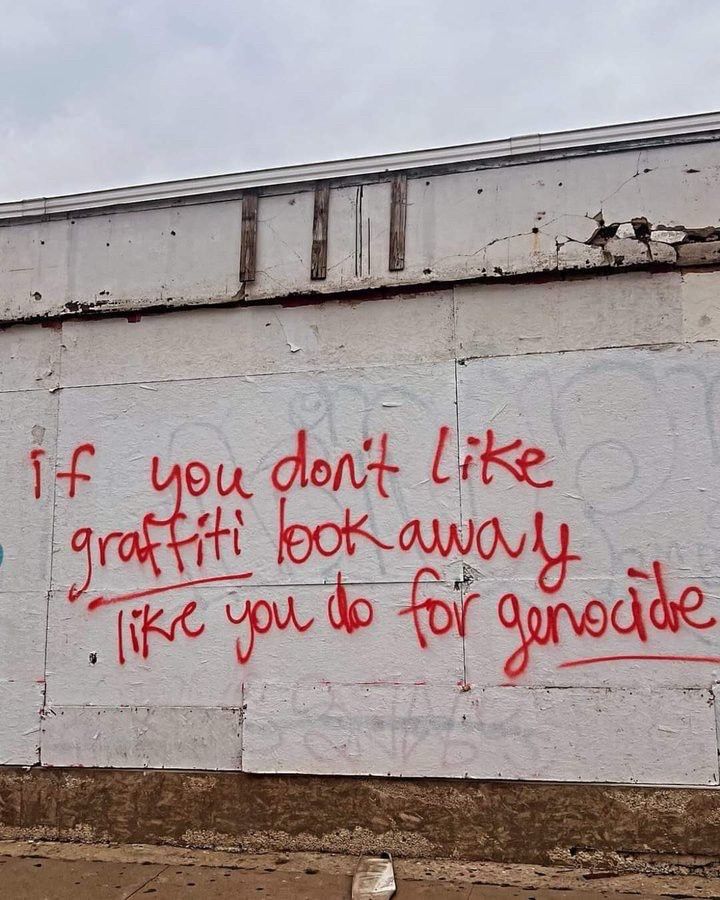



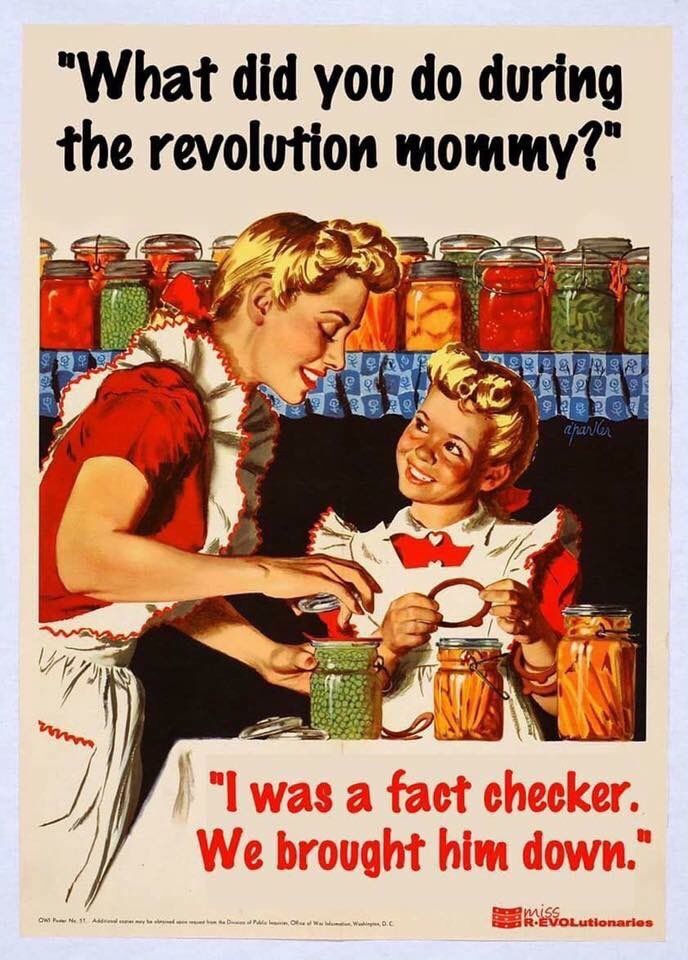


 Poetry therapy has been used as part of the treatment approach for a number of concerns, including borderline personality, suicidal ideation, identity issues, perfectionism, and grief. Research shows the method is frequently a beneficial part of the treatment process. Several studies also support poetry therapy as one approach to the treatment of depression — it has been repeatedly shown to relieve depressive symptoms, improve self-esteem and self-understanding, and encourage the articulation of feelings. Researchers have also demonstrated poetry therapy’s ability to reduce anxiety and stress. Those experiencing post traumatic stress have also reported improved mental and emotional well-being as a result of poetry therapy. Some individuals who have survived trauma or abuse may have difficulty processing the experience cognitively and, as a result, suppress associated memories and emotions.


 I have sought refuge in self-hatred, in depression, in the idle futility of it all.

 Secure and supported by this universal clarity.
 Depression is merely an afterthought.
 We are slaves to our memories


 the National Association for Poetry Therapy (NAPT) was established.
 not advocating a supernatural or spiritual causation for the effectiveness of poetry as a healing agent but rather the supra-natural mystical cause which is grounded first in human nature and behavior for which can be a myriad of imprecise explanations; none of which explain why it works.


 There is no trick to listening to yourself and learning how choosing and rearranging your words can unlock darkened doors, de-clutter basements and clean out the attics of your life. Sometimes in merely one session.
 Just add <poetry therapy> to your Skype contacts and schedule a date. Payments accepted through PayPal or Facebook cash. Here are some examples of the poetry achieved through PEGASUS POETRY THERAPY:
 The real English, the softcenter at the core of the cracked, hard surface, English remind me no one more so than of the Japanese. Both island peoples deeply suspicious of foreign invaders and both sewn tightly within an intricately embroidered fabric of ritual, custom and politesse. Both peoples’ have a tea ceremony; one with boiled spring water and green leaf powder, the other with scones, clotted cream and jams.


 If you’re interested in comic books, chances are you’ve heard the names Joe Simon and Jack Kirby. After all, their partnership paved the way for the Golden Age of comics beginning in the 1940s. With The Art of the Simon and Kirby Studio by Mark Evanier, learn more about the duo who invented noteworthy characters like Captain America and Sandman, conceived the idea of romance comics, and created a new standard for the genres of crime, western, and horror comic books. Take a look inside the various aspects of their career, and see some of the works that defined them.


 igorgoldkind


Pre-Order FACING the WAVES: Art & Music Edition by Award Winning Poet Igor Goldkind
The Mass market digital edition is out in April, but I’m only signing the $54.95 limited edition. $34.95 for the cheap, print on demand edition out in April, 2025
Original cover by Norwegian Surrealist Painter
Katarina Anderssen
(Also available as a fine art print, signed and numbered by Katarina )
Original music and spoken word album composed by the magnificent Israeli Jazz composer Gilad Atzmon available in March for download, CD and Vinyl entitled The Broken Star, a musical and poetic indictment of the current state of Israel.
Album cover design by the designer, illustrator, comics artist, visual god Dave McKean. (Arkham Asylum, Sandman, Cages).
International signing and performance tour of Spoken Word and Live Music coming in the Spring of ’25
This is Art.
Sample the Stone Soup:
Rumi’s Mirror
the reflection of a reflection is your reflection.
upon the mirrored surface of a pool,
that is being slowly filled
by the very source of the life
you reflect upon
Now jump in the pool!
Modern Haiku
A boy goes to school
And tears his schoolmates apart
With metal piercing bullets.
This is normal now.
Facing the Waves
Waves are your faces
Crashing in real time,
Raising the tide
Against your complacent shore.
Waves are your faces
Curved towards you:
White-bearded men,
Relentlessly knocking on your front door
Reality, an unknown intruder
Upon your inner core,
Beats rhythmically, poetically,
Drowning you in what you do not know.
Waves are your faces
Melting into one and the other;
Beating, imploring you,
To open your locked front door
Waves are your faces
Beating on your front door
Eroding your discomforts
Seeking to drown your inner core.
Beating senselessly, endlessly
Against locked doors,
Waves are abandoned faces
Beating on your front door.
(Email info@themissionarts.com
To be added to our pre-order list.
order in January for a 99.50% discount!!)
Look for it sweetheart, you ain’t seen anything like this before!
(Email: igor@themissionarts.com
To be added to our pre-order list order in January 2025 for a 99.50% discount!!)
Hey, No one does math the way we do!
Share & Disseminate This With Your Friends
Like this:
December 18, 2024 | Categories: art, beat, book launch, books, bubbles, comments about poetry, death, Depression, Emptyness, Existentialism, Faith, Gilad Atzmon, Healing, Igor Goldkind, jazz, La Jolla, literature, Math, Meaning of Existence, Meditations, mental health, Mindfulness, new poetry, physics, poetry, Poetry as therapy, Poetry Therapy, politics, Self-Therapy, sex, spoken word, story-telling, Suicide, Therapy, Transmedia, world jazz music, Zen | Tags: Anti Fascist Poetry, Award Winning Poetry, Contemporary, Contemporary American Poet, Contemporary Poetry, Modern America Poetry, Modern Poetry, New Poetry, Social Activism, Social Activist Poetry | 5 Comments