Learn the Rules of Poetry So You Know How and When to Break Them!
www.eventbrite.com/e/pegasus-poetry-workshops-tickets-1236706826409
The Wolves Amongst Us


The Wolves Amongst Us
Bah black sheep, hiding under your wool.
Do you think that you’re invisible?
That we don’t see you hiding behind your hand job smile?
Bah, black sheep, you’ve infiltrated the herd as if,
Your recipe for disaster
Wasn’t to drive us off the cliff.
Your platitudes are empty
Your please for unity absurd
When we know your one true aim has always been to thin the herd.
There’s always been two sides to the story
Since the first time we ever asked why,
There’s always been two sides to the story:
First,
The truth and then the lie.
Clique-Bait: The San Diego Poetry “Scene”

prelude to the storm
San Diego is a city-by-the-sea with a population of 5 million. It has spaghetti freeways numbered like 5, 8 and 805. These firmly establish the metropolis as a driving town. I grew up in San Diego in the 60s and 70s. We first rented an apartment in Point Loma named Loma Palisades. I attended Barnard Elementary School, which has since been converted into high priced condos, like everything of value in San Diego. Life was relatively laid back. The beach, particularly Ocean Beach, was close by. I began attending the early Comic con meetings in Ken Kruger’s science fiction, comics, and porn bookstore. My new friend Barry Alphonso joined me at the nerd-meets. The founder Shel Dorf would regularly give his moral sermons to us geeks, freaks, and comic book hounds.
I didn’t actually read comics at the time. I was kind of snobbish about them. However, my friends Barry and Bryan Smith did. They consumed comics ravenously. My parents didn’t give me an allowance. They were strict about where their kids spent their hard earned money. Science Fiction was another story. This genre I consumed like a dehydrated camel at an oasis. First Edgar Rice Burroughs and A Wrinkle in Time but soon it was Harlan Ellison, Theodor Sturgeon, Arthur C. Clarke, Isaac Asimov, Philip K. Dick (who I barely understood), Philip Jose Farmer, Kurt Vonnegut and then there was Ray Bradbury. Of all the fantasy, horror and SF authors I read, it was Bradbury who spoke deepest into my soul. I saw Bradbury as a kindred spirit. Along with Baudelaire, Poe, Rimbaud, Malarme and Zola who I also consumed with ravenous glee.
But Bradbury’s poetic novels forge my writing and poetry to this day. The Illustrated Man, The Martian Chronicles, and the devastating Something Wicked This Way comes. These stories infected my dreams. I recall having vivid dreams of sitting next to the illustrated man. I also dreamed of being on the carousel of youth in Wicked and meeting the Martians on Mars.
It was his short film “Dial Double 0” about an actual artificial intelligence (NOT that misnomer marketing term AI!), born in a phone box haunting a terrified man with phone calls that animated my imagination. That and the first series of Star Trek (yes, I am old enough to have seen the first series when it was broadcast, sitting next to my dad who was equally mesmerized by heroic space exploration. My actual dad and I bonded over Star Trek AND Ray Bradbury.
Deeply profound imagery, is what Bradbury delivered and my being the son of a painter, it was the paintings he put in my head that I could not get enough of.
My father, a professor of Anthropology at SDSU, encouraged me to read. He had taught me how to read English. I learned Spanish first in a Costa Rican Catholic school.
My father loved Science fiction, being a scientist and he reveled in the fact that I would empty the SF section of the downtown library every two weeks when we took a family outing to the library.
I eventually met Ray Bradbury at the age of 14 (or 13). It was thanks to my serving on the Comic Con steering committee. Walking up to the man in the ice cream suit and white fedora took all the nerve my nerd self could muster. He was standing by himself on the first morning of the Con, next to the El Cortez interior swimming pool. (Not in-door, but outside under a windowless sky light in the center of the hotel lobby. I walked up to Mr. Bradbury in terror. Here was this magician, this shaman of words who had entered my dreams at night and took me to far flung peaks of aesthetic bliss mixed with mystery and terror. Of course Mr. Bradbury was always Mr. Bradbury to me. Even when I got older and saw him briefly before his death, I never called him ‘Ray’. I deemed it to be a desecration of his powers.
I did summon the nerve to get him to sign my first edition paperback of Something Wicked This Way Comes and found him shining his benevolent smile into my eyes and face. He wasn’t a powerful, dark, intimidating wizard after all! Ray Bradbury was a kindly, warm, sincere man who cared about his fans. The artist as saint. He returned my paperback to me and smiled. I knew that I was safe from his dark magic. I could venture to ask him what I really, desperately needed to know.
“Mr. Bradbury”, I said before he turned to go to attend to his convention duties. “Mr. Bradbury, can I ask you a question?” Ray Bradbury stopped in his tracks. He turned back towards me. Leaning over my form, he replied, “Why of course, young man. What is it that you would like to know?”
I hesitated for a split second. It occurred to me that he was mentally anticipating a question about one of his stories, some character, or plot twist. But I had a bigger question in my 14 (or 13) year old hungry mind.
“Mr. Bradbury, tell me, how can I become a writer like you? Is there a special school I need to go to?”
Now it was Ray Bradbury’s turn to be enchanted; by little old me.
Mr. Bradbury motioned me over to two pool lounge chairs cruxed by the blue fluoride pool of creation. He sat down and faced me. He examined my face intently. Then he uttered these words:
“First, young man, you’ve got to get the name of my profession correct. It’s not writing, I’m not a ‘writer’, I’m a re-writer. The vocation is called re-writing for a very good reason. Because that, my son, is what you’re going to spend most of your waking life doing. Some of your dreaming life as well!” I became so mesmerized by meeting my hero. I didn’t remember what he said after that. It was about a 20 minute conversation and then he left to attend to his celebrity duties.
And That, My Friends, is how I became a writer. I was baptized by the worldly experience of a kindly, white-haired, be-speckled magician. He wore an ice cream suit and a white panama hat in the San Diego sun that blazed all around us, through the skylight at the very center of the El Cortez Hotel in the summer of 1972 (or 73). The El Cortez Hotel of legend, mystery, and comic book panel has become over-priced condos. This change happened because money is money. Culture and history are really just for the poor.
THE REAL STUFF NOW: (Hold onto your Horses!)
As the previous heading sign-posted, this was all just the prelude to the true subject of my dissertation:
Which is in fact, the Poetry Futures Poetry Festival I attended only yesterday, hosted by the San Diego Poet Laureate Jason Perez and held at the Cross Cultural annex of the UCSD campus.
There was no publicity covering the event, no posters or flyers to guide the poesie aficionados, but I was able to navigate my way to the upstairs set of conference rooms.
On my way up the stairs I found myself at pace with a young, well dressed Asian man with horned rim glasses. I asked him if he knew where the poetry festival was being held. He smiled an affable smile. “That’s where I am going as well,” he said. He reassured me that I was heading the right direction through this academic labyrinth.
Upon entering the reception room and pausing to shake Jason’s hand to thank him for inviting me, I found that the horn rimmed well dressed Asian man was actually the poet Lee Herrick! The Poet Laureate of California! Which I really cared nothing about. What I cared about was that he was an honest, good poet who had truth to tell in his writing. I had only read a few of his poems in an academic journal but he was the real thing. An adopted Korean child who had grown into a gentle, sensitive man.
Lee was not only a formidable wordsmith but the very man I had wanted to connect with in order to further my plans for the first international poetry festival to be held in San Diego: The Balboa Park International Poetry Garden Festival .
But more about that later. I plan to leave San Diego in 2025. However, I am also resolved to leave a lasting monument to the culture of quality in literary arts. A yearly Poetry Festival could continue long after I relocated back to more civilized climes. In conjunction with the festival, I also want to organize a poetry competition. The proceeds from this competition would go to building a Rumi’s Poetry Drinking Fountain in the center of the Prado. This fountain would be accessible to the general public. It would feature a stone sculpture of the Greek Pegasus, the symbol of poetry.
Donald (Dumb Hitler), Trump’s triumph in last November’s election convinced me. I realized that I was no longer suited to the American nightmare. For the first time, he secured a majority of the popular vote by only 175,000. I knew a nightmare was about to be unleashed.
The day after the tragic election results, I made two long distance phone calls:
The first to my ex wife, Felicity Brooks, the Managing Editor of Usborne Books with whom I had a tempestuous separation some ten years previously. As soon as she answered the phone, I didn’t have to say a thing.
“I’m so sorry, Igor, I’m so sorry about is happening to your country. What do you need to get out? I’ll help you with the home office to re-establish your residency and your work permit. I’ll even tell them that we’ve reconciled and are back together as a married couple.
“Whatever it takes”, she continued.
“I’m so sorry, I know that you loved the US but the time has come to make the hard choices you have to make to survive”. My heart leapt at her kindness and generosity of spirit.
How many men can count on their ex-wives as reliable friends?
But I also understood what she was saying and why:
Both of our parents had lived through WWII and understood the reality of political upheaval. They knew the plight of refugees escaping political oppression and tyranny. Now it was my turn to be a political refugee. My ex-wife knew that some forces in life are stronger and more important than mere marital squabbling.
The second call I made was to my never-actually-met-him Facebook friend, the musician Richard Torres. Richard was a punk rocker in the 1980s London scene and had had a hit. A big hit. But bad punk rocker that he was, he didn’t spend all his money on drugs, alcohol and womanizing. Instead, he betrayed his genre by buying a mansion in the Gothic quarter of Alicante, Spain!
What a loser!
3 years ago, I was illegally evicted from a house in Clairemont. This was after the passing of Louise Karsten. She rented me a cheap room in exchange for tending to her massive yard and building a vegetable garden. I also paid for the restoration of one of her three bathrooms. I had found myself vaguely homeless. Couch surfing from friend to friend and eventually anchoring myself to the outdoor couch of my bike mechanics overpopulated two bedroom rental.
His family and he were avid meth consumers. Every morning, I used the bathroom coming in from the front garden. I would be greeted by billowing clouds of smoked speed. I was invited to partake. Eventually, my polite abstinence proved to be an unalterable faux pas. I was inevitably asked to leave for not conforming to the social norms of their meth-smoking “community”.
Which is directly relevant to my account of this festival. After shaking hands with Lee, I wandered through the space. I was looking for poets to invite to my festival. They could teach as guest teachers at the Pegasus Poetry Workshops. It starts the last day of January 2025. They might even contribute to my new poetry journal, The Mission. I began to recognize some familiar figures of the San Diego Poetry “scene”. Poetry Underground had constructed a long table promoting their books and events. I avoided the eye contact of Anthony and “Sunny”. My last encounter with them was when they barred me from their underground open mic poetry reading. It was because I read my anti gun poem. THE BULLET FROM MY GUN. Anthony and Sunny founded Poetry Underground. They are proponents of the school of thinking that believes everybody who even tries to write a poem deserves accolade. I’ve always believed in support and encouragement for young artists; but support without critical discernment, without discipline, is no support at all.
Poetry takes work, not complacency. Each to their own but Poetry Underground’s so called “mental health” agenda leaves me a little bit worried. My concerns might not have a cause. However, it’s healthy to recognize your limits. By doing this, you can surpass them and grow as an individual and an artist. The slogan for Pegasus Poetry Workshops is straightforward. Poetry Underground blatantly rebuffed it. We will teach you the rules of poetry. Then, you will know how and when to break them. Poetry is not a nightclub, it’s a hard earned craft that requires discipline, focus and dedication, not constant applause.

My anti gun poem I read at my last ever ™”stand up tragedy” at Poetry Underground is reproduced above.
Anthony had took umbrage at my poem and its contents. He was especially upset at his audience’s reaction.
The audience was visibly excited by my heart-felt honesty. I had exposed the mental problems of gun obsessives. My poem highlights their detrimental impact on American society. We have too many guns and not enough gun control. The number one cause of childhood mortality in this country are gun deaths! That is obvious even to servicemen and women. However, Anthony did not see it that way. As MC, he seized the stage after my performance. He denounced my poem with a tirade about Second Amendment rights. My poem called out the gun nuts who want to spread even more death and mayhem. Gun violence is a reality, not an opinion in America. We experience a pandemic of gun violence every day in the US. This is a fact, not a perception. Gravity can be an experience, but it is not a perception or an opinion.
It is the truth.
I was pleased that my poem had triggered (sic) some kind of reaction but Anthony was adamant in his denunciation. As an ex military type, he had always eyed me with suspicion and barely concealed hostility. He could smell my liberalism and it made him sick. Some time later, I called Sunny to invite her and Anthony to my Pacific Beach Poetry Workshop. She found my invitation insulting. Her attitude towards me was evidently infected by the same hostility. She informed me that if I decided to return to their open mic ritual, “Anthony wants a word with you, first.”
That was enough for me.
Unlike some of the aspersions cast in my direction, I am an adamant pacifist and avoid conflicts at all costs. What I have learned is that if you turn away from “trouble” to avoid it, “trouble” will often follow you down the alley way anyways. It might even mug you from behind!
Needless to say, I never returned to the Underground. (Take notes, Dostoevsky!), These days, I keep my feet above, not under the ground.
The Poetry scene in San Diego is parochial at best; and that, relatively speaking is a compliment!
San Diego as a whole, is a metropolis sized city with the mentality of a small town. It has no real literary or arts scene comparable to San Francisco, LA, Oakland, Sacramento or even Fresno. In Southern California, artists are seen as stunted adolescents. They are treated as if they won’t grow up and get a real job packing groceries at Whole Foods. Most other major California cities have thriving poetry and expressive arts scenes. Poets stand together in brother and sisterhood and help and support each other. San Diego Poetry “scene” has been and is still, more like an open dog fight between warring and self-aggrandizing factions.
The gatherings and readings tend to be mutual admiration clubs of gratuitous glad-handing applause. It reminds me most of the participation awards of the 1990s when everyone wins just for having partaken. On a few occasions, I’ve heard a young poet with promise recite an amateur piece. I approached them afterward to encourage them to “Rewrite” and think about who they are writing the piece for. I am then admonished by the host poets and told off for being “negative”. Critical thinking is abhorrent to the San Diego poetry scene. Writing is too.
Curan was a rare exception. Sadly, he is now deceased. He was a white Buddhist gay poet. Curan ran the Mission Hills Library monthly workshop. He was genuine and real and we are publishing his work now posthumously in The Mission monthly. Curan was the exception. The rule in San Diego poetry readings is that there are featured “stars” backed by their publishers to sell products. And there’s the so-called “Open mic” monthly gatherings guaranteed for applause.
This is regardless of merit, and discussion or feedback is profoundly discouraged.
At one such “open mic” reading I asked the assembled audience of would be poets, to hold their applause. That if they wanted to give me feedback to approach me after the reading and tell me what they honestly thought. This caused the bah-bah-ing, amateur sheep to deride me as I was challenging their ritual. The veterans at the same reading openly mocked me for even suggesting such a trespass of their precious norm.
All of this petty-clique behavior is more worthy of a bad high school TV drama than a literary tradition. This has inevitably led to an impoverishment of poetry as a craft in San Diego. A vocation which in fact takes literally decades of hard work and endless failures to achieve anything of merit. Art is a vocation, not a dilettante’s hobby.
The owner of Verbatim Books was at the festival, there with her entourage. Of course, she avoided my path. I had tried to get her shop to stock my books. Then, on one occasion, I invited a homeless street poet reeking of alcohol. Former Beat Poet Laureate Chris Vannoy and I had heard him reciting incoherencies outside their reading. We asked him to come inside and recite his insane, psychedelic, beautiful ramblings. The owner did not take kindly to what she misconstrued as an attempt to sabotage her event. Apparently, you can’t be drunk and read poetry in San Diego. Sorry, Charles Baudelaire, Dylan Thomas, Charles Bukowski. You’re not wanted here!
After Avoiding the Poetry Underground & Verbatim, I said hello to Ted Washington who was going to be reading for the Fighting Poetry panel (which was my highlight of the festival. Ted and I have known each other for years. We do detect that we’re not exactly friends. However, we do share a begrudging respect for each other’s work. I would publish Ted Washington in a blink. His voice is angry, political and authentic, an African American raging against The Machine. Hey, we don’t have to be “Friends” with everyone. People don’t have to “like” each other; we just have to not kill each other.
Poetry is a forum, a medium of expression wherein people with differences can air those differences in lyric, rhyme and reason.
Jason’s Poetry Futures festival proved to be just that: political, engaging and inspiring. I met some great poets and some great human beings there. Mainly from LA, Portland, Anaheim and the Bay Area. I found myself applauding loudly, wildly at the voices of mainly women poets. I also found myself randomly running into complete strangers. We would exchange a line of verse in rhyme and reason.
“Strangers stopping strangers just to shake their hands.” Robert Hunter
The out of town readers were amazing, truly wonderful, sending shivers down my spine and music to my ears. In contrast, the academic poets both students and teachers, presented a stark contrast. Some of the UCSD graduates buried themselves in their own self-righteous academic graves. They pronounced their degrees like ancient Egyptian curses. These poets tried to conjure magic that wasn’t theirs or of any lasting potence. At best Art and Academia are uneasy bedfellows and can lead to abusive relationships as the only steady income an artist can muster while they perfect their craft is by teaching. Which is fine except that higher education in California (and probably throughout the US) is a business. The products are students and credentials that lead to paying jobs. That can be alright except when the credential is a token of conforming to an inorganic, bureaucratic entity that just wants to control the thoughts and actions of others. That’s when the relationship between art and academia becomes an abusive co-dependence.
Unrelated, Michael Klam and his San Diego Yearly Poetry Annual entourage of county editors were there too. I like Michael, even though I don’t have to. We’ve had over the years, a disagreement or two, but he’s always remained an affable sort. Besides, the Annual has published my poetry 4 years running and you don’t shoot the horse that lets you ride him. I gave up submitting to the annual a few years back mainly because ones poetry gets lost in its voluminous thickness. I don’t really know who actually buys the annual apart from the poets who are published in it. Some of its editors are friends and support what I do. Others despise me for my work, my dedication to critical thinking and my politics. I am devoted to Poetry and this poet’s life like it was my parent. Having lost both, Poetry has taken their place in loving me, in caring for me; poetry has nurtured my body, soul, and mind; without it I most likely would have taken my own life years ago.
(If not for my daughter Olivia as well; who I could never inflict such trauma upon.
In the end, it is our children who save our lives from dissolution and despair.
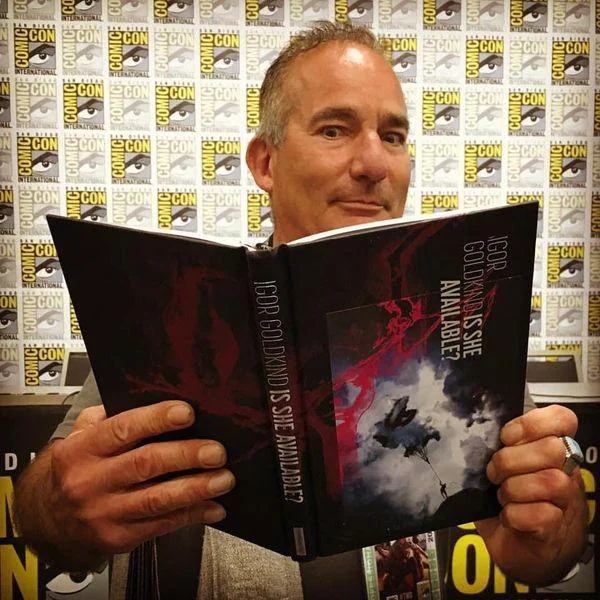
The San Diego poet I now most admire is Sonia Gutierrez, who recognized me when she was first approaching the center, outside while I spoke to an Arab who happened to be the buyer for the La Jolla Barnes and Nobel and who I had given a copy of Is She Available? and was raving about it, asking where he could order more copies for his store.
Sonia Gutierrez wasn’t quite sure where she recognized me from but insisted that I was familiar to her. She asked me a question about where the event was (Signage, people, signage!!). Sonia Gutierrez peered at me and told me that I looked familiar. Later when I heard her read at the Fighting Poetry panel brilliantly hosted by Ted Washington, I recalled that the great Mexican muralist Victor Ocheo had introduced her to me over 5 years previous. Victor was always pushing me to celebrate my Latino, Costa Rican heritage. My uncle being the now deceased Costa Rican muralist, painter and sculptor Francisco Zuniga. (I come from Art Aristocracy!)
He wanted me to connect with other “Chicano” poets. This was the very first occasion I heard Sonia Gutierrez read. I was literally and pleasantly blown away. A non academic, self taught poet. She is now a poetry teacher. She exuded her culture like a wafting perfume. There are too many phony Chicanos in this world; too many Latinos laying claim to a uniquely Mexican American heritage. People like Peruvian painter Mario Torero who insists that he’s a Chicano “Artivista” when there isn’t a drop of either American or Mexican blood in him.
Sonia Gutierrez filled the room with sounds and almost smells of her Mexican heritage.
She is a real poet in every sense of the term, as she serves her words up as a vehicle for her people’s history, her people’s culture, her people’s sounds. A woman’s sounds (like my mother singing in the bath tub, cantina songs), I wanted to embrace Sonia after her reading; and breath all of Mexico in.
Instead, I invited her to come teach at the Pegasus Workshop as a guest teacher and gave her a blank cheque as to how to fill the two hours. I admired her spunk. She bluntly asked me if there was a stipend for teaching. There is not, as the workshop is a semester long and free to the public. The event is held on the premises of a public building, which the tax payers pay for. Poetry should be free.
Poets do have to eat. Their words may feed the spirit, but the flesh is also wanting. Poets should be paid for their work. Buy their books, it makes a big difference!
So I told Sonia I would see what I can do. Her poem “Perspective” should be mandatory reading in San Diego’s classrooms. It is a monument to hypocrisy. It highlights the disingenuity of the new right as they sabotage our thinking, our ability to reason. They gaslight us into accepting racism and bigotry as just a matter of “perspective.” In today’s post Trump intellectual wasteland, all opinions are valid even house that would strangle opinion at its source.


The panel called Fighting Poetry was a little distracted by a ‘transitional” (transgender?) poet, who’s name escapes me. She was a striking woman with a beautiful face.
But the transgender poet had marred her own face with a frozen smug, plastic smile. I have had friends within the transgender “community”, (Not my choice but It is their’s and I would fight to protect that human right.), But there was definitely something false, something wrong with this particular poet’s self presentation. She proclaimed the righteousness of her gender choice as if it was a weapon to be used on her audience. Her answer to fighting poetry, in which real truths were being told, was to lead the group in a contrived “breathing exercise in an off-the-shelf mindfulness.
Her poetry was mediocre although her pain and composed anger were real enough. If she had not taken affront I would have shared with her some constructive feedback. The politics of sex, of gender, and identity are volatile like nitroglycerin. A single misstep by a boring straight man like me could spell disaster. I chose to avoid the risk of confrontation.
A young Vietnamese poet, whom I have lost track of and could not find, breathed air into the room. She did this by reciting a poem that mixed English and Vietnamese words. The music beautifully infiltrated the comprehension of the poem. I am a devotee and follower of Thich Nicht Han, the monumental Vietnamese Zen monk. I have met, sat, and walked with him in London. I was well disposed to the sound of her vowels. Even without understanding the meaning of her words, they were sheer poetry.
The highlights for me were Jason himself. He bid farewell to his position as poetry laureate. Then I was captivated by the sublime psychological work of Lee Herrick. I had only read him before and never actually heard him read. His voice opened up his exploration of his own heritage, his own adoption and adaptation to my heart.
A lesson for us all: if you can always hear the poet read his or her work aloud, do it! The human voice carries the breath of the soul. Like Homer, we are all blind to the written word when it can instead take flight. It flies on the winds that come from within us into the wide, wild world.
But don’t believe me when I sing Lee’s praises; Listen for yourself.
Listen to the wings of poetry unfold and take flight!
Experience life’s moments on your own.
The universe doesn’t expect much from us but it does want us to pay attention and listen….just listen.
Thank you for reading this far, now please if you will, comment below.
On Poverty and Consciousness

 A new acquaintance asked me why I endured relative poverty and uncertainty in California when I could easily take a tech copywriting or PR job and be living comfortably.
I answered, for which I’m sure someone reading this might wonder the same.
The answer is not simple and all has to do with my commitment to art and to the art of writing. It’s somewhat like a religious or spiritual calling; certainly as requisite of sacrifice and discipline as a monastery. (Read James Joyce’s Portrait of an Artist as a Young Man, if you need further elucidation on the subject). To become a great artist, which is what I believe I am becoming at this late stage of my life (or will at least die trying to be), takes total focus and constant dedication.
Not just to creation but to observation. Many of my best friends are not just poets and artists but scientists and mathematicians because they are processing their own observations through their own disciplines. When we talk and share words they read me and hear me, they comprehend how we’re all pursuing the same thing: the truth about life and the lives we are living.
Science and Art are really just two different vantage points in the same universe. During our Rennaisance there was no such separation between science, engineering and art. Just look at Da Vincis’s sketches if you don’t believe me. And this underlines the true failing of the formal education systems. No purely structured system can account for, much less process the unstructured data of experience.
But one truth I have learnt along this way is that we are all connected; both as a species and as sentient beings. Not just to those existing in the moment we all share but for all of us, from the very beginnings of awareness and rational self-consciousness. We are all brothers and sisters of the same mind, the same awareness that is awake and cognicent.
We all share the same biology of the mind.
I imagine that when extraterrestrial sentient life is contacted, it will be the poets and artists most open to the new who will not only best describe and communicate qualitative meanings with them but decipher their language(s) to communicate with them (more of “us”?), before the actual scientists can interpret their data and the military can rationalize the threat.
From the point of commonality; this sentience itself has a common shape or form in all of us throughout time and geography. It is our human nature.
My words try to sketch its outline.
Without needing to name a god, the Buddhists have been attempting to describe this commonality of all sentient beings, for thousands of years. In art and yes, in poetry too.
It’s what poetry is for: to describe the indescribable that is true for all of us, to all of us.
The known shining its single torch down a darkened corridor to the unknown.
The unknown (not the unknowable), has always been our mind’s final frontier.
We weren’t born yesterday. We did not just become aware of consciousness. The history of consciousness is the history of us, of the ‘you’ that is reading and comprehending these words.
You are no different in awareness than the Neanderthal who stumbled out of her cave and looked up at the stars in wonder. Every astronomer I have ever known harbors that exact same wonder. Our tools maybe bigger, faster and deadlier but our minds haven’t changed, just adapted to our tools. They’re physiologically still the same; and only enhanced by the evolution of language, both associative, symbolic and metaphoric.
This is where we alll connect. The commonality of our senses’ perception and their comprehension. This is what is meant by ‘realisation’. When we make the world real. When we realise that the truths we know from our senses connect us to the world as intimately as to each other.
These are the materials I use to create art.
But why not get a day job?
I will have to.
I have learned all I can stomach for now about the tangible reality of poverty. I have made some great and tragic friends outside my walls of privilege and comfort. But when I first detected my dwindling resources, I panicked. I borrowed gas money from friends, slept in beachside campsites for free and spent too many days in chic cafes nursing one cup of coffee and a refill just to write, just to connect with the non poverished. I. applied for every job I was qualified for and hustled my books even harder.
But this did not avert my panic and the fear, until it passed of its own. And you already knnow: nothing is ever as bad or as long as we first imagine it to be. That’s when I understood how many of my needs, weren’t needs at all and that I could live without the comforting requisites of a middle class existence, just fine. In some ways better.
Less consumption = less waste.There’s what I want and what I can have and if I diminish my wants, I can have have everything I want.
When you don’t have any money, you don’t spend any money and that initself is a good thing.
The last argument that pursuaded me of the virtue of experiencing this lifestyle is that if I really wanted to write for wider audience in a profound and meaningful way, that I might need to understand and empathize with the truth of our human condition across the entire economic spectrum, not just those who can afford to buy books
And the truth is that the vast majority of “us”do not live a middle class lifestyle and that the majority of “us” struggle every day to earn what is called a living and yet seldom ressembles it.
I have met so many, so many poor people living on the streets in one of the wealthiest cities in the wealthiest state in the union, in the wealthiest nation in the world.
None of us can afford to rest within our illusion of justice and freedom until poverty is no longer the default state of the human condition in America. Remember, poverty is a prison from which escape is difficult. But if we truly want to say that we live in the land of the free, then we must free our citizens from the prison of poverty.They are “us” as well. Not charitable”us”, not pitiful “us”, not lazy, drug taking, alcoholic “us”.
Just us.
I have talked in depth with enough of the so-called “homeless”. to recognize them for who they really are: The Poor. You know, those people Jesus was always talking about and Charles Dickens and Emile Zola wrote about? The idea that those without homes choose to live that way is a bigoted urban myth that need to be quashed.
Yes, may of the poor have real problems with alcohol, drugs and severe mental illness. But so does every other group and class of people I have ever known. The rich and the middle class aren’t exempt from alcohol, drugs and craziness; in fact they can afford more!
How then are we less connected as human beings?
Or is “humaness” only measured by level of income?
When I moved back to California to look after my mother, I was immediately struck by the avalanche of poverty that had engulfed my home town. As is every other foreign visitor to California, by the way. No tour of Balboa Park or visit to Sea World can eradicate the open poverty that everyone can see on the streets of San Diego. Which now more closely ressemble the streets of Port-au-Prince, Haiti or the extreme poverty that can be found in some places in Mexico, than any American city.
The first thing that went was the last vestage of regional or even national pride.
It is a crime against humanity for so rich a city as San Diego to maintain the level of homeless poverty that is evident to anyone who visits us. It is “our” fault. Because we are also connected to the impoverished and the socially weak.
You know, what Jesus was saying.
If I am to write the truth for those who want to read or hear the truth, then I ought to know what is lying outside the walls my middle class habits and worldview. What is it really like, not just for the impoverished but for the vast majority of Californians who also now live beyond the walls of middle class sensibilities, paycheck by paycheck?
Haunted by the memories of its long gone comforts.
What does it mean to be a human being living in America right now, in 2020. Aren’t we all supposed to have jertpacks by now?
What is the Truth of our American selves?
As Tony Morriosn said “The whole point of freedom is to free others”.
To my friends who have offered their support, I thank each one of you.
I will never forget your kindness and your humaness.

Yes I have a new book coming out in the fast approaching Spring.
It’s entitled TAKE A DEEP BREATH, A Book of Remedies and will feature much of the writing and accounts of experiences of truth that I have had living in California these last 5 years.
I hope that you will take a look.
5 Submissions of My Latest Work

Life is Always Replaceable
Being is Becoming Still
Existence is a limitless screen of emptiness,
Insomniac Awareness
The Last Halo of Hope.
Pebbles
The Halo of a Hope


Hope is mortal, not eternal.
Though it may feel like eternity
Sitting in a chair by the window.
Gazing up and down the path that leads
Up the hill and down to the canyon on your doorstep.
Every morning, every evening, every day.
Waiting for an answer to your prayer for hope to be restored.
Resilience rewarded
Patience still burning brightly
Under your old photograph on the wall where you live now.
I’m not sad.
No, sadness is just passing rain to irrigate the eyes.
Instead, I’m a new planet
Ringed by the last halo of hope
The one wrapped tightly around my head.

Pebbles

Pebbles
Thoughts are merely pebbles
Being gently washed by a passing stream.
You are the stream.
Beach Pebbles
Thoughts are merely beach pebbles
Being gently rounded by passing waves.

Pebbles
You are the waves.
Sand Pebbles
Thoughts are merely pebbles in the sand.
Being gently worn by the passing wind.
You are the wind.
Words are pebbles.
Words are merely thoughts
Being gently read by a passing eye.
You are the eyes
That can read my thoughts.

Thoughts
Being is Becoming Still

Existence is a limitless screen of emptiness,
Jubilant celebration
And gratitude for the joyous exhaustion in the rolling of a boulder up a steep hill.
Tripping over our thoughts like loosened cobblestones,
The truth is a truce we struck with uncertainty ages ago.
After losing our desperate struggle…
To cling to some kind of hope buried deep at the root of our own awareness
I am fearful of fully failing myself.
But I love myself best when I am alone with eternity.
Secure and supported by this very clarity.

A Short History of Poetry Therapy: Practice and Perfection by Igor Goldkind

On FaceBook, a discussion where questions are posed and answered: https://www.facebook.com/realpoetrytherapy/
The healing effect of words has long been recognized. As far back as 4000 BCE, early Egyptians wrote words on papyrus, dissolve them in liquid, and gave them to those who were ill as a form of medicine. In more recent history, reading and expressive writing have been employed as supplementary treatments for those experiencing mental or emotional distress. Pennsylvania Hospital, the first hospital established in the United States, employed this approach as early as the mid-1700s. 
In the early 1800s, Dr. Benjamin Rush introduced poetry as a form of therapy to those being treated. In 1928, poet and pharmacist Eli Griefer began offering poems to people filling prescriptions and eventually started “poem-therapy” groups at two different hospitals with the support of psychiatrists Dr. Jack L. Leedy and Dr. Sam Spector. After Griefer’s death, Leedy and others continued to incorporate poetry into the therapeutic group process, eventually coming together to form the Association for Poetry Therapy (APT) in 1969.
Librarians also played a major role in the development of this approach to therapy. Arleen Hynes, one pioneer in this area, was a hospital librarian who began reading stories and poems aloud, facilitating discussions on the material and its relevance to each individual in order to better reach out to those being treated and encourage healing. In 1980, all leaders in the field were invited to a meeting to formalize guidelines for training and certification. At that meeting,  the National Association for Poetry Therapy (NAPT) was established.
As interest grew, several books and articles were written to guide practitioners in the practice of poetry therapy. Hynes and Mary Hynes-Berry co-authored the 1986 publication Bibliotherapy – The Interactive Process: A Handbook. More recently, Nicholas Mazza outlined a model for effective poetry therapy, also discussing its clinical application, in Poetry Therapy: Theory and Practice.
The Journal of Poetry Therapy, established in 1987 by the NAPT, remains the most comprehensive source of information on current theory, practice, and research.
There is also a relationship between psychological healing and incantations; either repeated as a musical chant by the patient or in fact recited by the attending medicine man. Modern medicine and science of course scoff at the notion of magical incantations having healing or restorative powers as so much superstition. But this, of course, begs the question that if recitations and incantations had no evidential resort and no beneficial property then why would every single human culture have adopted the method and repeated it for several thousand years? Surely if there was nothing to vibrating air with the sound of one’s breath as well as the added stimulation of associative meaning being read cognitively by the patient’s mind; we would have given it and its sisters, singing and chanting aeons ago.
I am  not advocating a supernatural or spiritual causation for the effectiveness of poetry as a healing agent but rather the supra-natural mystical cause which is grounded first in human nature and behavior for which can be a myriad of imprecise explanations; none of which explain why it works.
Today, poetry therapy is practised internationally by hundreds of professionals, including poets, psychologists, psychiatrists, counsellors, social workers, educators and librarians. The approach has been used successfully in a number of settings—schools, community centers, libraries, hospitals, rehabilitation centers, and correctional institutions, to name a few.
How Does Poetry Therapy Work?
As part of therapy, some people may wish to explore feelings and memories buried in the subconscious and identify how they may relate to current life circumstances. Poetry is beneficial to this process as it can often be used as a vehicle for the expression of emotions that might otherwise be difficult to express
•Promote self-reflection and exploration, increasing self-awareness and helping individuals make sense of their world
•Help individuals redefine their situation by opening up new ways of perceiving reality
•Help therapists gain deeper insight into those they are treating
• In general, poetry therapists are free to choose from any poems they believe offer therapeutic value, but most tend to follow general guidelines.
It is recommended selected poems be concise, address universal emotions or experiences, offer some degree of hope, and contain plain language. Some poems commonly used in therapy are: “The Journey” by Mary Oliver “Talking to Grief” by Denise Levertov “The Armful” by Robert Frost “I Wandered Lonely as a Cloud” by William Wordsworth “Leaves of Grass” by Walt Whitman “Turtle Island” by Gary Snyder The poetry of Alan Watt, Allen Ginsberg and others.
Although the selection of material is often by the therapist, those being treated might be asked to bring to therapy a poem or other form of literature they identify with, as this may also provide valuable insight into their feelings and emotions.
My Technique in Poetry Therapy
A few different models of poetry therapy exist, but the one I’ve had the most success with is a Four Phased Progression of Attention:
Recognition – Focus – Intention – Action
In the receptive/recognition phase, the poet therapist merely guides the subject to focus on their issue. The aim is to establish concentration and cognitive focus on the details of the issue which are not revealed to the poet/therapist. Only until the poet/therapist feels confident that the subject is cognitively attuned to and non verbally focussed on the problem or issue of concern that they begin to ask suggestive questions as to how the subject feels, not thinks about their subject.

This provocation of emotion usually comes in three distinct phases of emotional content:
I. First is the one of the predicament, then the subject first becomes aware of the existence of the issue. This is the gateway phase where anticipatory feelings are registered and ideally conveyed through the prompting of the poet/therapist.
II. Then there is the full throttle stage when anticipation of the issue has given way to full experience of all emotions related to the issue. This is usually overwhelming (or it wouldn’t be “an issue” in the first place), and it is tantamount that the poet/guide leads the subject through distinct words to describe the layers of emotions experienced by the subject. Language and the use of the words is the key here because emotions always come in clusters of complexity that make it difficult for both poet/therapist and subject to distinguish and focus on underlying and suppress emotions.
“What kind of anger do you feel?”
“How would you describe your sadness”
“How much shame do you feel?
“What would you compare it to?”


Are typical of the questions a poet therapist would ask the subject.
This is a sophisticated method of word association but rather than creating bridges between seemingly disparate words, the goal is to drill down to the core emotions about the issue by uncovering and refining the language the subject has chosen.
Achieving exactitude of description is the task at hand. The Poet/Therapist makes careful notation of everything the subject says towards describing their emotion. It is important to keep them focused and not to succumb to intellectual distraction. Thoughts are illusions, emotions are facts.
Getting the subject to correctly and precisely describe the emotional facts of the matter at hand is the objective
III. The final phase is the exit strategy.
How do the feelings commence to recede? How does the issue recede back into the background? What are the parting emotions? Is there anxiety about the leaving? The anticipation of an issue yet unresolved? Or is the issue impermeable and subject to a rhythmic return?
Again, the subject’s wording, their adjectives, adverbs and phrases are the material of the poem.
At this point, there is usually a short break to give time for the subject to recover from the emotional transitions and for the Poet/Therapist to briefly skim their notes and begin to focus on the flow of adjectives. It is preferable if possible, to compose what amounts to a first draft, a flow of words which the poet can read back to the subject to confirm the accuracy of the flow.
At this first reading stage, it is possible to start interjecting logical bridges between the emotional descriptors. This is the creative factor unleashed. The Poet must be led by the subject to link coherent sequences between the emotional states. The poet suggests and the subject confirms or vetoes the phraseology, one line at a time.
Now we arrive at a second draft which is the property of the subject. It is their poem for which it is crucial that the subject now read the poem aloud and take ownership of its content. The subject can redraft the poem a third time in making it their own. But the physicality of uttering the words they have chosen to express their emotional state is an act of ownership and closure.
The Poet/Therapist can either email the finished poem to the subject, hand them his/her notes or rewrite the poem into a legible form. In any case, it is important that the Poet/Therapist ascribes the authorship of the poem to the client. If the client is hesitant to put their name to the poem than something is lacking in the poem and must be redressed or indeed started over again.
The key to the entire exercise is freedom of expression, honesty and then refinement; exacting the poem.
Other Approaches and Other Models
The process of writing can be both cathartic and empowering, often freeing blocked emotions or buried memories and giving voice to one’s concerns and strengths. Some people may doubt their ability to write creatively, but therapists can offer to support by explaining they do not have to use rhyme or a particular structure. Therapists might also provide stem poems from which to work or introduce sense poems for those who struggle with imagery. A Poet/Therapist might also share a poem with the individual and then ask them to select a line that touched them in some way and then use that line to start their own poem.
In group therapy, poems may be written individually or collaboratively. Group members are sometimes given a single word, topic, or sentence stem and asked to respond to it spontaneously. The contributions of group members are compiled to create a single poem which can then be used to stimulate group discussion. In couples therapy, the couple may be asked to write a dyadic poem by contributing alternating lines.
The symbolic/ceremonial component involves the use of metaphors, storytelling, and rituals as tools for effecting change. Metaphors, which are essentially symbols, can help individuals to explain complex emotions and experiences in a concise yet profound manner. Rituals may be particularly effective to help those who have experienced a loss or ending, such as a divorce or death of a loved one, to address their feelings around that event. Writing and then burning a letter to someone who died suddenly, for example, may be a helpful step in the process of accepting and coping with grief.
How Can Poetry Therapy Help You?
Poetry therapy has been used as part of the treatment approach for a number of concerns, including borderline personality, suicidal ideation, identity issues, perfectionism, and grief. 
Research shows the method is frequently a beneficial part of the treatment process. Several studies also support poetry therapy as one approach to the treatment of depression, as it has been repeatedly shown to relieve depressive symptoms, improve self-esteem and self-understanding, and encourage the articulation of feelings. Researchers have also demonstrated poetry therapy’s ability to reduce anxiety and stress in people.
Those experiencing post-traumatic stress have also reported improved mental and emotional well-being as a result of poetry therapy. Some individuals who have survived trauma or abuse may have difficulty processing the experience cognitively and, as a result, suppress associated memories and emotions.
Through poetry therapy, many are able to integrate these feelings, reframe traumatic events, and develop a more positive outlook for the future. People experiencing addiction may find poetry therapy can help them explore their feelings regarding the substance abuse, perceive drug use in a new light, and develop or strengthen coping skills.
Poetry writing may also be a way for those with substance abuse issues to express their thoughts on treatment and behavior change. Some studies have shown poetry therapy can be of benefit to people with schizophrenia despite the linguistic and emotional deficits associated with the condition. 
Poetry writing may be a helpful method of describing mental experiences and can allow therapists to better understand the thought processes of those they are treating. Poetry therapy has also helped some individuals with schizophrenia to improve social functioning skills and foster more organized thought processes. It is important to note in many instances, especially in cases of moderate to severe mental health concerns, poetry therapy is used in combination with another type of therapy, not as the sole approach to treatment.
Training for Poetry Therapists Poetry therapists receive literary as well as clinical training to enable them to be able to select literature appropriate for the healing process. While there is no university program in poetry therapy, the International Federation for Biblio-Poetry Therapy (IFBPT), the independent credentialing body for the profession, has developed specific training requirements. Several studies support poetry therapy as one approach to the treatment of depression, as it has been repeatedly shown to relieve depressive symptoms, improve self-esteem and self-understanding, and encourage the expression of feelings.
Concerns and Limitations of Poetry Therapy
In spite of its widespread appeal and broad range of application, some concerns have been raised about the use of poetry therapy. Some critics have pointed out it is possible for people to analyze a poem on a purely intellectual level, without any emotional involvement. This type of intellectualization may be more likely when complex poems are used, as a person might spend so much time trying to decipher the meaning of the poem that they lose sight of their emotions and spontaneous reactions. Poems that are unoriginal or filled with clichés are unlikely to stimulate individuals on a deep emotional level or challenge them to think in ways that promote growth. Just always keep in mind that poetry therapy may have little or no value for those individuals who simply do not enjoy poetry.
The Advertising Pitch:

Words are the Most Powerful Magic There Is
Sometimes Your Mind Has a Will of Its Own
With PEGASUS POETRY THERAPY you can
Learn How to Read Your Own Mind!
Confusion bringing you down?
Is manic depression touching your soul?
You know what you want, but you just don’t know how to get There?
Poetry therapy is what you need when the medication, the yoga, the guided meditation, the crystals, the chakra alignment and other Somatic treatments just aren’t working.
Some things only work when you let them work:
• Restore Self-Confidence
• Achieve Closure from Painful Relationship Breakups & Lost Loved Ones
• Find a More Meaningful Direction to Your Life
• Get Unstuck and Out of Your Own Way
• Overcome Fears and Anxiety
• Control panic attacks
• Change Addictive Behavior Patterns, like OCD
• Re-Write bad Scripts
Recognition > Focus > Intention > Action
 There is no trick to listening to yourself and learning how choosing and rearranging your words can unlock darkened doors, de-clutter basements and clean out the attics of your life. Sometimes in merely one session.
Every Tuesday from 11:00 am until 6:30 pm at the
Inner Temple Inner Healing Center
at Eve’s Vegan Cafe 575 S. Coast Highway 101 Encinitas, CA
Contact: realpoetrytherapy@gmail.com or
Call 858 349 6429 for an appointment.
$50- 1/2 Hour $80 – 1 Hour 
EXAMPLES & ENDORSEMENTS
PEGASUS POETRY THERAPY has only recently launched its online version via FaceTime, Skype or Facebook video.  Just add <poetry therapy> to your Skype contacts and schedule a date. Payments accepted through PayPal or Facebook cash. Here are some examples of the poetry achieved through PEGASUS POETRY THERAPY:
I.
Narcissus in a Nutshell
I’ve lost the person locked within the situation
Like a nut dwells within its hard shell of fearful anger.
Escaping vulnerability
Hiding from the unknown.
Hard shells, hard feelings, hardness itself
The excitement of living days in the present
Belonging to the past
I will not let go of what I can recall but not relive
My belonging to that which encompasses myself
Another nut within its shell.
To belong is to exist
Without belonging there is Nothing and
I fear nothing most of all because I do not know it
And I fear what I do not know more than
I would remedy the pain of this loss with trustworthy tools
When two liquids are bonded as one
A single drop of poison poisons the whole glass
And betrayal is always poison no matter how little or how much
The glass of Narcissus’s tears is now empty
He has blinded himself rather than drink his own poison.
Instead he has left me to sip the bitter poison
Of fading better days.
Like a cat
Poised in stillness
Distracted by nothing
Ready to pounce
I will not surrender the pain.
I will not surrender the pain.
Because the pain is my memory of the happiness
We’ve now lost
A sweet nut within a bitter shell.
II.
The Martyr
Last night I saw you beatify a martyr
With a magical brush of gold belief.
You were serious and determined
But your brush strokes were light caresses
On a sky blue span of canvass
As you gently coaxed another image into being.
You remind me of my mother earth
Stern in her compassion
Willing to tolerate just so much from me
Before reining in my love
With her brushes.
And where you have drawn your line
‘Be careful’, you said to me on parting
But all the care in the world could not stop
My bulb from bursting
Rendering me blind in the speeding night
But still seeing with the golden light
Of the martyr you have shown me.
III.
Snake Heart
This sadness, this hopelessness
Will not be swatted away
Nor drowned by the busy work
Of the day to day.
It persists
Even when I am submerged in my bathtub.
The warm water rising from the bottom of my lungs.
Until I lose the will to breath
And the sadness becomes anger
Rising to the very top of my horns
Of my red-hot raging exhaustion.
How good to be angry!
I used to be afraid of snakes but no longer. I am hissing from the centre of my snake-heart
As you try and step over me.
Your eyes fail to see as you tread on my tail.
On my snake heart.
On my resolution without confrontation.
Without the owning of emotion
All that’s left for us is the hissing sound of machinery.
“We confuse the world as talked about, described, and measured with the world which actually is. We are sick with a fascination for the useful tools of names, of symbols, signs, conceptions, ideas and numbers.” ~ Alan Watts

The Numbers Game
In the end, it was the numbers that did us in.
They lined us up into military rows
And assigned us all numbers
One after one after one after one after one….
How many, nobody knows.
You see, it’s a numbers game
It’s all the same
You’re not your name
You’re your numbers.
Let me explain how it’s done,
And how this game can never be won.
See, there are good numbers and bad numbers
High numbers and sad numbers.
Sometimes high numbers are good and low numbers are bad
And sometimes low numbers are good and high numbers are sad.
It all depends on who is counting.
Not you or me
Not the numbers either.
They don’t know, they’re just numbers after all.
Although…
The numbers are counting on each other.
Just not you or me
Because we will never be free
Of Big Numbers and small numbers,
Negative numbers and imaginary numbers,
You see, it’s a numbers game.
It’s all the same
You’re not your name
You’re your numbers.
Let me explain
How it’s done.
And how this game can never be won.
 Prisoner number…
Credit Score number
GPA number
SAT Number
Zip code number
Blood pressure number
Heart rate number
DOB & TOD numbers
House number
Gas number
Phone number
Electricity number
Room number
Water number
Dog tags number
Social Security number
Bank account number
Table number
Sibling number
Temperature number
Flight number
License number
Vehicle registration number
Alcohol level number
Height, weight and age number
I hear you scream:
“I’m not a number, I’m a human being!!”
Sure you are,
Now take a number.
It’s for your own protection
There’s safety in numbers.
Numbers can answer all of your questions:
How far, how long, how deep, how high, how many,
How often?
Just not ‘how come’?
Anyone can count,
But you can’t count on anyone.
See, it’s a numbers game
That can’t be won
It’s a numbers game
It’s just how it’s done.
It’s all the same.
You’re not your name
You’re your numbers.
Now count to ten
And start all over again.
For Rob Thompson who asked me if Numbers occupy Space.
Nobody Talks to Me Anymore

Has been entered int the Realistic Poetry Contest and thus is no longer available on my blog as it is defined as non-exclusive or previous publication by the contest rules.
Who knows, I may even win.
Either way, it returns once the contest is over in February
Tune In.

A Drinking Song: The Ghosts of Christmas Past and Present

Last night was kind of my XXXmas eve, being a Saturday night, with no ghosts to placate until Monday morning. So I took my Victory out for a long ride, 46 miles down to Chula Vista to drop in on my drunken-angel-poet-brothers Alex Bosworth and Chris Vannoy. As I told them, I’ve never stopped in Chula Vista before, only passed through it; well on my way to crossing the border between Mexico and Madness.
Back in the Beatnik Days, when America was still a Great Shining Beacon of Golden Intentions and jail-breaking freedoms, going south of the border was a euphemism for leaving the straight rational world and exploring the psychedelic corridors and hallways of the unconscious mind, where the muses played poker to the sound of Gabriel’s saxophone under a streetlamp, playing for spare change, playing for the end of time. Kesey, Cassidy, Timothy Leary had all spent time south of the border, hiding from the authority.
But I wasn’t going all the way south or crossing any borders. Instead, like a Boddhisatva practising the discipline of worldly compassion, I was riding south on the great American highway stopping just short of going over the edge. Stopping long enough for the rest of my sentient species to hop on board and cross over with me. How long I gotta wait? The blur of the wind in my eyes transforms Inter-state 5 into a two-lane river of white headlight diamonds on one end heading towards but past me and on the other end, a torrent of glistening rubies speeding with me, flowing around me, carrying me forwards in one high speed direction.
I was carried on a slipstream of glistening rubies last night. Chilled legs wrapped around my angel in flight, carrying me aloft above all thought, beyond all hesitation, in that dangerous living moment when every half second of thought is solid and real with consequence; and any distraction is a trap door thumping open under the hangman’s rope.
That is the fury of mediation. That is my arrival in this moment that we all share. The calm at the center of chaos. Join me, dear reader, at the centre of chaos.
So I’m heading south armed with an unopened bottle of rye, the spirit of the season travels with me. Good whisky is about as spiritual as I get these days. It is my usual Xmas tradition to grab a bottle of good booze and head down to the Greyhound station, or the street corner, outside a homeless shelter or an alleyway or anywhere I can find and join a cluster of the disaffected, the homeless, the pointless, the ones left out of family portraits. Just to share a drink, a joke and the dregs of our mutual humanity.
But this year, not particularly in contrast, I’ve chosen the company of Deadbeat poets, failed self-construction workers, mental hospital misfits, suicide skippers and gravel-voiced prophets capable of predicting the present with uncanny accuracy. Cassandra’s children muttering under their condensed breaths, scratching their prophecies from the oracle down for the benefit of anyone who still remembers how to read; or how to listen. Tonight these are my brothers (and sisters), in arms. Raging against a sea of struggles, believing that by opposing them, we will end them and wrap our soiled blankets of peace around this cold, shivering world’s shoulders.

Dead Beat Poets
I make it to Main Street much too early and agree to meet my comrades in a bar called Sanctum. I have no currency apart from my still untried bottle of rye so I stand outside on the pavement near but not too near two young women smoking butts and laughing. ‘Merry Xmas’, I venture.
‘Merry fucking Xmas to you too’, is their reply. So I listen. A skill I am still mastering. The raven-haired beauty of the pair is recounting her love life to her friend. Telling her how she had met her intended’s eyes at work, a burning penetration in time and how happy she was that at least she knew, that she knew that she knew that there was an unstated passion, thrilling at the unstated, as yet unenacted attraction between them.
The bittersweet anticipation of passions yearned for but still yet to come.
I wanted to tell the dark-haired young woman how lucky she was to be free to express such yearning to another woman. Jealously, I wanted her to pity my poor lame masculinity and the political mindfield I had to traverse to even come close to sharing such a pure moment of true emotion and affection. But I didn’t. Who wants to hear another pitiful man’s story anyways? This was the year of raised female voices. Voices raised in anger, in righteous retribution for all the wrongs accrued., in demand of recognition. Voices of freedom insisting on justice, insisting on equal treatment without unwanted trespass.
Poor me, poor me, pour me another drink. . . .
So instead I pulled out my weapon of virtue, my great equalizer of man and woman, my bottle of rye from my bag and asked if ‘You ladies would like a drink”. “Hell yes”. And for a brief instant, I felt just like St. Peter patrolling the earth and giving comfort to lost souls.
This murdered the time until my wordly brothers finally arrived. We poured from the bottle into bright red dixie cups, swigging them down in the parking lot before entering the warmth of Sanctum Ale House to talk poetry, performance, and what we were going to do with the rest of our lives. This was beginning to feel a lot like a rendezvous of fallen angels pausing for a drink and brief reflection before hitting Hell.

Beatnik Approved!
There was no reason to take a picture or a selfie or even take note of the time. We drank, we talked, we tried to make each other laugh and we indulged in our common humanity; a focus on what we shared more than what we didn’t.
My mind spun back in time to the many drinking conversations I had with my late great friend, the writer David Halliwell. The only man I had ever met who had got drunk with Sam Beckett. So David told this story of buying a bottle of good Irish whisky and taking the train to London, from Yorkshire. Easily a 4-hour journey. On the trip, David got nervous opened the bottle and drank half the contents on the way down arriving completely cut up the King’s Road party where San Beckett would be. He did find Beckett apparently and immediately sat down to finish the rest of the bottle he’d brought. David got so drunk he couldn’t remember a word that Sam Beckett had said to him.
Last night, I told Chris and Alex about the year that David called me up to join him for a Xmas drink and The Bull Tavern in the little North East Oxfordshire village of Charlbury, whose village council insisted on calling it a town because it had 4 pubs, a pharmacy and a post office.

I walked down the unpaved bumpy road to the tavern, past the Egyptian cottage with the papyrus reeds of Isis, the Goddess, not the terrorists. I reached The Bull pub and Inn, Opened the heavy oak door and walked into a movie. The pub was nearly empty save for the bar that featured David on his bar stool holding court with his mates. Only his mates were images burnt on my retinas since childhood: John Hurt, Ben Kingsley, David Warner, Freddie Jones and his son, then unknown now better known than him, Toby Jones. I remember blinking in disbelief. I might as well have walked in on Lewis Carrol, Tolkien and CS Lewis downing pints all who had also frequented this pub some hundred years previously.
I remember David smiling, laughing his phlegmatic cough and motioning me over to introduce me to these faces from the screen. “This is Igor, he’s another writer; he’s a Yank but he’s alright”. I was just another writer in the company of actors, everyday workers taking a break from toiling in the star-maker factories behind the popular film. I was handed a bulbous goblet of glowing ruby wine and the rest is hard to remember. But I do recall making them laugh and David Warner towering over me and reminiscing about his one appearance in a two-part Star Trek opposite Patrick Stewart that had earned him enough to comfortably return to the stage for 7 continuous years. Apart from young Toby, these were board strutting actors; indifferent and virtually contemptuous of their movie work save for the vast sums Hollywood paid them for peddling their trade of packaged emotions.
The next year most of them would be dead, David Halliwell included. I would empty his cottage with a Scottish actor of his while his Yorkshire sister wept inconsolably on his stairwell. In England, people let you weep and leave you to the dignity of your grief out of respect for the exceptional display of emotion. If you openly weep in England its because the pain is so hard that you really can’t hold it in.
Back in the Sanctuum, I explained to my companions how David had taught me the true meaning and value of the literary arts, which for David included actors who tell stories with their faces. Storytelling’s place in the human universe, keeping the stars locked in their firmament and the cosmic spheres in perfectly balanced and meaningful rotation. David Halliwell wasn’t famous. He died a virtual pauper, alone, estranged from his sister, a Yorkshire man with an RSC accent from wanting to be an actor, who wrote every day of his life before heading down to the pub to argue with me.
But he was a great success, albeit not by any kind of American Calvinist standard. Rather he succeeded in staying true to his art. He never sold out to better-paid mediocrity. He stayed true to his art, to himself and he survived with the respect and admiration of his fellow artists. When he died, I wrote and read this eulogy at his memorial, after Harold Pinter came up from Hampstead to say a few words about his departed friend. As did Stephen Frears and Scott Hampton (author of Les Liaisons Dangereuses).
I read this poem to David to my friends Alex Bosworth and Chris Vannoylast night. And in my mind, I went hunting and visiting my own xmas ghosts to remind me of the true joys of this season.

Daedalus Afraid to Fly
David, you bastard, you’ve left me
Understanding here alone,
With only these words falling out of my hands
When it is yours I want to hear again.
Words of your mastery, not mine.
So what was all the swearing about then, David?
What were all those Northern fumes really burning from?
I told you the songs of Yorkshire would never play in LA
Or London for that matter):
Two cities equidistant from your Yorkshire mother.
Tell me, David, why didn’t you just sell out?
You could have bought yourself a much better pint of beer
With all that money for old knotted ropes and
Still, have coughed up the phlegm to laugh at us all.
Is death your idea of some kind of joke?
Did you finally track down the film rights to Malcolm, David
And cash them in?
Are you really, secretly living in Barbados,
Making beautiful women miserable?
To think of all this wasted sorrow and
Empty glasses of beer.
You did say that you always wanted to visit other places.
But Daedalus, you were afraid to fly.
If you had been born upside down in America
You would have been a southern writer living in some Northern town.
Spilling your southern drawl over a rum and coke in a New York City bar.
Sitting elbow to arm with Williams, O’Neill, Baldwin and them all.
Your America was always an America of the mind.
So why fear the flight?
Your America David was where Charlie Parker
was forever sharp shooting pool with Humphrey Bogart
in some room behind a neon-splattered bar
Where Chet Baker never jumped or fell but flew, man!
He just flew away.
Just like you.
So you’re off then, David?
Back up the bumpy road,
Turning the corner around the Little Egyptian cottage
Navigating the reeds of Isis, Long past the close of time.
A brown duffle coat ship, bobbing on an unpaved surface,
Weaving a few well-spoken thoughts into your
Captain’s cap.
Can you tell me, David:
Were you X-Centric, or
Merely Eggs Essential?
How about this time I tell you, David:
The spark was always there.
But not like Daedalus, like Prometheus.
The living punishment of Truth,
Chained to your bar stool,
That eternal pint of Carlsberg lager gnawing at your liver.
Like Prometheus David,
The spark is always here.
For the late, great David Halliwell; poet, playwright,
author of Malcolm’s Struggle Against the Eunuchs.
I can only miss you when you’re gone.

 igorgoldkind


FACING the WAVES
Share & Disseminate This With Your Friends
Like this:
March 29, 2025 | Categories: books, comments about poetry, death, Existentialism, Igor Goldkind, Illustrated books, jazz, literature, Meaning of Existence, Meditations, Mindfulness, new poetry, poetry, Poetry Therapy, Self-Therapy, sex, spoken word, Transmedia, Transmedia. multimedia, Uncategorized, world jazz music | Tags: consciousness expansion, Existence, Existential, Igor Goldkind, Jazz, literature, Love Poetry, philosophy, Poem, Poetry Therapy, Self, Spoken Word | Leave a comment